

- within Litigation and Mediation & Arbitration topic(s)
- with readers working within the Law Firm industries
1. Introduction
A Chinese technology company travels to Europe to exhibit its latest products at an industry trade fair. Shortly after the exhibition opens, representatives of a competitor arrive and serve the company with a court order requiring it to cease displaying and selling the products immediately and to surrender product samples for inspection and seizure. Faced with an entirely unexpected situation, the company's staff have little choice but to remove the products from display and comply with the order.
This is not a hypothetical scenario. It reflects the practical reality of interim remedies available before the Unified Patent Court (UPC). During the Eurobike trade fair in Frankfurt in 2023, the Düsseldorf Local Division of the UPC granted an interim injunction on the very day the application was filed. The order required the respondent to cease exhibiting and selling the accused products immediately, and bailiffs or competent national enforcement authorities executed the injunction at the exhibition venue later that afternoon.
The speed with which the order was granted and enforced illustrates the distinctive role that interim remedies play in UPC litigation. Businesses may find themselves facing significant commercial disruption before substantive infringement proceedings have even begun. For practical purposes, the UPC interim relief mechanisms may be discussed under three main headings: (i) measures to preserve evidence, including orders for inspection; (ii) provisional injunctions and related protective measures; and (iii) precautionary seizure or freezing measures aimed at preserving assets.
2. Evidence Preservation and On-Site Inspections: Securing Evidence Before Litigation
When a patent proprietor suspects infringement but lacks sufficient evidence to commence infringement proceedings, or is concerned that key evidence may be concealed, removed or destroyed, the UPC provides interim measures for evidence preservation and on-site inspections.
Before substantive proceedings are commenced, the court may authorise an unannounced inspection of the respondent's premises. Depending on the circumstances, the order may permit the inspection, recording or seizure of allegedly infringing products, materials, manufacturing equipment and relevant documents. These measures enable the patent proprietor to secure the evidence necessary to pursue infringement proceedings while reducing the risk that critical evidence will be lost.
How the Procedure Works
Applications for evidence preservation may be made ex parte — that is, without prior notice to the respondent. To obtain such relief, the applicant must satisfy the Court with a sufficient degree of certainty that the patent is valid and infringed, or about to be infringed. The applicant must also demonstrate that immediate action is necessary. Before granting the requested measures, the court will weigh the interests of both parties to determine whether the application is justified.
Where an ex parte preservation order is granted, the applicant must commence substantive infringement proceedings within the prescribed period after the measures have been executed; failing to do so entitles the respondent to apply for the order to be discharged. This procedural safeguard is intended to prevent applicants from using evidence preservation as a tactical measure without pursuing the underlying infringement claim.
Case Study
In 2024, Belgian steel wire manufacturer Bekaert suspected that German silicon wafer producer Siltronic had purchased infringing diamond wire from a third-party supplier for use in wafer production. Although Siltronic stated that it would suspend use of the disputed wire, it declined to disclose further details regarding its procurement.
Bekaert therefore applied to the Düsseldorf Local Division of the UPC for an order preserving evidence and authorising an on-site inspection. The application sought permission to inspect Siltronic's warehouse in Germany, obtain samples of the disputed cutting wire and examine documents identifying its source of supply.
The court granted the application on 18 October 2024. On 11 November, bailiffs carried out an unannounced inspection of Siltronic's premises. As a result, Bekaert obtained samples of the stored cutting wire together with important documentary evidence, including invoices and delivery records.
The case demonstrates how evidence preservation measures can provide patent proprietors with access to critical technical and commercial evidence before substantive infringement proceedings begin.
3. Interim Injunctions: The UPC's Most Effective Interim Remedy
Among the various forms of interim relief available before the UPC, interim injunctions are the most widely known — and most commercially disruptive — remedy that businesses are likely to encounter. They are designed to prevent imminent infringement or to stop the continuation of alleged infringement pending a final decision on the merits by requiring the respondent to cease the sale, offer for sale, importation or display of the accused products immediately.
Territorial Scope
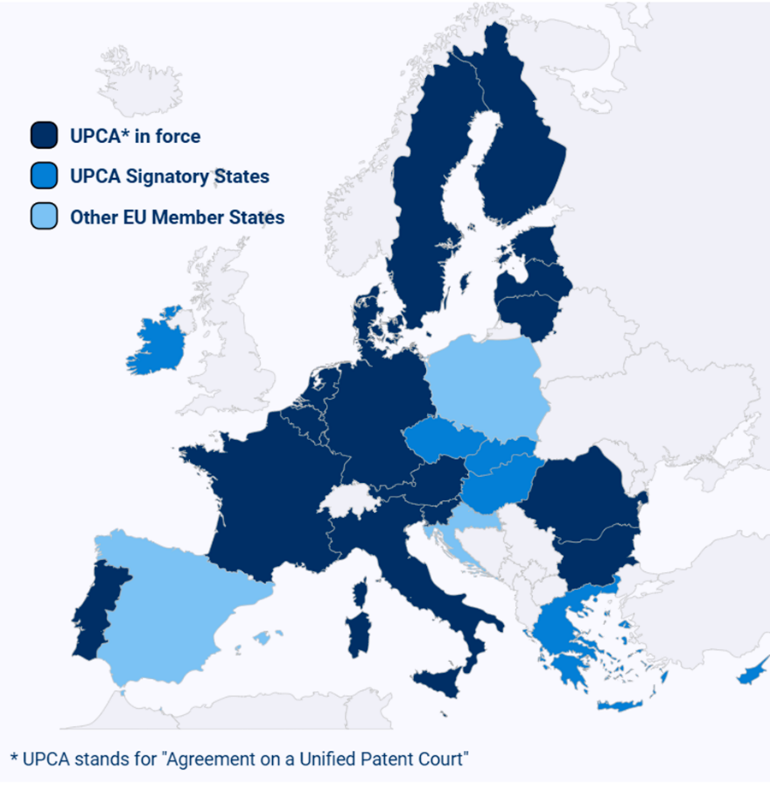
One of the most significant features of a UPC interim injunction is its territorial reach. As a general matter, a UPC injunction may have effect across the UPCA Contracting Member States in which the asserted patent has effect and for which relief has been sought. In certain circumstances, its practical effect may also extend beyond the UPC system to cover infringement occurring in non-participating European jurisdictions.
Case Study
In 2025, Dyson applied to the Hamburg Local Division of the UPC for an interim injunction against Dreame in relation to allegedly infringing hair-styling products. Dyson sought an order prohibiting the sale of the accused curling devices not only across the participating UPC Member States, but also in Spain, which has not joined the UPC system.
The case was particularly notable because the Court accepted jurisdiction by relying on Dreame's German authorised representative, Eurep GmbH, as the relevant jurisdictional link. Although Spain is not a UPCA Contracting Member State and therefore falls outside the UPC system, the presence of the German representative provided the jurisdictional link necessary for the Court to hear the claim.
The court ultimately granted the interim injunction. The order took effect throughout the participating UPC Member States. In relation to Spain, the injunction was directed against Dreame Hong Kong and its German authorised representative, demonstrating that, in appropriate circumstances, UPC proceedings may have practical consequences extending beyond participating Member States.
Requirements for Granting an Interim Injunction
To obtain an interim injunction, the applicant must establish a prima facie case that the patent is valid and that infringement is likely. Supporting evidence typically includes documentation confirming the patent's validity, together with claim charts comparing the asserted patent claims with the technical features of the accused product.
The Court will also consider urgency, proportionality and the balance of interests, weighing the prejudice likely to be suffered by the patent proprietor if relief is refused against the impact of the requested measures on the respondent. Interim relief will generally be granted only where the court is satisfied that the balance of interests favours immediate intervention.
In practice, the UPC has adopted a relatively flexible approach to granting interim injunctions where the relevant legal requirements are satisfied. The UPC has shown a willingness to grant interim relief where the requirements are met, particularly when measured against practice in a number of national European courts.
A further distinguishing feature of UPC interim injunction proceedings is their speed. In urgent cases, the court may issue an order within days—or even on the same day that the application is filed. Where the circumstances are less urgent, the court may instead hold an expedited hearing involving both parties before issuing its decision, typically within a matter of weeks.
Protective Letters: An Important Defensive Tool
Businesses facing the risk of an ex parte interim injunction are not without means of defence. One of the UPC's distinctive procedural mechanisms is the Protective Letter.
A Protective Letter is filed in advance by a prospective respondent before an application for interim relief is made. It sets out the respondent's position—for example, that the accused product does not infringe or that the patent is invalid—allowing the court to consider those arguments before deciding whether interim relief should be granted without prior notice.
Under the UPC Rules of Procedure, a respondent is notified immediately after an ex parte interim injunction has been executed and may apply for the order to be reviewed. In practice, however, persuading the court to revoke a granted injunction is rarely straightforward. For businesses that anticipate becoming the target of an ex parte application, filing a Protective Letter in advance may therefore provide an important procedural safeguard.
4. Asset Preservation Measures
Although relatively uncommon in patent litigation, precautionary seizure or freezing measures are available under the UPC framework. The court may order a respondent not to transfer assets outside the UPC's jurisdiction or to refrain from disposing of specified assets located either within or outside the jurisdiction. Such measures are intended to reduce the risk that assets will no longer be available to satisfy a judgment if the patent proprietor ultimately succeeds.
The requirements for obtaining an asset preservation order are broadly similar to those applicable to evidence preservation measures. The applicant must establish a prima facie case that the patent is valid and has likely been infringed, after which the court will determine whether the balance of interests justifies granting the requested relief.
Although this procedural mechanism is available, patent proprietors rarely seek asset preservation orders before the UPC. The principal reason is that UPC patent litigation is primarily concerned with halting infringing conduct, rather than securing future monetary recovery. In this respect, the UPC differs markedly from litigation practice in the United States, where asset-related measures generally play a more prominent role. Accordingly, where the respondent is financially sound, there is rarely any need for urgent asset preservation.
5. Practical Steps for Businesses
The speed and effectiveness of interim remedies under the UPC mean that businesses operating in Europe should be prepared both to reduce litigation risks in advance and to respond effectively if interim measures are sought. The following practical considerations may help companies minimise disruption and maintain greater control when faced with UPC proceedings.
Conduct Freedom-to-Operate (FTO) Reviews Before Entering the Market
Before launching products in Europe, businesses should carry out freedom-to-operate (FTO) analyses to identify patents that may present infringement risks in their target markets. Early assessment allows companies to avoid potential conflicts with competitors' core patent portfolios and reduces the likelihood of becoming the target of an application for interim relief.
Where products involve technologies covered by patents held by competitors in Europe, companies should assess in advance what interim measures those competitors may seek, and prepare both technical and legal responses well before entering the market.
Establish Clear Internal Response Procedures
Businesses should establish internal procedures to deal with the possibility of an interim injunction or evidence preservation order being served in Europe. Legal, technical, commercial and management teams should understand their respective responsibilities and be prepared to coordinate closely with local counsel where necessary.
Practical preparations may include:
a. Designate a dedicated point of contact. Appoint in-house legal or intellectual property personnel to coordinate with European counsel and respond immediately if interim measures are sought.
b. Conduct response exercises. In particular, companies participating in European trade fairs should rehearse how different teams—including legal, sales, public relations and supply chain personnel—will respond if an interim injunction is served at an exhibition. Everyone involved should know whom to notify immediately and what steps to take.
c. Cooperate with court enforcement. Businesses should comply with court orders and avoid obstructing enforcement officers. Any challenge to the order should be pursued through the appropriate legal procedures after the order has been executed.
-
- Consider Filing a Protective Letter: Where a business has reason to believe that a competitor may apply for interim measures before the UPC, it should consider filing a Protective Letter in advance so that its position can be taken into account before the court decides whether to grant ex parte
- Prepare for Trade Fair Enforcement: Trade fairs are a common setting for UPC interim measures. Companies exhibiting in Europe should therefore prepare contingency plans before the event. For example, alternative product displays or exhibition arrangements may help minimise disruption if particular products become subject to an interim injunction or evidence preservation order.
6. Conclusion
Interim remedies are becoming an increasingly influential feature of UPC litigation and are reshaping the patent enforcement landscape across Europe. Given their speed, broad territorial reach and immediate commercial impact, businesses operating in Europe should understand how these procedures work well before disputes arise.
For Chinese companies expanding into international markets, the UPC's interim remedies present both significant risks and valuable strategic opportunities. Businesses should strengthen their ability to respond swiftly to cross-border intellectual property disputes, improve coordination between legal and commercial teams, and integrate IP compliance and risk management into their day-to-day operations.
Equally important, companies should view the UPC not only as a source of litigation risk but also as a forum in which interim remedies may be used proactively to protect and enforce their own patent rights. With appropriate preparation and a clear understanding of the system, businesses will be better positioned to respond confidently to unexpected disputes while making effective use of the procedural tools available under the UPC.
The content of this article is intended to provide a general guide to the subject matter. Specialist advice should be sought about your specific circumstances.
[View Source]