
Nashenta Vuddamalay Zindel’s articles from ENS are most popular:
- within Tax topic(s)
- in Turkey
- with readers working within the Business & Consumer Services, Insurance and Retail & Leisure industries
ENS are most popular:
- within Immigration, Consumer Protection and Criminal Law topic(s)
The Prime Minister has delivered his national budget for the year 2026-27 building on the reform programme launched last year to bring durable growth.
Our principal takeaways are set out below:
Key Fiscal measures
Personal Tax
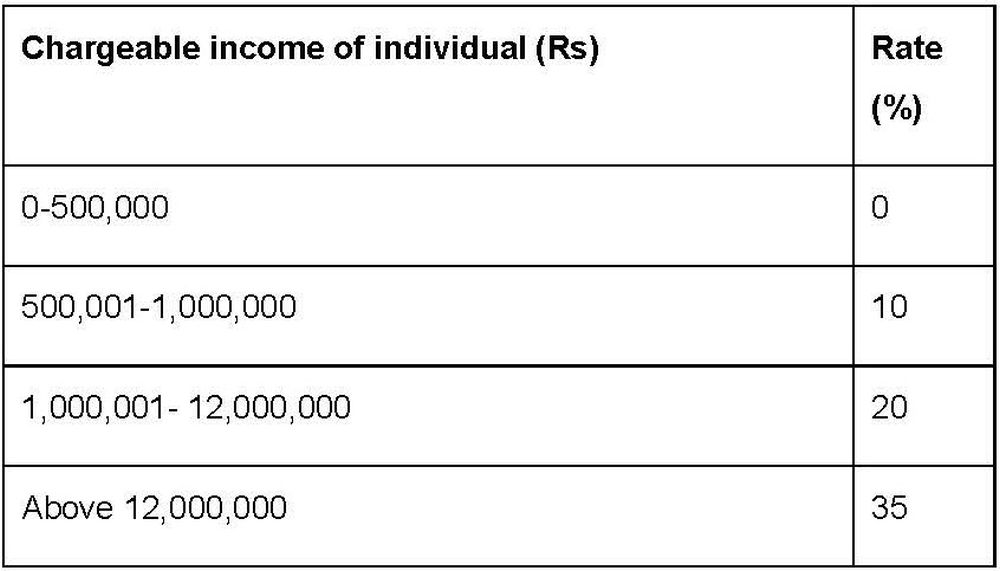
- The Fair Share Contribution will be repealed and replaced by an additional personal income tax band of 35% on annual chargeable income exceeding Rs 12 million, with the progressive personal income tax bands as follows:
Income Tax
- Tax deducted at source of 1% will apply on the payment exceeding Rs 300,000 on supply of software related services or distance maintenance of programmes and equipment.
- Tax deducted at source of 5 % will apply on advertising, promotional, endorsement, digital content or marketing services through social media platforms or other similar electronic means.
- Investment Funds and real estate investment vehicles which are the parent entity of the Multinational Enterprise will be exempted from Qualified Domestic Minimum Top-up Tax, effective as from 1 July 2025.
Value Added Tax
- It has been clarified that foreign digital service providers without a permanent establishment, are not required to register for VAT if the supplies are made to VAT registered persons only and the following changes have also been proposed regarding digital supplies:
- No VAT registration required where annual turnover of digital supplies made by the foreign service provider does not exceed Rs 3 million;
- No appointment of tax representatives required for the submission of VAT returns and remittance of VAT;
- Details of recipient of services in Mauritius are not required if this is not in line with confidentiality requirements in the jurisdiction of the foreign supplier; and
- Online market places and digital platform will qualify as digital or electronic services.
Tax Administration
- A framework will be introduced for early resolution of tax matters through binding written Compliance Agreements with the Mauritius Revenue Authority, before assessments are issued.
Real Estate
First-time buyers
- Buyers of bare land will enjoy an exemption on the first Rs 3 million (up from Rs 2.5 million), and those acquiring a house or apartment benefit on the first Rs 6 million (up from Rs 5 million). Owners of agricultural land, previously shut out of the scheme, are now invited to the party.
The G+2 door closes for foreigners
- Government will no longer grant leases under the G+2 Scheme that authorise the sale of apartments on State Lands and Pas Géométriques to non-citizens. If you already hold an approved lease or own such an apartment, you will not be affected, but going forward, vendors selling these units will face a new 10% special levy (notarial reservation contracts already signed are grandfathered).
EDB property schemes under the microscope
- The duties and taxes on transfers of residential properties under Economic Development Board schemes are set for review, watch this space.
- As announced in the last year budget, Registration Duty for buyers and Land Transfer Tax for sellers on non-citizen property transactions under EDB schemes, will both rise from 5% to 10%, effective for deeds registered on or after 1 July 2026. There is no grandfathering here: the new rate bites even where the reservation agreement or promise of sale was signed before that date. Foreign buyers would be well advised to get their deeds registered before the deadline.
Banking, financial services and digital assets
- A new Bank of Mauritius Bill and a new Banking Bill will be introduced with focus on strengthening governance, sharpening prudential regulation, as well as enhancing consumer protection and financial stability, whilst also fostering innovation in the delivery of financial services.
- The Banking Act will also be amended to allow the duty of confidentiality to be overridden for disclosures required under the Financial Crimes Commission Act and the UN Sanctions Act.
- The fintech landscape is set to undergo an important shift. The Government has committed to establishing a clear regulatory framework governing the issuance of, and investment in, stablecoins, as well as the tokenisation of real-world assets, aligning Mauritius with advancing global standards in digital finance.
- A National Fintech Governance Committee will be set up and introduce a shared licensing and passporting framework to boost its position as a regional fintech hub, especially for Africa and emerging markets. To be noted that at the same time regulations will be tightened by requiring residency for senior executives of virtual asset service providers and banning unlicensed individuals from soliciting investors for virtual asset transactions.
- A new Open Banking Framework will enable secure sharing of financial data between banks, virtual asset service providers, and authorised fintech firms.
Immigration - Golden Visa scheme
- Investors who commit a minimum of USD 1 million within their first 12 months in high value sectors (FinTech, AI, biotechnology, renewable energy, global treasury) may qualify for a Golden Visa valid for up to two years and renewable thereafter and benefit from a favourable tax regime similar to that available to Premium Visa holders. Once the minimum investment threshold of USD 1 million is met, Golden Visa holders become eligible to apply for Permanent Residence, and any work permits required for accompanying domestic workers are processed on an expedited basis within five working days.
Regulatory reforms
The proposed amendments introduce practical changes across company law and related regulatory frameworks.
- Protected Cell Companies will be allowed to convert into Variable Capital Companies while preserving legal continuity.
- Global Business Companies and Authorised Companies issuing debentures exclusively outside Mauritius will also be exempt from appointing a Debenture Holders’ Representative, provided no invitation to issue those debentures is made in Mauritius.
- The reforms would give businesses more flexibility by extending company name reservations from two to six months. At the same time, beneficial ownership rules will be tightened through mandatory disclosure of dates of birth by 30 June 2027, with filing obligations also extended to Sociétés and a transitional period for existing Sociétés.
- Compliance and supervisory powers will be strengthened. Company Service Providers may face fines of up to Rs 200,000 for failing to meet registration requirements under the Companies Act, while the Registrar will be empowered to carry out AML/CFT supervisory inspections on Charitable Foundations classified as non-profit organisations under FIAMLA.
- The Financial Reporting Act will introduce a framework for the adoption of internationally recognised sustainability reporting standards. Reporting may be applied on either a voluntary or mandatory basis, depending on the nature, size, and significance of the entity.
- The changes to the Financial Services Act include the expansion of the FSC’s powers and the amendments will also extend certain offences to former licensees, allow the FSC to act against misleading advertisements and promotions, and raise delegation thresholds for capital expenditure. Further regulatory initiatives are expected to follow, including a modular private wealth management licence, and a pension income drawdown framework.
Energy
- Mauritius is accelerating its transition to renewable energy, targeting a 60% renewable energy mix by 2035, supported by a 220 MW solar photovoltaic project with battery storage. In parallel, the Central Electricity Board will transfer rooftop solar ownership to 1,000 households, increasing their share of generated electricity from 50% to 100%. The feed-in tariff for solar energy will rise by 15%, from Rs 4.20 to Rs 4.83 per unit.
Employment
Among the headline social measures the Budget proposes :
- A significant extension of maternity leave to one year, with the first six months fully paid and the remaining period remunerated on a half-pay basis. Paternity leave would also be enhanced, increasing from four weeks to 6 weeks.
- The introduction of 1 paid day of menstrual leave per month for women experiencing severe menstrual symptoms, including dysmenorrhea and related conditions such as migraines.
The content of this article is intended to provide a general guide to the subject matter. Specialist advice should be sought about your specific circumstances.
[View Source]