In the food industry, it’s not uncommon for product packaging design to be similar between brand owners. At what point does the similarity of packaging lead to trademark infringement, and what can trademark holders do to prevent copycat packaging and market confusion? Mariëlle Hoffer provides some guidance.
If a food producer uses packaging labels that closely resemble those of a leading brand owner, there is a risk of confusion. A recent case in the Benelux provides a useful reminder of the measures that trademark holders can take to prevent copycat packaging and market confusion.
Battle of the copycat packaging
The dispute centred on the similarity between the packaging of Yumurcak cheese sticks from Demka GmbH, a German producer and wholesaler of food products, and that of Enfa Groothandel BV, a wholesaler of beverages and food products.
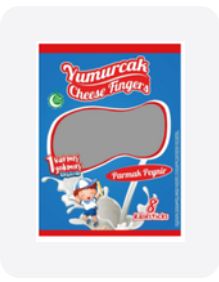
Demka markets its own cheese sticks in blue and red packaging (Yumurcak):
For years, Demka also produced cheese sticks for Enfa, also featuring blue and red packaging (Sefinem, v1):
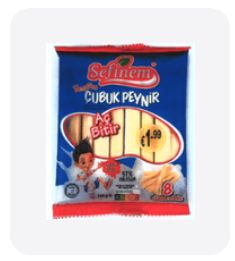
After the collaboration between the two parties was terminated, Enfa continued to market its products in the Benelux using the same packaging.
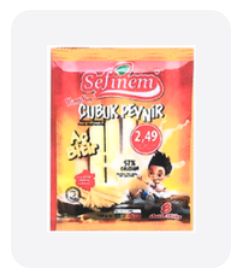
Following the termination of the collaboration with Enfa, Demka filed an EU trademark application for the design of its packaging. Subsequently, Demka objected to Enfa's use of the corresponding packaging based on its EU trademark rights. Enfa disputed that trademark infringement had occurred but did modify its packaging in February 2025, as shown (Sefinem, v2):
Nevertheless, Demka initiated legal proceedings based on, among other things, the question of whether both Enfa packages infringe Demka's trademark rights.
How is packaging infringement assessed?
In proceedings about packaging trademark infringement, the judge rules on whether there is a risk of confusion. In doing so, the packages are compared, and naturally, it is also relevant whether the packaging is used for the same products.
In this matter, the court ruled that the Sefinem v1 packaging infringes the trademark rights in the Yumurcak design. In the assessment, it was considered important that the mark was used for identical products and that the packaging design corresponded to a large extent. In particular, the red top and bottom edges of the packaging and the blue colour of the middle section played a role in the conclusion. Furthermore, both packages contain white letters with a red border, and vice versa; attention was drawn to an open frame in the middle of the packaging with a red-and-white border. Finally, on both packages, an image of milk and a boy with a white shirt and blue trousers is depicted at the bottom in more or less the same position. The court concluded that the overall impression of these packages corresponds and that, therefore, there is a risk of confusion between the two brands. The visual differences between the two brands (particularly the different brand names Yumurcak and Sefinem on the packaging) do not alter this, as the word element does not dominate the packaging.
However, the judge ruled that the Sefinem v2 packaging does not infringe Demka's trademark rights, as the limits of what is permissible have not been exceeded, given the deviations on important points. In particular, the use of colour and the different depictions of the little boy at the bottom of the packaging play a major role in this assessment.
This was not the first time that a trademark holder has resorted to legal action to rein in its competitors.
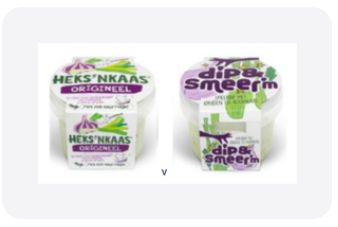
Heksenkaas v Dip & Smeer’m
Heksenkaas BV successfully used its trademark rights on the packaging of its spreadable dip (Heksenkaas) to prevent the use of the confusingly similar packaging of Heinrich Kühlmann GmbH & Co. KG (Dip & Smeer’m).
Packaging trademark infringement and distinctiveness
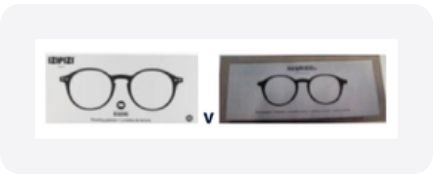
To successfully rely on a trademark registration for packaging design, the packaging must possess sufficient distinctive character and precisely adopt the distinctive elements in the trademark registration, as established in a case involving Izipizi SAS.
In the first instance, Izipizi successfully used its trademark registration of rectangular white packaging featuring an image of the front of a pair of glasses to take action against the corresponding packaging of eyeglasses from Looplabb BV.
Izipizi v Looplabb
However, on appeal, it was ruled that this packaging mark possesses little distinctive character, as it concerns white packaging containing an image of an eyeglass frame, which was deemed not distinctive for eyeglasses. Consequently, the other elements, such as the Izipizi mark and the reading icon on this packaging, were considered the most distinctive elements. As a result, it was ruled on appeal that there was no risk of confusion, and Looplabb's packaging was not deemed infringing.
Copyright and packaging
Copyright can also apply to packaging if the design is sufficiently original and creative choices have been made. Unlike trademark law, registration is not required for copyright. In the case between Izipizi and Looplabb, a copyright claim was made alongside a claim based on trademark law.
The court ruled that copyright does indeed rest on Izipizi's packaging. However, to establish copyright infringement, it is also necessary that the overall impression of the packaging corresponds to that of Looplabb. The judge was of the opinion that the overall impression did not correspond and rejected the claim based on copyright, whereas the claim based on trademark law was initially successful. From this, we can conclude that trademark registration for the design of packaging has added value compared to copyright.
What about design rights?
Moose Toys v UP International
If the packaging or its design is new – meaning it has been on the market for no longer than a year – then the (shape or) design of a package can also be registered as a design.
Based on a design registration, you can take action against the use of identical packaging or packaging that creates no other general impression on the informed user than the registered design. If, as a producer, you have multiple packages, for example, because there are multiple flavour variants, you can register these as multiple designs relatively inexpensively. Consequently, design registration in the EU is very easy and fast.
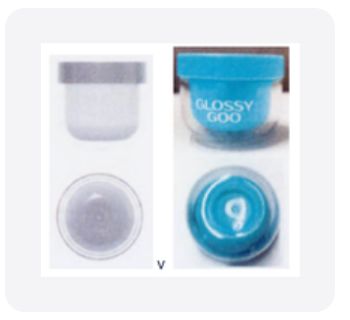
The informed user is a fairly observant consumer who spots differences relatively quickly. Nevertheless, producers can successfully rely on their design registrations. Based on the design registration of packaging for slime, Moose Toys recently successfully took action against the use of similar packaging. The judge ruled that UP International had adopted the same distinctive design choices. This concerned, in particular, the use of an inner and an outer pot, where the outer pot is transparent, and the design and proportions of both pots are consistent, causing both packages to create the same overall impression and resulting in design infringement.
Key takeaways about packaging trademark infringement
To protect your unique position in the market as a trademark holder as much as possible, it is advisable to develop distinctive packaging that differs from what is already on the market in terms of colour usage and graphic elements. Furthermore, it is advisable to register this packaging as a trademark and/or design in the relevant territories. If third parties subsequently copy the layout of your packaging, you can, based on your trademark registration – whether or not in combination with copyright and design rights – successfully object to the use of a similar packaging layout and design, provided there is a risk of confusion.
The content of this article is intended to provide a general guide to the subject matter. Specialist advice should be sought about your specific circumstances.
[View Source]