

As the use of artificial intelligence (AI) grows across the IP profession, expectations are rising for AI solutions that not only deliver accuracy and efficiency but also better support routine IP workflows, such as patent search and analysis. Benoit Chevalier explains why patent research sits at the sweet spot for AI adoption, how the latest AI features and capabilities are assisting IP practitioners, and offers advice on how to choose the right AI-powered patent search solution for your needs.
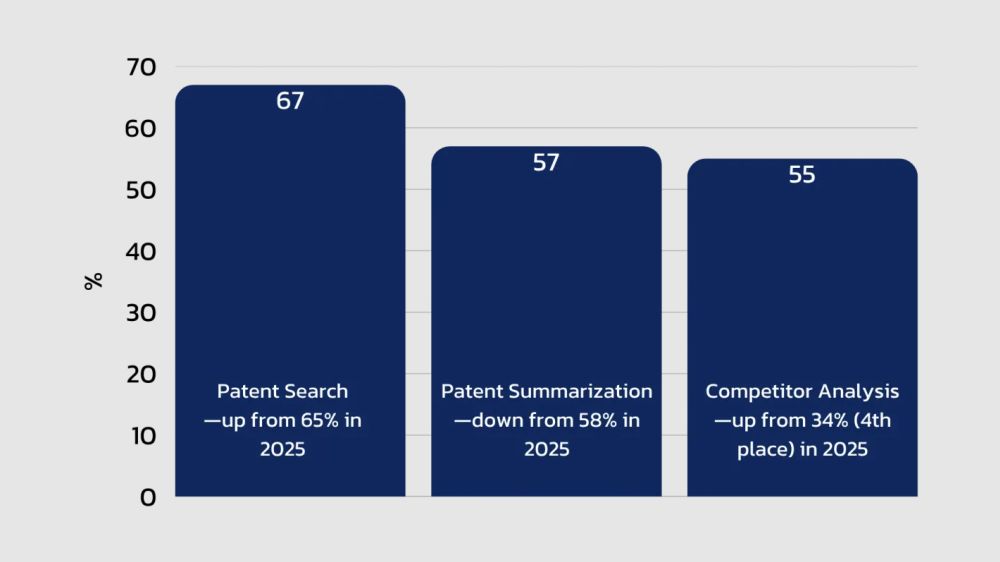
Patent data is growing exponentially, increasing complexity for IP, research and development (R&D), and innovation teams. Under pressure to make faster, data-driven decisions, organizations need more efficient and strategic solutions that will boost the speed, efficiency, and quality of their patent search and analysis projects. Little wonder then that patent search leads the field for AI adoption among IP practitioners, with 67% of IP professionals now harnessing dedicated AI solutions for search and analysis, according to our 2026 Industry Outlook Research.
As the use of artificial intelligence (AI) grows across the IP profession, expectations are rising for AI solutions that not only deliver accuracy and efficiency but also better support routine IP workflows, such as patent search and analysis. Benoit Chevalier explains why patent research sits at the sweet spot for AI adoption, how the latest AI features and capabilities are assisting IP practitioners, and offers advice on how to choose the right AI-powered patent search solution for your needs.
Patent data is growing exponentially, increasing complexity for IP, research and development (R&D), and innovation teams. Under pressure to make faster, data-driven decisions, organizations need more efficient and strategic solutions that will boost the speed, efficiency, and quality of their patent search and analysis projects. Little wonder then that patent search leads the field for AI adoption among IP practitioners, with 67% of IP professionals now harnessing dedicated AI solutions for search and analysis, according to our 2026 Industry Outlook Research.
A Snapshot of AI Adoption in the IP Sector
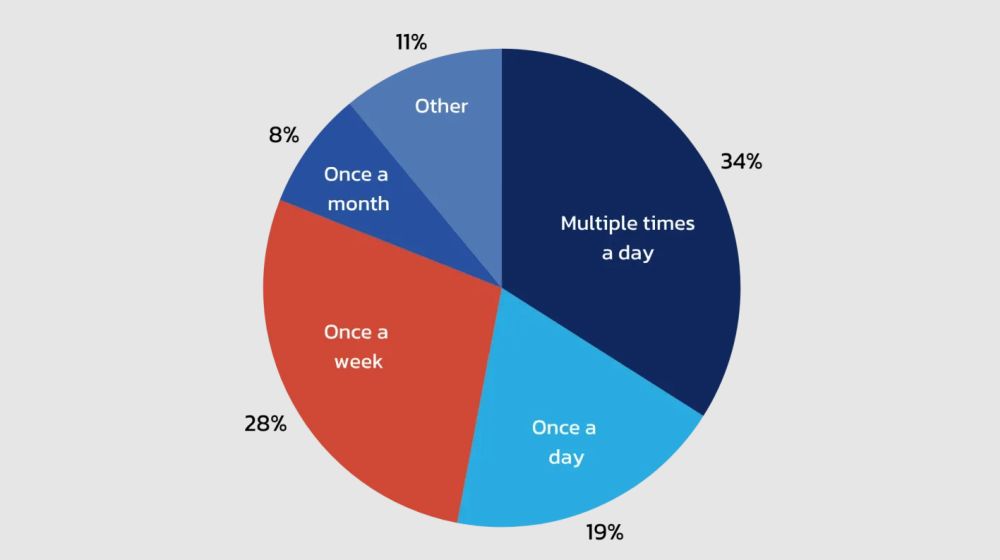
—How often do you use AI solutions for IP? 
—Top 3 areas for AI adoption in the IP profession
—The top 5 features IP professionals value most are...
- 1. Summarization (56%)
- 2. Search assistants in natural language (54%)
- 3. Translation (51%)
- 4. Chatbots/Q&A (40%)
- 5. Task automation (30%)
Source: From Risk to Reward: What Our 2026 Industry Outlook Research Reveals About AI in IP
How Traditional IP Tools are Harnessing AI
AI has rapidly transformed how IP searches are created, and results analyzed and used. First, replacing time-consuming manual patent searches and dependence on advanced Boolean expertise with agentic AI workflows that enable searches to be quickly constructed from natural language queries. Second, by helping users translate large volumes of data into actionable insights, turning comprehensive datasets into practical IP intelligence. However, there is still more to come.
AI-powered assistants embedded directly into IP workflows, such as Questel’s Sophia AI Agents, are designed to support patent, R&D, and innovation stakeholders to automate complex search and analysis tasks. From natural language prompts, the technology can quickly extract key technical features, providing contextual, decision-ready insights that extend human capabilities and expertise. However, not all AI delivers business value — the difference lies in how it is implemented.
Indeed, as new tools and AI features enter the IP market, the next challenge for IP professionals is to ensure that any technology they choose boosts their efficiency and productivity — rather than leading to fragmentation of tasks and information across workflows and IP tools.
5 Key Criteria for Choosing the Right AI Agent for Patent Search
The top AI tools for patent search and analysis incorporate specific features and capabilities. When selecting a solution, consider the following criteria:
1 Data Quality & Coverage
- Global, enriched, normalized patent datasets
- Integration of legal, litigation, and scientific data
2 Semantic & Natural Language Capabilities
- Ability to understand concepts (not just keywords)
- Feature-based patent analysis
- Intuitive query building
3 Explainability & Transparency
- Clear traceability of results
- Supporting evidence (snippets, feature extraction)
- Avoiding “black-box AI” risk
4 End-to-End Workflow Integration
- Unified experience from: Query → Analysis → Reporting
- No switching between tools
- Increased efficiency and productivity
5 Decision Intelligence
- Technology landscaping
- Competitive analysis
- Portfolio strategy
- Risk identification
Ultimately, when choosing an AI agent for your organization, the goal should not (just) be better search — but also more comprehensive coverage, enhanced accuracy, complete transparency, time-saving workflow integration, and insights that drive better decisions.
The Benefits of a Unified IP AI Ecosystem
To transform patent search from a reactive to a proactive strategy, Questel believes IP professionals need access to integrated IP AI solutions that enable faster and more confident innovation and R&D decisions — all while keeping the human professional at the heart of the process. Together, our all-in-one Orbit Intelligence search and analytics platform and Sophia AI Agents form a unified IP AI ecosystem for patent search and analytics, combining data, intelligence, workflow, and decision support.
- Orbit Intelligence provides the data & analytics backbone, centralizing patent data (including standard-essential patents), non-patent literature, legal and business intelligence data, and other IP data sources into a single database with advanced analytics capabilities. By enabling rapid access to technology trends, key players, and competitive landscapes, it helps users transform raw data into strategic business intelligence.
- The Sophia AI Agents boost access to that intelligence by helping users build queries, refine searches, analyze sources, and generate summaries, claim mappings, and more.
Four Ways to Optimize AI for Patent Search with Sophia
Orbit provides the data foundation; Sophia delivers intelligence and automation through four unique capabilities.
Focus on meaning, not keywords with Sophia Search
Our AI-powered semantic search tool converts natural language queries into specialist searches to extract key features from inventions and patents and accelerate prior art discovery
Reduce expertise barriers and accelerate search setup with Sophia QueryOur AI assistant converts natural language into structured Boolean queries, automatically integrating synonyms, classifications, and constraints.
Move from raw results to insights in minutes with Sophia DocumentThe AI agent analyzes multiple patent documents simultaneously to extract key insights faster.
Accelerate deep analysis and review workflows with Sophia LabThe tool rapidly generates claim mappings and multilingual summaries on demand.
Why Choosing the Right AI Tool Matters for Patent Search
AI alone is no longer a differentiator for patent search. The real value for IP professionals comes from enhanced access to data quality, workflow integration, and decision intelligence. That’s why the right AI agent for patent search requires more than simply automation. Instead, IP professionals need a solution that turns complexity into clarity and data into decisions by combining data, AI, and dedicated workflows to provide decision-centric IP intelligence.
The content of this article is intended to provide a general guide to the subject matter. Specialist advice should be sought about your specific circumstances.
[View Source]