- within Intellectual Property topic(s)
- in European Union
- in European Union
- in European Union
- in European Union
- with readers working within the Advertising & Public Relations, Insurance and Healthcare industries
- within Privacy topic(s)
The Crocs brand may be recognisable worldwide for its iconic hole-punched clog, but its EU design right has proved far more fragile following a successful challenge by a Spanish competitor, as Alexis Thiebaut explains.
In its judgment of 22 April 2026 (T-228/25), the General Court of the European Union confirmed the invalidity of the Crocs EU design right for lack of individual character based on the prior existence of a similar design.
Background to the Crocs EU design case
On 24 October 2022, the Spanish company Gor Factory, SA filed an application for a declaration of invalidity at the European IP Office (EUIPO) against the EU design n°000257001-0001, filed on 22 November 2004 by the company Crocs, Inc., under US priority of 28 May 2004, represented as follows:
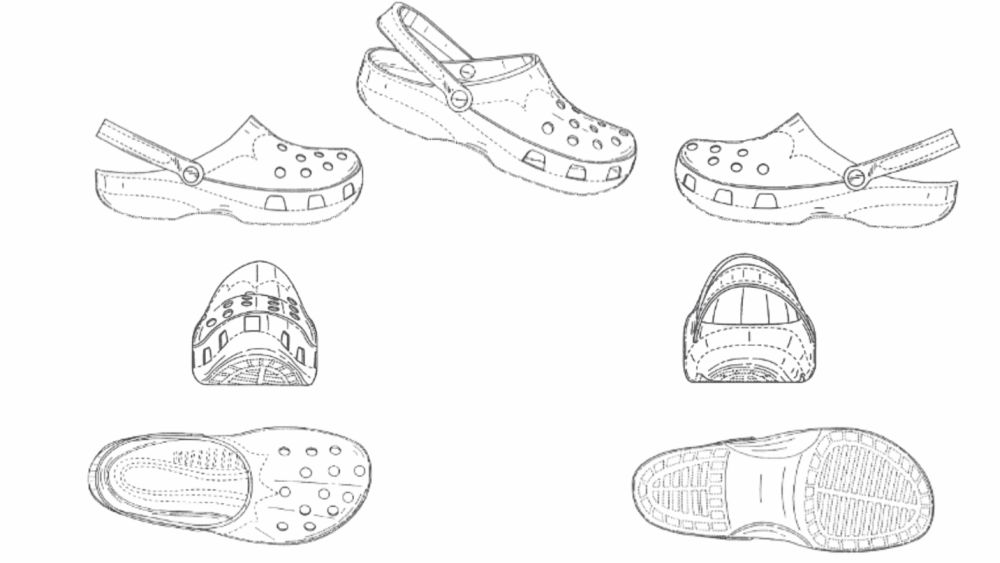
This design was registered on 22 November 2004, in Locarno class 02.04 for footwear.
In its proceedings, Gor Factory claimed that the Crocs design lacked individual character due to the prior existence of the 'Holey Soles' clog, shown below:
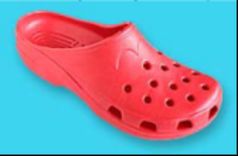
This earlier model was disclosed to the public on 13-14 April 2003 on the www.holeysoles.com website and archived by the Wayback Machine.
In its decision of 22 January 2024, the EUIPO Cancellation Division upheld the application, finding that the contested design did not have individual character. Crocs appealed against that decision on 19 March 2024.
Position of the Board of Appeal (decision of 5 February 2025)
The Third Board of Appeal of EUIPO dismissed Crocs' appeal, upholding the cancellation of the Crocs design. The Board considered that:
- The earlier 'Holey Soles' design had indeed been made available to the public, within the meaning of Article 7(1) of Regulation No 6/2002, on 13 and 14 April 2003, that is to say, before the priority date of 28 May 2004.
- As regards the informed user, it noted that they would display a relatively high degree of attention when using those goods.
- As regards the degree of freedom of the designer, the Board found that it was high.
On those bases, it concluded that the contested design lacked individual character, since, when compared with the earlier design, the designs at issue produced the same overall impression on the informed user, without the difference between them being able to counterbalance their similarities.
Therefore, the iconic Crocs model was considered to have no individual character.
Position of the General Court (judgment of 22 April 2026)
Faced with the cancellation of its clog model, Crocs appealed to the EU General Court, arguing that:
- The degree of freedom of the creator was not high;
- The presence of a distinctive heel strap had not been considered and that this contributed to the individual character of the Crocs model.
Unfortunately for Crocs, the General Court did not agree:
On the degree of freedom of the designer, the Court considered that it is high in that the only technical constraints are to respect the ergonomics of the foot and to integrate a sole and a robust upper. A clog designer is therefore free to choose the material, colour, patterns, decorative elements, as well as the presence, number, size, shape and position of holes and cut-outs.
As regards the comparison of the overall impressions, the Court also upheld the Board of Appeal's findings.
Thus, the heel strap present on the Crocs model, although perceptible by the informed user, was considered of less importance in view of the identical overall shape of the two clogs.
The Court also pointed out, interestingly, that the informed user could consider the Crocs design as an alternative version of the earlier design, especially since the presence of the strap in question is an occasional feature.
Finally, the Court rejected Crocs' argument based on the inclusion of its clog in the book "Fifty Shoes that Changed the World", pointing out that the reputation or emblematic character of a product is irrelevant to the assessment of the individual character of a design, which is assessed objectively by comparing the overall impressions. It also rejected the reference to a decision of the USPTO, as the EU design regime is an autonomous system, independent of national or foreign laws.
Therefore, the Crocs model is definitively cancelled.
Key takeaways from the Crocs EU design case
This judgment is a welcome reminder that the registration of an EU design does mean it is automatically valid, as the EUIPO does not carry out any substantive examination of novelty or individual character.
This judgment, although difficult for Crocs, also serves as a reminder that the reputation of a product has no bearing on the validity of its registered design. Crocs, whose worldwide reputation is not disputed, was scuppered by the existence of an earlier design, revealing that commercial success cannot compensate for the absence of novelty or individual character in the legal sense of the term. This outcome is also reminiscent of the cancellation of a Puma shoe model, following a disclosure on Instagram by singer Rihanna.
From a strategic point of view, this case will certainly invite right holders to protect the shape of their products as soon as possible to avoid such pitfalls.
Unfortunately, the adage that shoemakers always wear the worst shoes has been proved again true, since Crocs has lost a useful and easy-to-implement protection on its oldest and most iconic design!
The content of this article is intended to provide a general guide to the subject matter. Specialist advice should be sought about your specific circumstances.
[View Source]