Pabian Law Clients and Friends,
We hope that this Year-Round Immigration Quarterly Update finds you well. We are excited to share the Pabian Law Quarterly Update for January 2026, serving as an educational update on government and regulation changes, trends, alerts, and other pertinent information.
As background, Pabian Law has two practice areas – our H-2B Visa Practice for our seasonal hospitality clients and our Year-Round Practice for all hospitality employers where we assist with a myriad of visa and green card application types, including TN visas, O-1 visas, H-1B visas, green card applications (EB-1, EB-2, and EB-3). We also have a team that assists employers with employment verification issues (ex. I-9 and E-Verify questions). In short, we are a full-service immigration law firm for hospitality employers across the United States!
Please read on for information about the following topics:
- Upcoming Pabian Law education
- H-1B Visa Cap Lottery & New H-1B Visa Rules – A Major Shift in Section Criteria
- Consular Delays & Expanded Social Media Vetting for H-1B Visa Applicants
- New Entry & Visa Issuance Restrictions Based on Nationality
- Green Card freeze at Consulates & Embassies for citizens of 75 countries
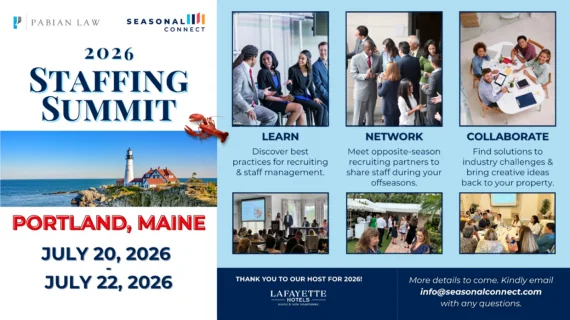
- Save the Date for the 2026 Staffing Summit! – Registration opens on February 1st at www.staffingsummit.com and we annually sell out this event!!!
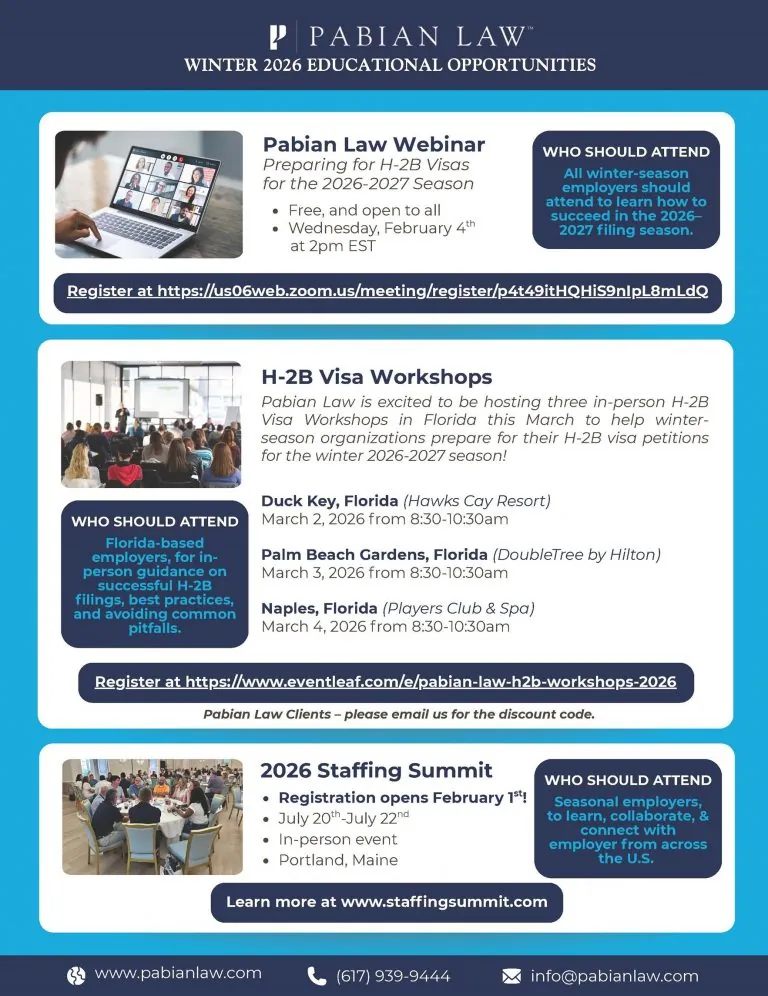
Upcoming Pabian Law education
H-1B Visa Cap Lottery & New H-1B Visa Rules — A Major Shift in Selection Criteria
As we prepare for this year's H-1B visa cap season, U.S. immigration policy has introduced one of the most significant changes to the H-1B visa selection process in years. In December 2025, the U.S. Department of Homeland Security finalized a rule that replaces the longstanding random H-1B visa lottery with a wage-based, weighted selection process
As background, H-1B visas are the most common type of U.S. visas. They allow people to work in the U.S. on a year-round basis for an initial three-year term. To qualify, a person must have the equivalent of a U.S. Bachelor's degree and be coming to the U.S. to work in a job that requires a Bachelor's degree in the foreign national's field of study. Importantly, H-1B visas are completely different from H-2B visas. While they share similar names, H-1B visas are year-round visas while H-2B visas are seasonal.
Employers that wish to sponsor foreign nationals that do not currently hold H-1B visa status can only file in March. This is the only time during the entire year in which an employer can file petitions, and the filings are subject to a random lottery call the H-1B visa cap lottery. The first step in the process is submitting a "registration". After registrations are submitted, the lottery is held. If selected, the employer then submits the full H-1B visa petition to U.S. Citizenship & Immigration Services (USCIS).
What Employers Need to Know:
- Weighted Selection Process: Registrations
submitted for the H-1B visa lottery will now receive selection
"entries" based on the offered wage level under the U.S.
Department of Labor's wage levels. Higher wage levels translate
into more entries and thus better odds of selection.
- Level IV (the highest) wages receive the highest number of chances.
- Level I (the lowest) wages receive the fewest.
- Lottery Timing: USCIS is expected to open the FY 2027 H-1B registration period in March 2026 under these new rules.
- Cap Numbers: The statutory numerical caps (65,000 regular + 20,000 master's exemption) remain unchanged.
Implications for Strategy
This shift underscores the importance of wage planning and job classification accuracy for employers seeking to sponsor workers for H-1B visa status. Positions offering higher wages and advanced skill requirements will have a competitive edge in being selected for the H-1B visa cap. We can help you consider strategic wage-level positioning well in advance of the cap registration opening.
If you are considering sponsoring an employee for an H-1B visa, or have any questions about the process, please reach out as soon as possible. Due to us needing to file petitions in early March because of the looming government deadline, it is time to start work on these petitions.
Consular Delays & Expanded Social Media Vetting for H-1B Visa Applicants
Recent policy changes at U.S. consulates and embassies are contributing to delays in H-1B visa issuance, driven in part by expanded vetting requirements and social media screening.
Expanded Online Presence Review
In late 2025, the U.S. Department of State broadened its visa issuance vetting process to require mandatory social media screening for H-1B visa and H-4 visa applicants. Applicants are now required to provide all active and prior social media handles from the past five years and need to make their social media profiles public. Consular officers may review public content for possible security concerns.
Consular Appointment Delays
- Many H-1B visa interviews, particularly at busy posts in India and other countries, have been rescheduled. The new appointments are sometimes being scheduled for several months out due to the added consular vetting requirements. This is causing substantial delays for some foreign nationals to enter the country.
- Some posts have reduced interview capacity significantly, resulting in visa stamping taking three to six months in some cases.
Practical Tips for Visa Applicants
- Prepare early: Schedule consulate and embassy appointments well in advance of travel or project start dates.
- Expect extra processing time: Plan travel and onboarding timelines with delays in mind. A foreign national may need to spend extra time abroad waiting for visa issuance and may need to work remotely from another country as a result. If this is not possible, it may be best to postpone international travel that is not urgent or necessary.
New Entry & Visa Issuance Restrictions Based on Nationality
Visa Bond Requirements
On January 21, 2026, the U.S. government broadened the list of 38 countries whose nationals must post bonds (from $5,000 to $15,000) as part of B-1/B-2 tourist visa applications.,. This bond requirement is temporary and is expected to be in effect for 12 months. The validity of the tourist visa will be reduced to only 3 months, the visa will be single-entry, and the permitted stay for affected foreign nationals will be for only 30 days (as opposed to six months). The bonds are refundable if visa issuance is denied or if the foreign national is found to comply with the conditions of their admission.
The expanded bond program now includes a substantially larger list of countries from regions in Africa, Latin America, and Asia, reflecting heightened security screening priorities by the current administration. These countries include Benin, Cape Verde, Senegal and Venezuela.
Prohibitions on Visa Issuance
On January 1, 2026, Presidential Proclamation 10998 went into effect, further shifting U.S. immigration policy toward nationality-based entry restrictions and requirements. Specifically, this Proclamation affects visa issuance for individuals from certain countries. The policy only applies to foreign nationals who were outside of the United States on January 1, 2026 AND do not hold a valid visa as of that date.
To reiterate, foreign nationals who hold valid U.S. visas, even those who were outside of the United States when the Proclamation went into effect on January 1stare not subject to Presidential Proclamation 10998. No visas issued before January 1, 2026 at 12:01 a.m. EST, have been or will be revoked pursuant to the Proclamation.
Full Restrictions on Visa Issuance
Nationals of the following countries are fully suspended from receiving immigrant (green card) and non-immigrant visas (all categories) unless they qualify for an exception (see below):
- Afghanistan
- Burma (Myanmar)
- Burkina Faso
- Chad
- Republic of the Congo
- Equatorial Guinea
- Eritrea
- Haiti
- Iran
- Libya
- Mali
- Niger
- Sierra Leone
- South Sudan
- Sudan
- Syria
- Yemen
Additionally, individuals traveling on travel documents issued or endorsed by the Palestinian Authority are also barred from visa issuance and entry under this policy.
Partial Restrictions on Visa Issuance
Nationals of the following countries are prohibited from receiving from receiving visitor, student, and exchange visitor non-immigrant visas (B-1/B-2, F, M, J). They are also prohibited from receiving immigrant visas.
Other non-immigrant visas (e.g., H-2B, H-1B, L-1, O-1, P-1, etc. employment categories) are still being issued (sometimes with reduced validity and heightened scrutiny) depending on consular guidance:
- Angola
- Antigua and Barbuda
- Benin
- Burundi
- Cote d'Ivoire
- Cuba
- Dominica
- Gabon
- Gambia
- Malawi
- Mauritania
- Nigeria
- Senegal
- Tanzania
- Togo
- Tonga
- Venezuela
- Zambia
- Zimbabwe
Note: Turkmenistan was previously on the partial restriction list but, under the January 1, 2026 proclamation, only immigrant visa issuance remains suspended, while most non-immigrant visa categories are not restricted (except immigrant categories).
Exceptions to the Prohibitions
The visa and entry restrictions do not apply in certain cases, including (but not limited to):
- U.S. Lawful Permanent Residents (green card holders)
- Individuals holding valid U.S. visas issued before January 1, 2026
- Dual nationals of a restricted country traveling on a passport from a non-restricted country
- Certain diplomatic or official visa classifications (e.g., A, G, NATO)
- Certain special immigrant categories specified in the proclamations (such as participants in major sporting events).
These developments reflect a dynamic and evolving U.S. immigration landscape. Employers should stay informed, plan ahead, and work closely with experienced immigration counsel to navigate upcoming filing cycles and deadlines, consular procedures, and evolving eligibility requirements.
If you would like tailored guidance or need help with specific cases, our firm is ready to assist!
Green Card freeze at Consulates & Embassies for citizens of 75 countries
On January 14, 2026 the U.S. Department of State (DOS), the federal agency that oversees consulates and embassies, announced that it isfreezing processing at embassies and consulates for citizens of 75 countries. This processing freeze is to take place beginning on January 21, 2026. "Immigrant visas" are those issued to people who have been approved for U.S. Lawful Permanent Residency (green cards). Nonimmigrant visas, such as H, L, E, O, P, J, etc. are a completely different category under U.S. immigration laws. Therefore, visas are completely unaffected by this announcement and will continue to process as normal.
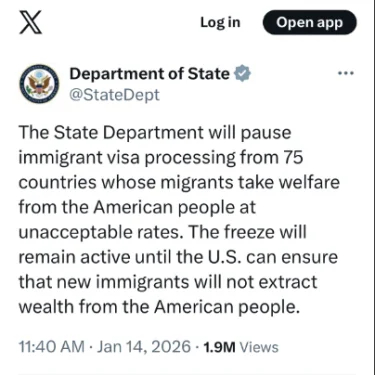
According to several news outlets, the 75 countries include: Afghanistan, Albania, Algeria, Antigua and Barbuda, Armenia, Azerbaijan, Bahamas, Bangladesh, Barbados, Belarus, Belize, Bhutan, Bosnia, Brazil, Burma, Cambodia, Cameroon, Cape Verde, Colombia, Cote d'Ivoire, Cuba, Democratic Republic of the Congo, Dominica, Egypt, Eritrea, Ethiopia, Fiji, Gambia, Georgia, Ghana, Grenada, Guatemala, Guinea, Haiti, Iran, Iraq, Jamaica, Jordan, Kazakhstan, Kosovo, Kuwait, Kyrgyzstan, Laos, Lebanon, Liberia, Libya, Macedonia, Moldova, Mongolia, Montenegro, Morocco, Nepal, Nicaragua, Nigeria, Pakistan, Republic of the Congo, Russia, Rwanda, Saint Kitts and Nevis, Saint Lucia, Saint Vincent and the Grenadines, Senegal, Sierra Leone, Somalia, South Sudan, Sudan, Syria, Tanzania, Thailand, Togo, Tunisia, Uganda, Uruguay, Uzbekistan, and Yemen.
While it is a relief that nonimmigrant visas are unaffected by this freeze, this is certainly unwelcome news for employers and foreign nationals from the above countries who are in the midst of the green card application process.
Additional information will hopefully be announced soon, including the duration of the freeze. We will keep you updated as more information is released. In the meantime, please do not hesitate to reach out with any questions.
Save the Date for the 2026 Staffing Summit!
Registration opens on February 1st for the 2026 Staffing Summit!!! All employers are welcome – even if you are not a Pabian Law client! Be ready to register on February 1st, as last year's Staffing Summit sold out! More information about this incredible event can be found at www.staffingsummit.com.
Conclusion
We hope that you enjoyed this Year-Round Quarterly Update. Please do not hesitate to contact us with any questions about the topics listed above or any other immigration-related topics.
Warm regards,
Keith Pabian and your friends at Pabian Law
The content of this article is intended to provide a general guide to the subject matter. Specialist advice should be sought about your specific circumstances.