

- within Technology topic(s)
- in United States
- with readers working within the Banking & Credit, Business & Consumer Services and Transport industries
- within Technology and Law Department Performance topic(s)
AI and techBoies Schiller FlexnerPinsent MasonsSullivan & Cromwell
‘AI can be a valuable tool, and at the same time, it calls for a measured and vigilant approach.’
Few professions have had greater reasons to heed the recent words of Pope Leo XIV than law, with a clutch of major firms finding themselves in AI-related hot water in recent months.
Pinsent Masons’ recent AI mishap – in which the firm referred itself to the SRA after being criticised by a judge for what was described as ‘cavalier’ filing of inaccurate submissions in an insolvency case – marked the highest-profile example to date involving a UK-headquartered firm.
US firms have also come under the spotlight, with Sullivan & Cromwell apologising to a New York judge after opposing counsel Boies Schiller Flexner identified inaccurate submissions, some of which were attributed to AI hallucinations.
And the rate of such incidents is only increasing, with many more examples (see boxout below) underscoring the risks involved.
The scale of the issue
Damien Charlotin, a law, data science, and AI researcher based in Paris, has been keeping a detailed record of AI hallucinations in the legal world.
His database tracks legal decisions in cases where generative AI produced hallucinated content, covering ‘only cases where the court or tribunal has explicitly found (or implied) that a party relied on hallucinated content or material,’ according to Charlotin’s site.
Charlotin began compiling the database in April 2025 while teaching a course on LLMs and the future of the legal profession at Sciences Po Law School in Paris, looking at data going back to Q2 2023. Since then, the number of errors recorded has surged, reaching a daily average of five per day this February.
While the majority of the errors involve pro se litigants or litigants in person, at the time of writing (2 June) the database includes nearly 600 instances of errors involving lawyers, with more than 460 resulting in professional sanctions. Of these, fewer than 15 are marked as only ‘alleged’ AI hallucinations.
Just ‘bad lawyering’?
So why are so many lawyers, even at elite firms, making such high-profile errors?

Is the technology to blame? Or is this simply a new version of an old problem: inexperienced lawyers making mistakes?
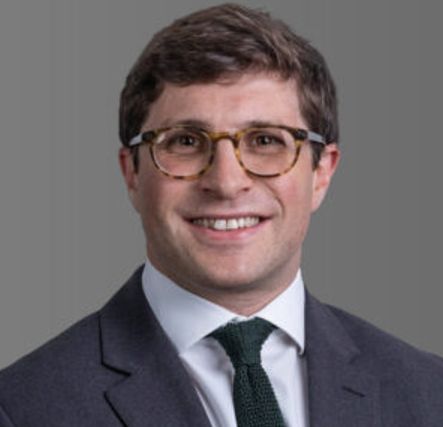
University of Miami law professor Michele DeStefano (pictured right) is the co-founder of Digital Legal Exchange, a forum for GCs and business leaders focused on the digital transformation of the legal function, and has interviewed more than 40 senior legal professionals on the use of AI in law firms in the past three months.
She falls firmly into the latter camp. ‘A lot of this is just bad lawyering,’ she says, adding that lawyers are trained to check their sources and read the cases they cite.
This view is echoed by Maurice Allen, a City law veteran of firms including Ropes & Gray, Clifford Chance and White & Case, and now a managing director at recruiter Major Lindsey & Africa: ‘To me it’s nothing more than basic quality control. It’s very easy to check. This is not the fault of AI – someone got something wrong.’
Others argue the problem is not AI itself, but the way it is being used — particularly when lawyers become too trusting of outputs.
Michael Stacey, a regulatory partner at City firm Russell-Cooke, said that the Pinsents incident was ‘a stark illustration of the risks of unthinking reliance on AI tools.’
Jacob Turner, a barrister at Fountain Court Chambers specialising in AI law and regulation, says it has become more ‘professionally acceptable’ to use AI, but calls for ‘scepticism and care’ when using the technology. ‘There is definitely a risk that people become too comfortable with it’, he adds.
The gap between policy and practice

Michael Evans, co-managing director at reputation consultancy Byfield, believes that many firms are still playing catch-up when it comes to AI usage, with firms often failing to follow their own AI rules: ‘The real reputation risk currently lives in the gap between policy and practice,’ he says.
Evans also has sympathy for the lawyers involved: ‘Junior lawyers are structurally in a very difficult position. They are often the people most likely to be asked to use AI tools, the most exposed to pressure, and the least likely to spot subtle errors.’
Turner believes there should be more guidance from bodies such as the SRA: ‘These high-profile instances of AI misuse are good at providing context and warning for individuals on what not to do, but there should also be positive guidance on what they should do and how they should do it.’
Evans believes that when it comes to the SRA, the ‘fundamental’ issue is preserving public trust in the profession. ‘If AI usage were ever perceived to threaten that trust, the regulator would inevitably step in more assertively,’ he says, adding that he does not believe that point has yet been reached.
Rise of the agents
Turner points to the rise of agentic AI as another development likely to create headaches for the profession: ‘There may well be an argument that client care letters should indicate if agentic AI is going to be used in any meaningful sense, because arguably that AI is becoming like a human team member.’
DeStefano echoes the point, saying some general counsel ‘are already naming agents on their org charts.’ As an example of the pace of change, US telehealth provider Medvi, which reportedly employs only two human staff, is on course to generate $1.8bn in sales this year after heavily deploying agentic AI.
DeStefano also believes that the profession needs to ‘rethink’ how lawyers are trained to use AI, both from a technical and ethical perspective. ‘Some firms are saying we want associates coming in and acting like a third-year qualified lawyer. But that’s not going to happen without changing how lawyers are trained,’ she says.
Training the next generation
Training has developed in response to the rise of generative AI. But the pace of change has been fast enough that, as in education more broadly, providers struggle to keep up. Many postgraduate diploma in law (PGDL) courses do not include direct training on how to use AI as a lawyer, while AI is at present absent from the Solicitors Qualifying Examination (SQE).
In classes, however, students discuss the technology and issues around it, with one current PGDL student telling LB that Pinsents incident had already been brought up.
Once lawyers begin training at their firms, they encounter a wide range of policies and practices covering AI use firmwide, with many mandating human oversight and output checking, including at Mayer Brown, which this April launched a ‘comprehensive GenAI training curriculum’, which specified ‘mandatory human review of all GenAI outputs’.
Several firms have issued reminders to their employees in response to other firms’ AI embarrassments, including re-emphasising the need to check AI output against primary sources – though there is little evidence of substantive policy change.
In the face of rapid change, many firms do not have the luxury of time to establish robust and foolproof rules and restrictions, with pressure from clients to demonstrate that they are using the best tools, and a proliferation of tools to use, from Anthropic’s new Claude for Legal to legal tech specialist offerings from providers like Luminance and Legora.
James Carroll (pictured right), managing partner at Russell-Cooke sums up the issue: ‘AI is a tool, one we must adopt or risk being left behind. But like any tool, if we aren’t careful and compliant in how we use it, the tool will end up itself becoming the risk rather than the asset it should be.’
Major firms with recent AI-related incidents
An inexhaustive list of firms to have found themselves in AI-related hot water includes:
Pinsent Masons: In May 2026, Pinsents referred itself to the SRA after initially providing inaccurate submissions which featured AI hallucinations, and then compounding the error by using AI to write an explanatory letter that misapplied the law.
Sullivan & Cromwell: In April 2026, the firm apologised to a federal bankruptcy judge in Manhattan after a motion contained AI-generated ‘hallucinations’, including fabricated case citations and other errors.
Boies Schiller Flexner: In September 2025, the firm apologised and filed a corrected brief in litigation involving the Church of Scientology after admitting AI-generated citation errors.
Latham & Watkins: In May 2025, while defending Anthropic in a music copyright case, the firm used Claude to assist with formatting citations in an expert declaration. The AI hallucinated a fake article title and authors for a real source.
Gordon Rees: In October 2025, the 2,000-lawyer US national firm admitted to including inaccurate and non-existent citations in an Alabama hospital bankruptcy case.
Butler Snow: In May 2025, three partners at the firm were disqualified from a case by a federal judge in Alabama after filings included fabricated case citations generated by ChatGPT. The judge said ‘modest fines’ would not be sufficient.
K&L Gates and Ellis George: In May 2025, a special master in California sanctioned the firms jointly $31,100 and struck briefs after a supplemental filing included numerous hallucinated and inaccurate citations and quotations.
The content of this article is intended to provide a general guide to the subject matter. Specialist advice should be sought about your specific circumstances.
[View Source]