- within Intellectual Property topic(s)
- in United States
- with readers working within the Healthcare and Law Firm industries
- within Food, Drugs, Healthcare and Life Sciences topic(s)
- with Inhouse Counsel
On June 13, 2016, the Indian state of Jammu & Kashmir was granted the Geographical Indication Certificate for its famous Kashmiri Hand Knotted Carpet. The present GI certificate was given by Geographical Indication Registry, Chennai. Kashmiri Hand Knotted Carpets as quite famous around the globe, and are prepared through a special way of weaving known as 'Taleem'. The application for GI certificate on Kashmiri Carpet was filled by Meeras Carpet Weavers' Industrial Cooperative Ltd., the society created by Kashmir Chamber of Commerce & Industry (hereinafter referred as KCCI).
As per the GI application, the history of Kashmiri carpet dates back to the period of the famous Sufi Saint and scholar, Hazrat Mir Syed Ali Hamdani (1341‐ 1385 AD) of Persia. When he came to Kashmir, he brought a few skilled artists with him and laid the base for the cottage industries in the Kashmir valley. During the period of Zain‐ul‐ Abadin (1420‐ 1470 A.D), a Sultan of Kashmir carpets from Kashmir started winning fame in far regions and it has been recorded as a great period in the history of carpets in Kashmir.
There is yet no historical evidence which can confirm the addition of Taleem to carpets. But, Taleem was used earlier in waving of Kani Shawls, and some people believe that when the demand for carpets increased and Kani Shawl was on the decline, shawl weavers took taleem to carpets.
Kashmiri carpets are very similar to Iranian carpets, and thus it was quite difficult to obtain GI certificate on Kashmiri carpet but, the said GI certificate was obtained on the basis of the fact that, in no other place than Kashmir, weavers use a written set of codes and symbols for design patterns and colors.
Taleem, a coded color chart, is the manner followed by the weaver of Kashmir, indicating the number of knots to be woven in their respective colors. The colors and numbers of knots to be woven are indicated by signs. Weaving by Taleem technique is considered to be more accurate and fault free as compared to weaving through the graphic method.
Indian Institute of Carpet Technology was also a stakeholder in developing the value of Kashmiri carpets. Mr. Zubair Ahmad Mir, director, Indian Institute of Carpet Technology, said 'Our role will be to test these products so as to make them qualify for GI status'1.
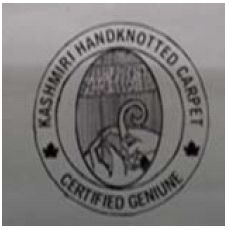
The present GI also accompany a logo with it. Presence of this logo will ensure that the carpet is the original Kashmiri Hand Knotted Carpet.
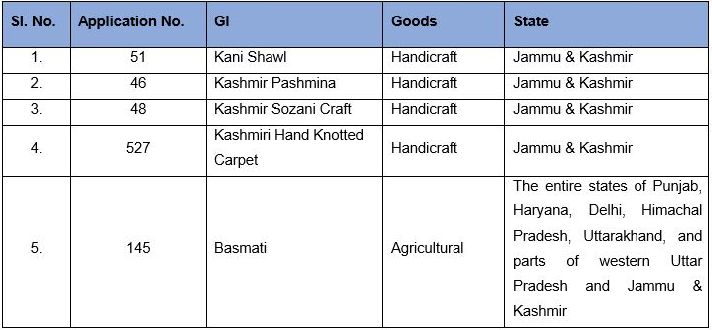
The Indian state of Jammu & Kashmir is famous for its rich heritage of handicraft and the state owns many GI certificates. A list of GI certificates owned by Jammu & Kashmir is given blow ‐
Footnote
1. http://kashmirreader.com/2016/06/22/taleem‐fetches‐kashmir‐carpet‐unique‐geographical‐tag/
The content of this article is intended to provide a general guide to the subject matter. Specialist advice should be sought about your specific circumstances.