

- with readers working within the Retail & Leisure industries
- within International Law topic(s)
Artificial intelligence technologies have begun to be used by almost everyone and have increasingly become an integral part of daily life. With the widespread adoption of these technologies, which are capable of generating new outputs by processing inputs such as text, images and other forms of data, the question of whether outputs created by artificial intelligence models qualify as “works” and whether they infringe third parties’ copyright has continued to be intensely debated over the past year, as has been the case in previous years. These debates are no longer confined to a purely theoretical level but have also recently become the subject of judicial decisions.
The concept of “authorship”, which lies at the very core of copyright law, constitutes one of the most controversial areas with regard to content generated by artificial intelligence. This issue has also been addressed in various judicial decisions worldwide. In this context, in a case1 decided on 19 March 2025 by the Zhangjiagang People’s Court of Jiangsu Province of the People’s Republic of China, the designer Feng Runjuan generated an image by entering the following text prompt into the AI-assisted image-generation platform, Midjourney: “children’s chair with a jelly texture, shape of cute pink butterfly, glass texture, light background” and subsequently shared this image on an online platform. Thereafter, an authorised representative of the defendant company Kuashi Plastic made an offer to Feng with the intention of producing the design; however, Feng rejected this offer. Following this rejection, the defendant company began manufacturing and selling certain children’s chair models which were alleged to be highly similar to Feng’s designs.
Consequently, Feng initiated legal proceedings against Kuashi Plastic, alleging copyright infringement and unfair competition. The defendants argued that the prompts entered by the plaintiff into the artificial intelligence system did not constitute protectable intellectual creations and that similar images had already existed prior to the creation of the disputed images. In the course of the proceedings, it was also established that AI-generated outputs are inherently unpredictable and that the same result may not be reproduced even when identical prompts are entered again.
In its decision, the court held that copyright protection would not arise where content is generated predominantly by artificial intelligence. The court emphasised that, for AI-generated outputs to benefit from copyright protection, the individual must make intentional and decisive choices by providing prompts and exercising creative control over the original visuals, including the individualisation of elements such as perspective, colour, and composition and that such human contributions must be clearly demonstrated. The court concluded that Feng failed to meet these criteria and accordingly dismissed both the copyright infringement and unfair competition claims.

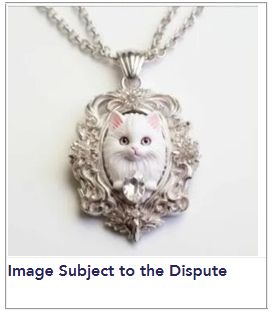
Similarly, in a case where the plaintiff alleged that an image described as a “crystal cat necklace” had been created using an artificial intelligence application and that the defendant had unlawfully used this image for promotional purposes across various platforms, the Beijing Internet Court held that, in order to determine whether an output qualifies as a work, the following criteria must be assessed cumulatively: (i) whether it falls within the fields of literature, art or science; (ii) whether it is original; (iii) whether it is expressed in a specific form; and (iv) whether it constitutes an intellectual creation. With regard to the criterion of originality, the court emphasised that the creative process must be demonstrated by the plaintiff by concrete evidence.
By its decision dated 16 September 2025, the court concluded that the requirement of originality had not been satisfied, as the plaintiff failed to submit any evidence regarding the creative process. Accordingly, the plaintiff’s claims were dismissed, and the decision was upheld. 2
An examination of the relevant decisions indicates that, when assessing whether outputs generated by artificial intelligence as a result of given inputs qualify as works, Chinese courts require a demonstrable level of human contribution in the creative process and take into account proof of the extent to which the inputs were decisive in generating the output. Within this framework, it appears that the prevailing global approach is that copyright protection may only be afforded to outputs that incorporate human creativity.
On the other hand, the use of copyrighted works in the training of artificial intelligence systems continues to be one of the most pressing issues in copyright law. In particular, the question of whether generative AI models trained on large datasets make unauthorised use of copyright-protected works has become the subject of numerous lawsuits worldwide. For example, in a case brought by visual content provider Getty Images, alleging that its works were used without authorisation by Stability AI during the training and development of an artificial intelligence model, thereby infringing its reproduction right, the High Court of England and Wales, in its decision dated 04 November 2025, held that the mere fact that an AI model was exposed to copyright-protected works during training does not, in itself, constitute copyright infringement. The court reasoned that the AI model does not store those works and therefore does not contain infringing copies of them and accordingly dismissed the copyright-based claims.3
While this decision indicates that the use of copyright-protected works in the training process of artificial intelligence systems does not automatically constitute copyright infringement in every case, it does not put an end to the ongoing debates regarding the scope of such use and its impact on the resulting outputs. Indeed, it is widely acknowledged across different jurisdictions that the assessment of copyright infringement may differ where AI-generated outputs display substantial similarity to, or effectively reproduce, pre-existing protected works.
Indeed, under Article 22 of the Turkish Law on Intellectual and Artistic Works, the reproduction right is expressly regulated, granting the author the exclusive right to reproduce the original or copies of a work, in whole or in part, by any means or method, whether directly or indirectly, temporarily or permanently. Accordingly, contrary to the approach adopted by the High Court of England and Wales, such copying may be classified under Turkish law as temporary or indirect reproduction.
To our knowledge, at present, there is no court decision in Türkiye that directly addresses issues concerning artificial intelligence and copyright. Nevertheless, given the increasingly widespread use of AI models, it is inevitable that significant developments in this field will emerge in the coming years.
In conclusion; as of 2026, the relationship between artificial intelligence and copyright is not static but rather continuously evolving. While efforts are made to preserve the fundamental principles of copyright law, the continued advancement of technology is also encouraged. Within this search for balance, the proper management of legal risks and the careful monitoring of existing and emerging regulations are of critical importance for both rights holders and AI developers.
Footnotes
3 https://www.judiciary.uk/wp-content/uploads/2025/11/Getty-Images-v-Stability-AI.pdf
The content of this article is intended to provide a general guide to the subject matter. Specialist advice should be sought about your specific circumstances.
[View Source]
