

For many Indian businesses, the climate journey begins with a simple exercise: measuring their carbon footprint. But as India’s carbon market takes shape, knowing your emissions is only the starting point. A more important question then emerges: What do these numbers mean for business and what should we do next?
India’s Carbon Credit Trading Scheme (CCTS) is moving from framework development towards implementation. Greenhouse Gas Emission Intensity (GEI) targets have been notified for energy-intensive sectors, and the compliance mechanism now covers 490 obligated entities across sectors1. For businesses, this means carbon is no longer just a number to measure and report at the end of the reporting cycle. It needs to be understood in the context of how the business operates and where there is scope to improve.
Figure 1: Sector Covered Under CCTS
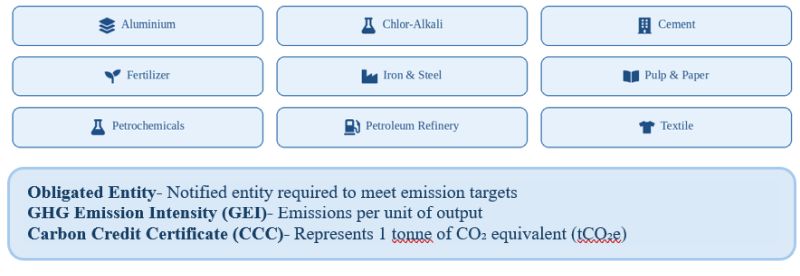
CCTS: From Emissions to Performance
Under the CCTS compliance mechanism, obligated entities are required to meet GEI targets. This means a company’s emissions are considered in relation to its output or production, rather than simply looking at how much it emits in total.
Take a simple example. A company increases production, so its total emissions also go up. But if production grows faster than emissions, it is emitting less for every unit it produces. The opposite can happen too, emissions may come down, but if production falls even more, emissions per unit can increase. That is why total emissions alone do not tell the whole story.
How Should Businesses prepare for CCTS?
- Know Where You Stand
The first step is to determine whether the company or its relevant facilities fall within the notified CCTS compliance mechanism. For covered entities, the management should know:
- Notified target for its sector
- The relevant baseline period
- The applicable unit of production
- Current emission intensity
This should become a regular management metric rather than something reviewed only during reporting.
- Build a Reliable Emissions Baseline
A company cannot manage what it cannot reliably measure. Businesses should establish an emissions baseline covering relevant Scope 1 and Scope 2 emissions, while assessing material Scope 3 categories where relevant.
For CCTS-covered entities, particular attention should be given to the data required for calculating and monitoring GEI performance. The data should be accurate, consistent, traceable and supported by appropriate records.
- Identify What Drives Emission Intensity
Once the baseline is established, the next question is: what is driving our emissions?
Figure 2: Factors Influencing Emission Intensity
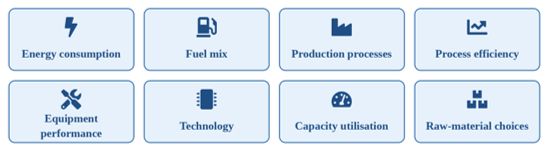
Identifying these drivers helps companies move from simply reporting an emissions number to identifying where intervention is possible.
- Identify Reduction Opportunities
The objective should not be to reduce emissions simply because a target exists. Companies should understand which interventions can improve both carbon performance and business efficiency. Potential areas may include:
Figure 3: Potential Areas for Emission Reduction
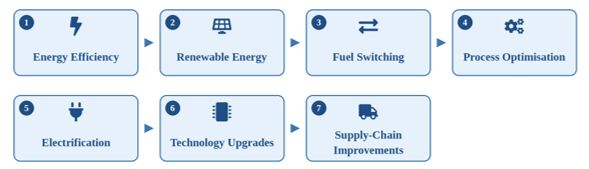
The right combination will depend on the company's sector, technology, production process and economics.
- Understand the CCTS Gap
Companies should establish a clear view of their position:
Figure 4: Understanding the CCTS GAP
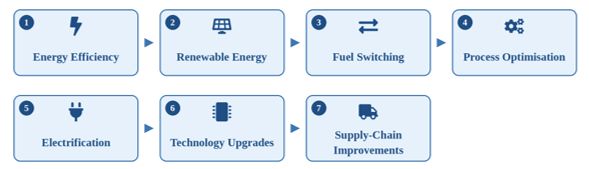
This can help management assess whether existing measures are sufficient or whether additional interventions may be required. For an obligated entity, the assessment also provides an indication of whether the company is likely to outperform its notified GEI target or face a shortfall.
Entities that perform better than their notified GEI targets may be eligible to earn Carbon Credit Certificates (CCCs). On the other hand, an entity that falls short of its target may need to purchase CCCs from the market and surrender them against its compliance obligation, in accordance with the applicable provisions of the scheme.
- Strengthen MRV and Verification Readiness
The CCTS framework includes a Measurement, Reporting and Verification (MRV) system, with annual verification of GHG emissions data and an ecosystem of Accredited Carbon Verification agencies. Companies should therefore ensure that:
- Emission calculations are documented
- Data sources are clearly identified
- Methodologies and emission factors are consistently applied
- Supporting records are maintained
- Responsibilities for data are clearly assigned
- Internal review and controls are established
- Data can be traced back to source records
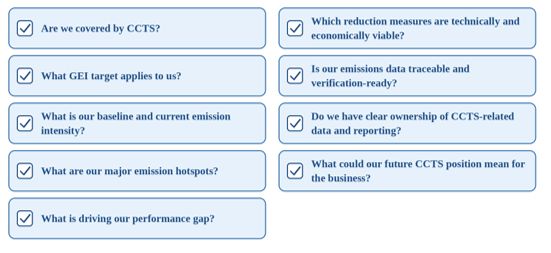
The CCTS Readiness Checklist
Before the compliance cycle becomes deadline-driven, management should be able to answer:
Figure 5: CCTS Readiness Checklist
From CCTS Compliance to Carbon Strategy
This is where CCTS preparation needs to move beyond compliance and become part of the company’s broader carbon strategy.
The biggest risk for businesses is to treat CCTS as a box-ticking exercise, limited to determining applicability, submitting data and meeting a notified target. Such an approach may address the immediate compliance requirement, but it does not help the business understand what is driving its emission intensity or how its performance can be improved.
The real value of CCTS lies in using emission-intensity data to identify practical opportunities across operations, technology and investment planning. It can help companies assess energy efficiency, process performance, technology choices, capacity utilization and decarbonisation options in a more structured manner.
Figure 6: CCTS Preparation Journey
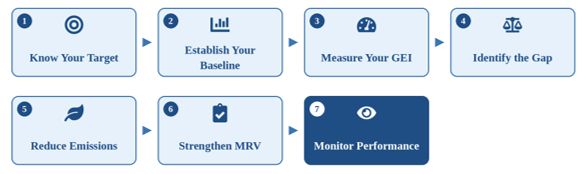
Starting early gives companies the time to understand the factors influencing their emission intensity, assess technically and economically viable reduction measures, and establish reliable data, monitoring and verification systems.
Beyond Obligated Entities: Opportunities Under CCTS
The CCTS also creates opportunities for businesses that are not covered by notified GEI targets. Through the Offset Mechanism, eligible projects that reduce, avoid or remove greenhouse gas emissions can be registered for potential issuance of Carbon Credit Certificates (CCCs), subject to the applicable requirements.
Businesses can start by identifying existing or planned initiatives with measurable emission-reduction potential and assessing whether an applicable CCTS methodology exists. The initiative can then be evaluated for its eligibility, baseline, monitoring and verification requirements. This helps businesses identify opportunities that can reduce emissions, improve operational efficiency and potentially create value through the emerging carbon market.
Footnote
1 https://www.pib.gov.in/PressReleasePage.aspx?PRID=2217239®=48&lang=2
The content of this article is intended to provide a general guide to the subject matter. Specialist advice should be sought about your specific circumstances.
