

Producers of industrial and craft products in Europe have previously faced challenges protecting their rights. Nearly six months after the introduction of a new EU system for Geographical Indications (GIs), Sherine Lara Sedfaoui asks whether GI registrations or certification marks now offer the greatest benefits to owners of high-end textile and luxury brands.
What does a name truly represent? For Murano glass or Solingen blades, the name is everything! It’s a promise of quality, a whisper of history and a guarantee of authenticity. For decades, protecting these industrial and craft treasures in Europe has been a complex legal puzzle. Now, the European Union has forged a new public shield: a unified system for Geographical Indication (GI) protection. But as the dust settles, a fascinating question emerges. In a world of high-end textiles and luxury goods, can this new public system truly replace the powerful, private guardians who have long controlled the narrative of origin? The story of the legendary West Indian Sea Island Cotton suggests the answer is far from simple.
A new dawn for Europe's artisans
After years of anticipation, the EU has finally unveiled Regulation 2023/2411, a landmark law creating a single, powerful system to protect the names of Europe’s iconic craft and industrial products. This regulation sweeps away a confusing patchwork of national laws, offering a unified, EU-wide fortress of protection for everything from traditional textiles to local stonework.
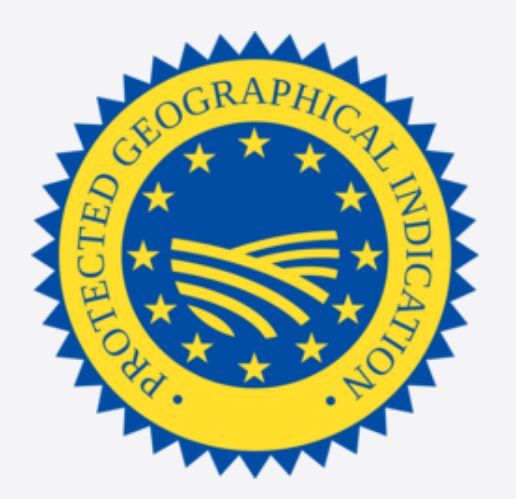
Managed by the European Union Intellectual Property Office (EUIPO), the new framework allows producer groups to apply for protection, first at the national level and then at the EUIPO. Once granted, a product earns the right to bear the official "protected geographical indication" (PGI) symbol.
The new PGI symbol
The new PGI symbol is a badge of honour signalling to consumers worldwide that a product's unique qualities are intrinsically tied to its geographical roots.
The goal is ambitious: to empower small producers, preserve priceless traditional skills, and arm consumers with a reliable guarantee of authenticity in an increasingly crowded market.
The unofficial seal: The market's own promise of authenticity
Long before Brussels forged this new shield, the market had its own guardians. This model of private control is a well-established tradition in the luxury textile industry, where authenticity is paramount.
Consider the legendary West Indian Sea Island Cotton, a textile so rare it is called the “cashmere of cottons”.
For nearly a century, its integrity has been protected not by a government, but by a private entity: the West Indian Sea Island Cotton Association (WISICA). Established in 1932, WISICA inspects and certifies every single kilogram, ensuring its precious origin is never compromised.
WISICA is indeed in good company.
Harris Tweed
Think of the iconic Harris Tweed, whose famous Orb mark is a legally protected certification of origin:
This mark guarantees that the fabric has been handwoven by islanders in their homes in the Outer Hebrides of Scotland, using pure virgin wool. This protection is so absolute that it is enshrined in its own Act of Parliament, functioning as a private certification managed by the Harris Tweed Authority.
Woolmark
Similarly, the globally recognised Woolmark logo, owned by Australian Wool Innovation, doesn't just signify a place: it certifies that a product is made from 100% new wool and has passed rigorous quality tests.
Egyptian Cotton
More recently, the Egyptian Cotton™ mark, managed by the Cotton Egypt Association, uses cutting-edge DNA testing to verify that its products are made from authentic, unblended Egyptian cotton, fighting a rampant counterfeit market.
The common thread is undeniable: these powerful private associations have successfully "privatised" a geographical origin or a quality standard, creating and defending billion-dollar brands through meticulous control and building global consumer trust where public systems did not suffice.
Public shield or private sword? Why certification marks endure
With the advent of the public GI system, one might assume that private initiatives like WISICA are destined to become relics. However, the private certification trademark, authorised under the EUTMR 2017/1001, remains a formidable and arguably superior tool for several key reasons.
First, a certification mark is a precision instrument. While a public Geographical Indication protects the fundamental link to a geographical area, a private association can set and enforce standards that are far more stringent and specific. WISICA's control over every kilogram is a level of scrutiny a broad public system may struggle to match. A private mark can also certify attributes beyond geography, such as unique ethical or sustainability practices, giving it a powerful edge in the modern consumer market.
Second, trademarks are globally agile. A well-established certification trademark often carries a legacy of global recognition that a new GI symbol will take years to build. Furthermore, a trademark is a flexible asset that can be registered and defended directly in key markets across the globe, from New York to Tokyo, offering a more direct and often faster route to worldwide protection than navigating international GI treaties.
Finally, a private association holds the reins of its own destiny. It can manage its brand, adapt its marketing, and respond to market threats with a speed and focus that a large public body cannot. For an ultra-niche, luxury product, this absolute control is not just a benefit, but the essence of its commercial strategy.
Final considerations: An era of strategic choice
The EU's new GI regulation is a monumental achievement that will undoubtedly become a vital shield for countless European artisans. It provides a clear, unified, and publicly backed system to protect the integrity of products whose value is tied to their home.
The enduring power of brands like Harris Tweed and the West Indian Sea Island Cotton still proves that the "privatisation" of origin through a certification trademark is not going away. They remain a sharp and effective sword, offering an unparalleled level of control, global agility, and brand stewardship.
This is indeed not a moment of replacement, but of expansion. The challenge now is to masterfully choose the right tool for the right product. In this new era, the battle for origin is not over; it has just become far more interesting.
The content of this article is intended to provide a general guide to the subject matter. Specialist advice should be sought about your specific circumstances.
[View Source]