- with Finance and Tax Executives
- with readers working within the Accounting & Consultancy, Aerospace & Defence and Securities & Investment industries
Download a PDF copy of this Blog here.
The GST/HST framework under the Excise Tax Act (“ETA”), as with other indirect tax regimes (like federal and provincial alcohol, tobacco and vaping taxes) includes “directors’ liability” provisions that are triggered when the corporation does not have the money to pay an assessed amount. Most of these systems have “statutory limitation rules” and “due diligence defences” which may limit liability, but these rules are extremely tricky to apply in practice.
We review these in a two-part series here, with reference to the helpful recent case Stevens v. The King, 2026 TCC 76 (“Stevens”), which revolves around this directors’ liability framework.
This Report concerns the “statutory limitation rules”. For our companion Report on the “due diligence defence”, click here.
Directors’ Liability Overview
Section 323 of the ETA imposes personal liability on directors for unremitted GST/HST obligations of the corporation, including net tax, penalties and interest. It prevents corporations from collecting GST/HST from customers and then failing to remit those amounts to the CRA while insulating directors behind the corporate veil.
In practice, the CRA will pursue directors only after exhausting collection efforts against the corporation itself – and only after it satisfies certain procedural requirements.
One procedural requirement is that for a former director to be made personally liable for a corporation’s tax debts, the underlying Notice of Assessment (“NOA”) must have been issued within two years after that former director last ceased to be a director.
The Stevens Decision
In Stevens, the appellant sought to avoid personal liability for his corporation’s unremitted GST/HST of $704,243, arguing that the two-year limitations period was over.
His primary argument was that he had resigned as director more than two years before the issue date of the relevant NOA, meaning the statutory limitations period for his personal liability was over.
The Court rejected this argument, finding that the appellant had not, in fact, resigned when he said he did. The Court emphasized that the status of directors “must be capable of objective verification”, whereas this appellant could not provide real evidence that he had indeed resigned when he claimed that he did. His testimony lacked credibility, and he provided no reliable evidence to support it.
Stevens shows that the directors’ liability regime cannot easily be avoided by claiming that one was not a director at the relevant time. Such a claim must be accompanied by real evidence – or else.
Takeaways
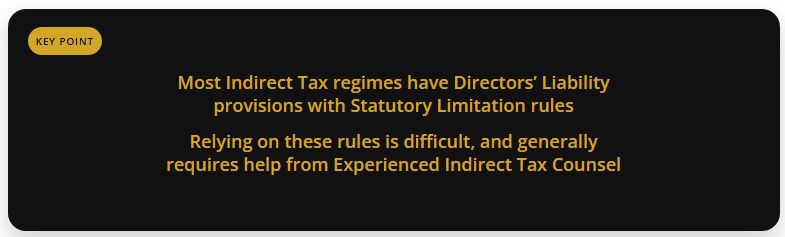
Directors of corporations that do not remit GST/HST may be held personally liable for the corporation’s back taxes, but a former director can only be held personally responsible if the underlying NOA was issued within two years after that former director last ceased to be a director.
Relying on the statutory limitations rules to avoid personal liability is difficult. Concerned parties are encouraged to contact Experienced Indirect Tax Counsel for help.
For help with Indirect Tax Issues, please click here.
The content of this article is intended to provide a general guide to the subject matter. Specialist advice should be sought about your specific circumstances.
[View Source]