- within International Law topic(s)
At its annual Employment Law Symposium, Ward and Smith, P.A. invited North Carolina Labor Commissioner Luke Farley to share how employers can navigate the shifting landscape of workplace regulations, along with his vision for the future.
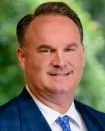
Commissioner Farley is the youngest Labor Commissioner to be elected in a century and the youngest sitting member of North Carolina's Council of State. His mission is to make North Carolina the safest place to work and the best place to do business – creating an environment where, in the words of North Carolina's State Toast, "the weak grow strong and the strong grow great."
Before entering public service, Commissioner Farley spent 14 years in private practice, focused on workplace safety law. A graduate of UNC-Chapel Hill and Wake Forest University School of Law, he is committed to protecting workers and creating more job opportunities across the state.
The discussion was moderated by Avery Locklear, a labor and employment attorney, and Will Oden, a North Carolina Board Certified Specialist in Employment Law.
"I am always impressed when someone leaves a thriving career to enter public service," said Oden. "What inspired you to do that?"
"I spent thousands of hours building my practice and enjoyed being an attorney, but I felt there was a higher calling for me," Commissioner Farley explained. "I wanted to do something with my life that would have a bigger impact on the state and society as a whole, and public service was the way to do that." When discussing the role of Labor Commissioner, he stated that he "thought it was important for someone with real-world experience to be in the role," and that he "could bring a unique insight to the position."
Growth vs. Enforcement
The North Carolina Department of Labor has to maintain a delicate balance between enforcing regulations and the need to create an environment where the economy can thrive. "Businesses create jobs, but the workers keep businesses running. If you favor one side or the other too much, everything gets thrown out of balance," commented Commissioner Farley.
Farley, drawing on his private and public sector experience, volunteered that many employers that fail to follow the rules and regulations do so due to a lack of awareness. "I am an optimist," and "see the folks that don't look after their employees as a minority," Commissioner Farley observed.
The complexity of state and federal regulations presents an obstacle for many employers. "Especially for small businesses, many just don't have the resources," explained Commissioner Farley. "My role is to connect them to the resources they need and achieve compliance. We educate before we regulate, however, for the bad apples that are out there, we are not afraid to issue citations."
Nuances of Public Sector Leadership
Commissioner Farley is looking to infuse the culture of the Department of Labor with a service-oriented approach. "The employees we protect and the businesses we regulate are essentially customers of the department," he said. "The workers are protected by regulations, and the employers can benefit from taking advantage of our educational programs."
Motivating employees can be a challenge, as unlike the private sector, performance-based incentives do not exist. Further, the process for terminating an employee can be extremely lengthy and bureaucratic.
"I'm working on instilling a sense of mission into our workforce. Part of this means being present for everyone, so I've been traveling around the state to chat with people," added Farley. "This also means I want to know if our employers or stakeholders have an interaction that is less than professional." Commissioner Farley then provided his personal cell phone number to audience members for that purpose.
The structure of the North Carolina Department of Labor also impacts the type of services it provides to employees and employers. North Carolina is one of only four states in the nation with an elected labor commissioner; it is the only independent Occupational Safety and Health Administration ("OSHA") State Plan state with an elected labor commissioner.
"What this means is the federal government makes the regulations, but the elected Labor Commissioner enforces them...we've opted out of federal enforcement," explained Commissioner Farley. "That's great for our businesses, because instead of dealing with bureaucrats in Atlanta or Richmond, you can talk to me. You have my cell phone."
Consultative Services
"I like the 'educate before regulate' idea," said Locklear.
"The on-site consultative services program is the best tool we have at the Department to build safer workplaces. It's free, and there's a firewall between our investigators and the consultative services arm. Basically, we want people to feel comfortable using the service, so that it will not result in a compliance inspection," Commissioner Farley added.
Employers can take advantage of the consultative services offering by inviting NCDOL to their workplace. While there, department staff evaluate the workplace to identify potential issues that are not up to standards. If an identified issue is corrected within a certain time frame, there is no citation.
"I know from my private practice that the idea of inviting the Department of Labor into the workplace may sound a little crazy," joked Commissioner Farley. "But I think about it like you can do something the easy way or the hard way. OSHA can randomly show up and issue a citation if something is wrong, or you can be proactive and reach out to consultative services."
Commissioner Farley is focused on partnering with businesses to remedy potential hazards: "We are more interested in building collaborative relationships instead of something more adversarial."
Oden: "For employers that participate in the consultative services program, do they receive any sort of safe harbor protection?"
"There's not a legal safe harbor if there is a violation that occurs after a consultative visit; however, there is a credit provided for citations and penalty amounts," explained Commissioner Farley. Arranging for a consultative services visit is treated as a show of good faith. "We want to incentivize the use of these programs," added Commissioner Farley.
In addition to on-site consultative services, Commissioner Farley mentioned the Carolina Star Program. The Carolina Star Program is a safety recognition and certification program that does provide safe harbor for employers that participate. Only 146 employers have earned the certification out of a total of around 300,000 employers across the state, making it the Department of Labor's highest level of recognition.
Because the process to receive the certification is extremely rigorous, employers that make it into the program are exempt from random inspections. "This is great PR," notes Commissioner Farley, "since it shows you value your employees and are going above and beyond to ensure their safety."
Informal Conferences
However, if employers are ever investigated and subsequently cited by the Department of Labor, participating in an informal conference is another strategy that employers should consider. The term refers to an opportunity to have a discussion with the Department after receiving a citation.
"Avery and I always recommend doing this. If nothing else, it's a great education," advised Oden, and "[i]t helps with building relationships" with the Department personnel.
Commissioner Farley has a strong belief in the value of informal conferences: "I told my staff they should make all reasonable efforts to resolve matters in an informal conference, and that every settlement offer proposed by an employer should get a response."
In the past, settlement offers would not receive a counter if the terms were too far away from what the Department viewed as reasonable. "We respect it if someone makes a settlement offer and responds with a counter," Commissioner Farley commented. "Employers should take advantage of this opportunity, especially under my administration. It can help avoid costly litigation."
Future Goals
Moving forward, Commissioner Farley would like the Department to be viewed as a fair, balanced agency – one that listens to the concerns of both employers and employees. Providing exceptional customer service to all stakeholders is another strategic objective.
Reducing fatality rates is paramount to Commissioner Farley and the Department. Currently, the number one cause of workplace fatalities are workers being struck by equipment, a statistic that Commissioner Farley believes may be due to the rise of warehousing and e-commerce in North Carolina.
"To reduce those injuries, we're starting an alliance program with key industry partners," Commissioner Farley explained.
Employers may be able to sleep more easily knowing it is unusual for the Department to share information with other agencies. "I don't go out of my way to share and I don't think OSHA matters should be tied up in some other matter," mentioned Commissioner Farley. "Of course, if I have a legal obligation to provide information, I will provide it."
Essential Guidance
Commissioner Farley's advice for employers is to be cooperative, collaborative, and transparent. "If the OSHA investigators get the sense you're hiding something, their approach to the matter will change," he commented. "Our inspectors are passionate about workplace safety. They will push very hard to find something if they think you're being evasive, and I don't restrain them from that."
Further, Commissioner Farley wants people to know the Department is focused on being collaborative and promoting common sense regulations: "My job is to protect workers, but workers are only workers if they have jobs."
Conclusion
Commissioner Farley's presence energized the Employment Law Symposium, and attendee reviews show a wide appreciation for his candor, humor, and leadership of the Department of Labor. For additional information, visit the NC DOL website at https://www.labor.nc.gov/.
The content of this article is intended to provide a general guide to the subject matter. Specialist advice should be sought about your specific circumstances.