- with Senior Company Executives and HR
- with readers working within the Banking & Credit and Insurance industries
Employee Entitlement Scheme (“EES”) operators must apply for an AFSL by 1 September 2026. This means you must have lodged your AFSL application through the ASIC Regulatory Portal on or by 1 September 2026 in order to continue to operate the EES beyond this date.
1. What is an EES?
An EES is a scheme where employers make contributions the primary objective of the scheme is to:
- fund any of the following:
- benefits payable upon terminating an employee’s employment;
- long-service leave entitlements for employees; and
- fund other entitlements for employees that are incidental to employment.
2. I operate an EES. Do I need to apply for an Australian Financial Services Licence (“AFSL”)?
In short, yes.
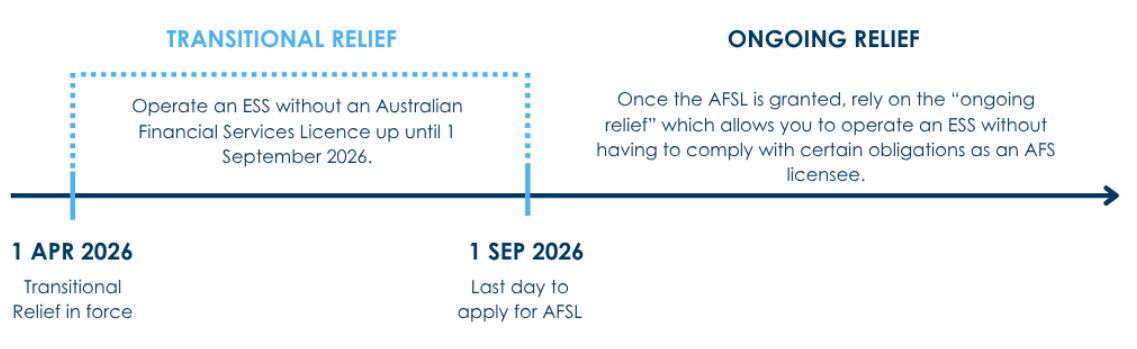
The ASIC Instrument allows you to operate an EES without an AFSL up until 1 September 2026. However, EES operators must apply for an AFSL by 1 September 2026. This means you must have lodged your AFSL application through the ASIC Regulatory Portal on or by 1 September 2026 in order to continue operating the EES beyond this date. This is known as the “transitional relief”. The transitional relief continues until ASIC makes a decision about your licence application.
3. Do I need to notify ASIC that I am relying on the transitional relief?
Yes, if you are relying on the transitional relief, you must do the following
- Notify ASIC by emailing them (notifications@asic.gov.au) within fourteen (14) days of first relying on the relief and provide:
- name of your EES;
- name of the operator of the EES; and
- date you first relied on the transitional relief.
4. Do I need to do anything else other than notify ASIC that I am relying on the transitional relief?
Yes. While relying on the transitional relief, you will need to:
- maintain an internal dispute resolution system to handle complaints made by members of the EES. Although you are not required to comply with the requirements set out in ASIC Regulatory Guide 271: International dispute resolution (“RG 271”) while you rely on the transitional relief, you will be required to comply with RG 271 once you obtain your AFSL (and if you are providing services to retail clients). Sophie Grace’s Dispute Resolution Policy has been developed to address the requirements set out in RG 271;
- do all things necessary to ensure you act efficiently, honestly and fairly in operating the EES;
- have adequate arrangements to manage conflicts of interest that arise or relate to activities you undertake in operating the EES;
- ensure the property of the EES is clearly identified as the EES property, held by you or the custodian on trust for the members of the EES, and held separately from any of your property or other MISs;
- keep written financial records that:
- accurately record and explain the EES’s transactions, financial position and performance;
- enables you to prepare and audit true and fair financial statements for the EES.
- publish information the EES’s financial statements (balance sheet, profit and loss statement, cash flow statement, notes to the statements (if any) and any reports prepared by an auditor in relation to the statements (if any)) in a prominent position on your website.
AFSL Applications
5. If I fail to lodge an AFSL application by 1 September 2026, will I still be able to operate my EES?
No, you will not be able to operate your EES beyond this date. If you fail to submit an AFSL application by 1 September 2026, you cannot rely on the transitional relief and must cease operating your EES.
Further, if you apply for an AFSL on or before 1 September 2026 and:
- ASIC subsequently refuses your application; or
- you subsequently withdraw your application;
you cannot rely on the transitional relief and must cease operating your EES.
6. What type of authorisations should I include in my AFSL application?
ASIC’s guidance is that because an EES is an unregistered MIS, applicants should include some, or all, of the following authorisations:
- provide general financial product advice for the following classes of financial products:
- interests in MIS limited to EES only; and
- deal in a financial product by:
-
- issuing, varying or disposing of a financial product in respect of the following classes of financial products:
- interests in MIS limited to EES;
- issuing, varying or disposing of a financial product in respect of the following classes of financial products:
- provide the following custodial or depository services:
- operate custodial or depository services other than investor directed portfolios services.
Note: The AFSL application form on ASIC’s Regulatory Portal may not include the interest in MIS limited to EES option. In this case, you will need to select the interest in MIS excluding investor directed portfolios services (“IDPS”) authorisations. ASIC will then tailor the authorisations to be limited to EES once it grants you the AFSL.
Further, you will need to consider whether you will also be providing financial services in relation to other financial products. For example, as the operator of the EES, you may be investing in securities as part of operating the EES. In this instance, you will also need to apply for the relevant authorisations to advise and deal in relation to securities.
7. What information do I need to provide to ASIC when applying for an AFSL application?
Similar to any other AFSL application, you must be prepared to explain the following in your AFSL application:
- how you intend to operate your EES;
- how the key people, such as your Responsible Managers and fit and proper people demonstrate organisational competence;
- the type of financial services and products you will provide, and whether these will be provided to retail and/or wholesale clients;
- how you intend to generate income and the various fees that you will charge;
- your anticipated business growth and forecasted revenue;
- the channels you will use to distribute your products and services;
- how you will deliver financial services;
- how you will ensure compliance with your licence obligations;
- the financial service-related functions that will be outsourced; and
- your custody activities and any custody agreements in place (if any).
Sophie Grace has a range of documents and proofs that you can purchase through the Sophie Grace Shop to assist with preparing your AFSL application.
8. Who should be nominated as the Responsible Manager (“RM”) on the AFSL application?
You will need to nominate someone who can demonstrate they have the experience and qualifications to support the operation of an EES.
In addition to the requirements set out in ASIC Regulatory Guide 105: AFS licensing: Organisational competence, ASIC’s guidance states :
- at least one (1) RM must have relevant experience in providing or supervising financial services within the existing AFSL regime i.e. they have worked in an organisation, for three (3) out of the last five (5) years or five (5) out of the last eight (8) to ten (10) years, that has an AFSL and is authorised to operate a MIS; and
- one (1) or more RMs can be nominated that has relevant industry experience providing or supervising services in relation to an EES that was relying on the relief under the ASIC Instrument.
You can read more about this here.
Ongoing Obligations
9. Once I obtain my AFSL, what are my obligations?
Once ASIC grants you an AFSL, you are subject to the same obligations as any AFS licensee. This includes complying with:
- the core obligations (s 912A), submitting an AFSL audit (s 989B), and having adequate compensation arrangements where services are provided to retail clients (s 912B);
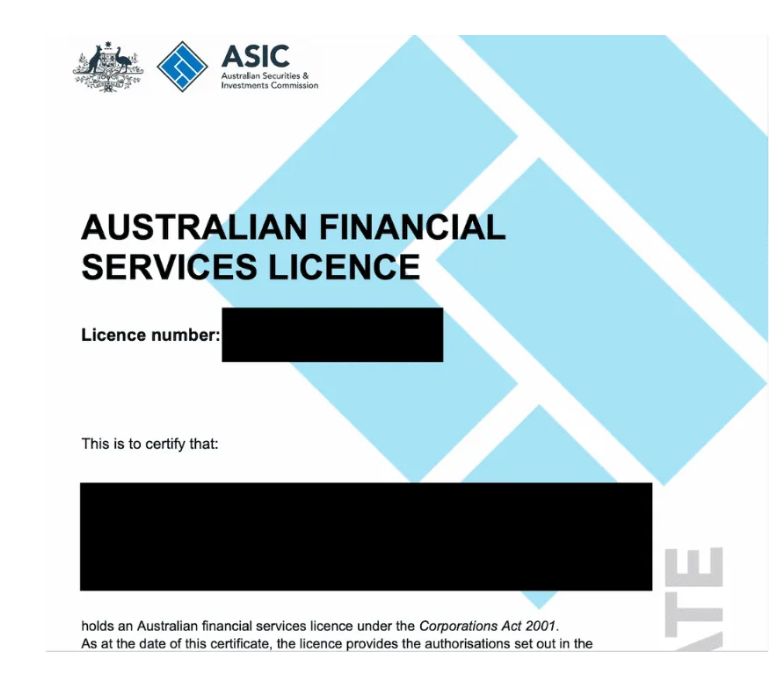
- your AFSL conditions which are listed on the final AFSL documents that ASIC issues (screenshot below); and
- comply with conditions imposed under the ongoing relief in the ASIC Instrument (refer to FAQ 11).
10. Is there relief available once my AFSL is granted?
If ASIC grants you an AFSL, you can rely on the “ongoing relief” which allows you to operate an EES without complying with the following:
- the requirement to register the EES with ASIC;
- provide product disclosure statements in relation to interests in the EES;
- design and distribution obligations (s1100ZC); and
- the prohibition on hawking of financial products, meaning interests in the EES can be offered to employees as a result of unsolicited contact.
11. What are the conditions imposed under the ongoing relief?
The conditions for taking advantage of the ongoing relief for EES’ require you to meet the following obligations:
| Care and Diligence | • Perform your obligations in relation to the EES with the degree of care and diligence that a reasonable person would exercise if they were in your position • Do all things necessary to ensure you act efficiently, honestly and fairly in operating the EES |
| Conflicts Management | Have adequate arrangements to manage conflicts of interest that arise or relate to activities you undertake in operating the EES. |
| Competence and Training | • Maintain competence to operate the EES • Ensure your representatives are adequately trained, and are competent to operate the EES |
| Dispute Resolution | Maintain an internal dispute resolution system to handle complaints made by members of the EES that complies with the requirements set out in RG 271 (refer to Sophie Grace’s Dispute Resolution Policy template). |
| Risk Management | Ensure you have adequate risk management systems in place and one that is adequate for managing the risks associated with operating an EES. |
| Holding Scheme Property | Ensure the property of the EES is clearly identified as the EES property, held by you or the custodian on trust of the members of the EES, and held separately from any of your property or other MISs. |
| Treatment of members | • Treat members who hold interests in the EES of the same class equally, and members who hold interests of different classes fairly • Give priority to the interests of members of hold interest in the EES, where there is a conflict between your interest and the members’ interest in the EES |
| Website information | Within fourteen (14) days of first relying on the ongoing relief, include and maintain a clear and prominent explanation on your website regarding the following matters about the EES: • how the contributions to the EES will be used • how the income derived, directly or indirectly, from contributions or other EES property will be used • the rights of members holding interests in the EES to receive payments from EES property • the availability and location of the annual financial reports and auditor’s reports • any significant risks associated with holding an interest in the EES • any of your rights or an associate to be paid fees out of the EES property • any agreements or arrangements made which a benefit may be given out of the EES property to you or an associate • how complaints made by members of the EES in relation to the operation of the EES will be dealt with |
| ASIC notification | Notify ASIC in writing that you will be relying on the ongoing relief and provide the name of the EES, within fourteen (14) days of first relying on the ongoing relief. |
| Financial reporting | • Prepare annual financial reports for the EES for each EES financial year • Have the annual financial report audited by a registered company auditor and obtain an auditor’s report • Make each annual financial report and auditor’s report publicly available in a prominent position on your website within four (4) months after the end of the relevant EES financial year * The requirements above in relation to the annual financial report for the EES needs to be completed in addition to the requirement to complete your AFSL audit. |
| Record keeping | • Accurately record and explain the EES’s transactions, financial position and performance, and enables true and fair • Enable true and fair financial statements for the EES to be prepared and audited |
Background
ASIC’s new legislative instrument, ASIC Corporations (Employee Entitlement Schemes) Instrument 2026/199 (“ASIC Instrument”) commenced on 1 April 2026.
Further Reading
ASIC Corporations (Employee Entitlement Schemes) Instrument 2026/199
ASIC Information Sheet 295: Employee entitlement schemes
ASIC Regulatory Guide 105: AFS licensing: Organisational competence
The content of this article is intended to provide a general guide to the subject matter. Specialist advice should be sought about your specific circumstances.
[View Source]