

On September 1st, the Texas Supreme Court officially closed out its 2025–26 term, and it did so with significant numbers: I count 143 opinions resolving 110 cases with 58 oral arguments. (That’s about 1.3 opinions per decided case.) Here’s how those figures further break down: 56 were signed majorities, 28 were per curiam, and 60 were separate writings (i.e., concurrences, dissents, and statements respecting a particular disposition). Those figures are fairly consistent with the prior two terms, with a noticeable jump in the number of separate opinions this term:
| Metric | 2025-26 Term | 2024-25 Term | 2023-24 Term |
| Total Opinions | 143 | 147 | 157 |
| Total Cases | 110 | 118 | 126 |
| Oral Arguments | 58 | 61 | 62 |
| Per Curiam | 28 | 41 | 44 |
| Signed Majority | 56 | 65 | 68 |
| Separate Opinions | 60 | 46 | 47 |
Interestingly, the Court answered only one certified question from the Fifth Circuit (compared to 5 each the prior two terms). Mandamus proceedings stayed consistent, however, with 16 this term of the decided cases (compared to 19 last term and 15 before that).
Subject matter
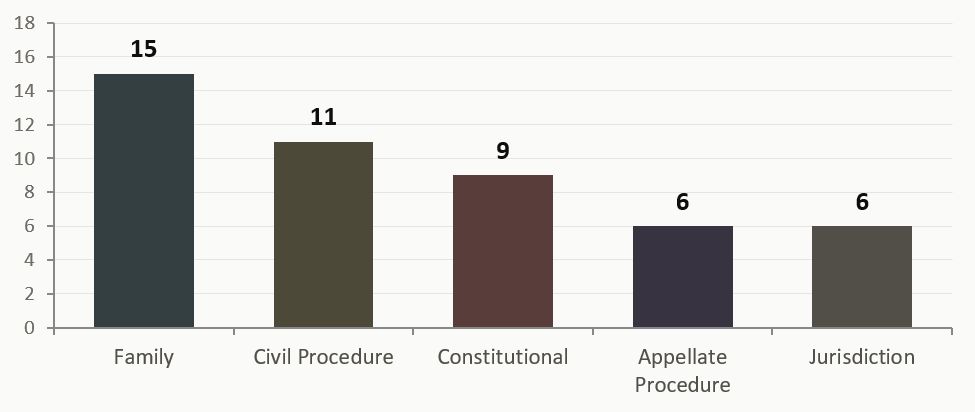
I also tracked the various categories of subject matter written on this year. The leading categories were family law, civil procedure, constitutional law, appellate procedure, and jurisdiction:
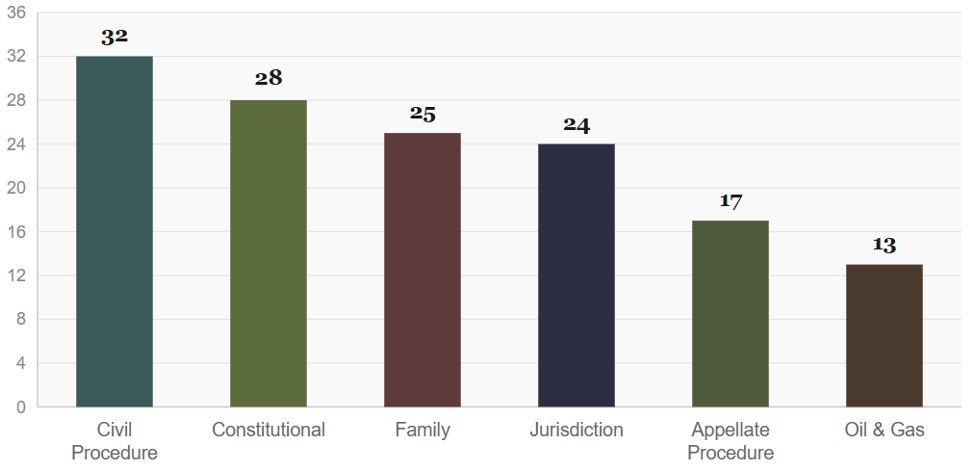
Unsurprisingly, there are shifts in subject-matter focus when zoomed out to encompass the prior two terms as well:
Timing
I also crunched the numbers on several timing metrics, counting (1) how many days passed between the filing of the petition for review and opinion publication and (2) oral argument and opinion publication:
- For all opinions issued this term, both merits and non-merits, the average time from filing the petition for review to the issuance of the opinion was 511 days (i.e., 1 year and 5 months).
- That’s 2 days longer than last term and 14 days longer than the term before that.
- For all opinions issued in merits cases, the average time from filing the petition for review to opinion publication was 552 days.
- That's 15 days longer than the prior term and 34 days longer than the term before that.
- For opinions issued in non-merits cases (i.e., dissents, concurrences, and statements respecting the denial of a PFR), the average was 324 days.
- For per curiam opinions, the average from filing the petition for review to issuance of the opinion was 518 days.
- That’s 63 days longer than last term and 81 days longer than the term before that.
- The average time from oral argument to the issuance of the opinion was 142.5 days (i.e., about 4.5 months).
- That’s 1.5 days longer than last term (141) and 4.5 days longer than the term before that (138).
Merits Cases by Court of Appeals
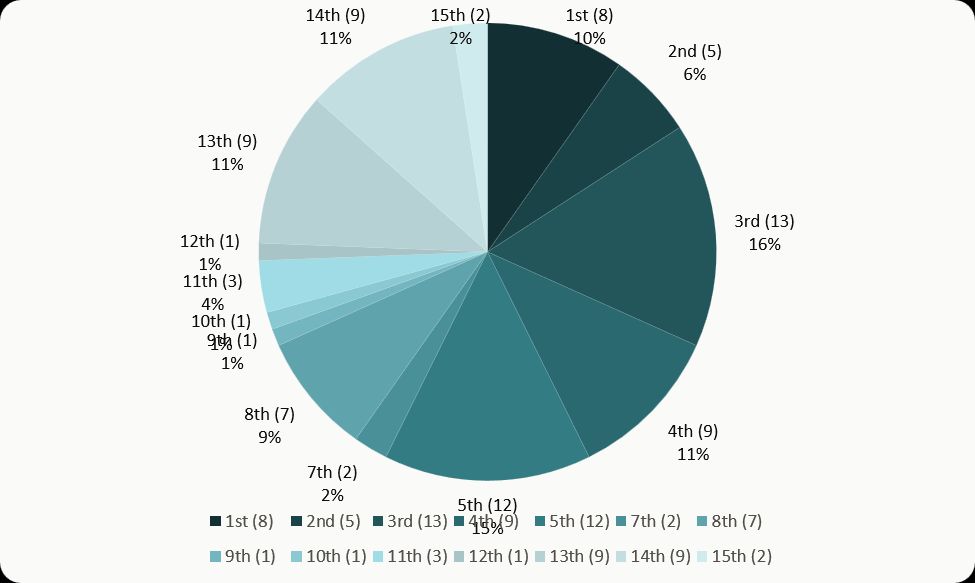
The distribution of cases among the courts of appeals remained roughly similar to prior terms, with the usual leaders being the Third, Fifth, Fourth, Fourteenth and First Courts of Appeals, in that order:
And below is a chart showing the various reversal rates of each court of appeals, comparing the prior two terms and their averages:
|
Court of Appeals |
2023-24 Term | 2024-25 Term | 2025-26 Term | # of Cases | Avg Reversal Rate |
| First (Houston) | 80% | 77% | 100% | 22 | 85.67% |
| Second (Fort Worth) | 75% | 100% | 100% | 13 | 91.67% |
| Third (Austin) | 76% | 100% | 84% | 36 | 86.67% |
| Fourth (San Antonio) | 70% | 100% | 88% | 23 | 86% |
| Fifth (Dallas) | 87% | 85% | 83% | 50 | 85% |
| Sixth (Texarkana) | 100% | 100% | N/A | 3 | 100% |
| Seventh (Amarillo) | 83% | 83% | 100% | 14 | 89% |
| Eighth (El Paso) | 90% | 75% | 85% | 25 | 83.33% |
| Ninth (Beaumont) | 83% | 100% | 100% | 8 | 94% |
| Tenth (Waco) | 100% | 100% | 100% | 6 | 100% |
| Eleventh (Eastland) | N/A | 100% | 100% | 4 | 100% |
| Twelfth (Tyler) | 100% | 100% | 100% | 3 | 100% |
| Thirteenth (Corpus Christi–Edinburg) | 100% | 71% | 100% | 20 | 90% |
| Fourteenth (Houston) | 92% | 92% | 88% | 27 | 91% |
| Fifteenth | N/A | 50% | 100% | 5 | 75% |
Geography
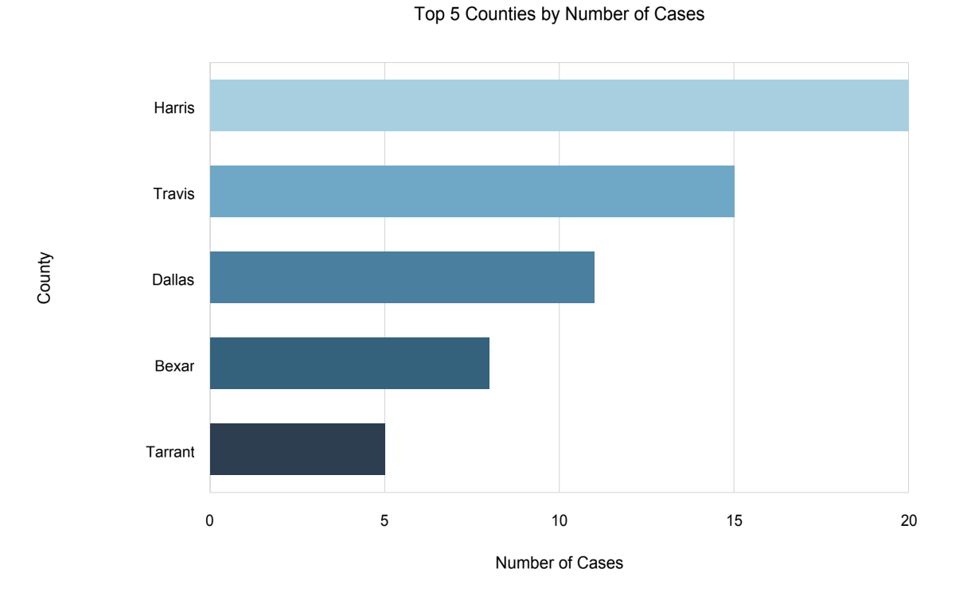
The term’s cases originated overwhelmingly in Texas's largest counties. Harris County supplied 20 cases, Travis 15, Dallas 11, Bexar 8, and Tarrant 5. Those five counties account for 59 of the 110 cases, or roughly 54% of the docket.
Opinion Counts by Justice
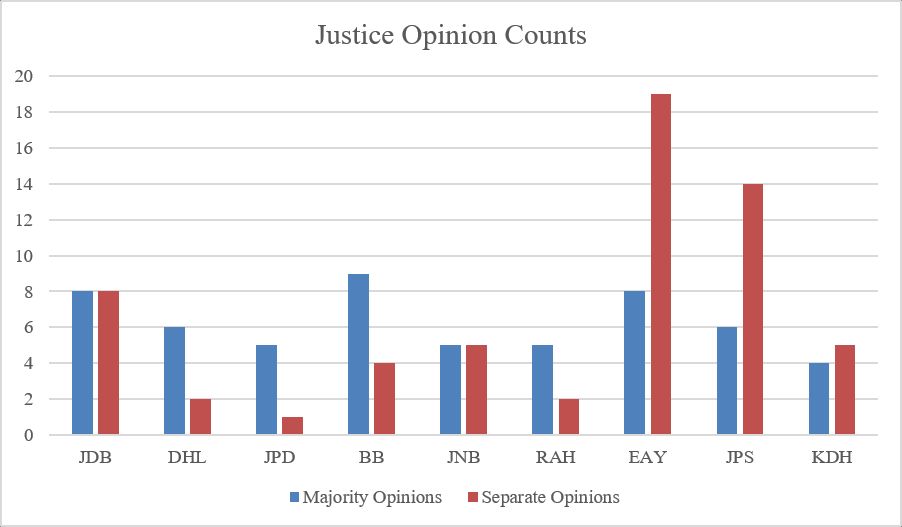
The distribution of majority opinions this term was relatively even, though not as even as prior terms, so there may have been some majority-opinion stealing this term. There were, however, large discrepancies in the number of separate writings (which I've categorized as any opinion not a majority opinion):
A few concluding thoughts
- We continue to see an increase in the number of separate opinions (mostly concurring) written by the Justices. Several of these opinions take issue with precedent and suggest that overruling, or at least revisiting, them may be necessary (a subject for another post). And since tracking opinion data the past few terms, I've had to create a new category this term: “statements regarding” the disposition of a petition for review. I count 5, and as Don Cruse recently observed, “a majority of the Court’s members joined some kind of ‘statement regarding’ the denial of a long-pending mandamus petition” this term.
- While the Court once again cleared its oral-argument docket at the end of June, getting opinions out this term slightly lagged compared to prior terms. I suspect it is partly because the Court is in the midst of implementing new rule changes, treating one set of petitions under the old rules and another set under the new rules. Once the new rules govern all the pending petitions at the Court, we will probably see some efficiency gains, and particularly in the time between the filing of the petition for review and disposing of it (one way or another).
- There were noticeably fewer per curiam opinions this term: 28 compared to 41 last term and 40 before that. And the per curiam opinions issued this term took longer to get out compared to prior terms. Query whether the Court's new petition practice, through which it now issues per curiam decisions without requesting full merits briefing, will not only slow down the vetting process for assessing per curiam-worthy cases but also reduce the Court's per curiam docket in future terms. Only time will tell.
Those who want to explore the data themselves can access my spreadsheet here: 2025-26 Term - Google Sheets
The content of this article is intended to provide a general guide to the subject matter. Specialist advice should be sought about your specific circumstances.
[View Source]