

This year marks the American semiquincentennial, a celebration of 250 years since the signing of the Declaration of Independence. If you have received a patent or trademark registration this year, you may have noticed something new on the paperwork. The USPTO has been issuing redesigned patent eGrant covers and trademark registration certificates stamped with a special “250” logo (the product of an agency-wide design contest). But a commemorative seal is far from the only way that the United States is utilizing the Patent and Trademark Office for this historic event. And as it turns out, the branding of America’s anniversaries is a good window into the evolution of trademark law. So, let’s take a brief trip back in time to see how these anniversary celebrations, and the intellectual property protections surrounding them, have changed over the years.
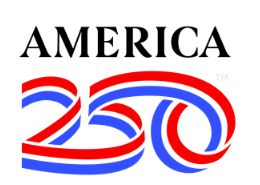
Starting with this year’s celebration, the official mark of America’s 250th anniversary is AMERICA 250®. The wordmark was filed back in 2019 by the United States Semiquincentennial Commission, a nonpartisan body created by Congress back in 2016 for the purpose of planning the anniversary. The Commission treats its trademark like any sophisticated brand owner would. The Commission runs a formal licensing program to sign dozens of official licenses across apparel, coins, and collectibles. These licenses collect royalties that fund the anniversary programming. The Commission is also quick to issue cease-and-desists in response to businesses trying to free-ride on the AMERICA 250® branding. This brand strategy is not without controversy from the public, however, as some have taken it upon themselves to set up online petitions and file opposition proceedings to cancel the wordmark. According to challengers, the mark is descriptive and so interlinked with the national celebration that it shouldn’t be anyone’s to control. Whatever your view, it’s a thoroughly modern trademark story: a federally recognized owner, a licensing apparatus, and disputes over the scope of rights in a descriptive-sounding term.
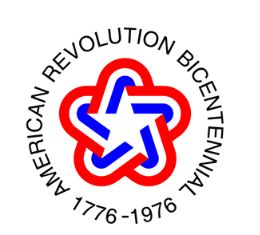
Rewind fifty years and the landscape looks different. The 1976 Bicentennial didn’t center on a specific wordmark, but on a symbol. A white star nestled inside a swirl of red, white, and blue ribbon adorned much of the iconography for the 200th anniversary. Created by Bruce Blackburn, who designed the iconic NASA logo, the symbol was protected not by USPTO registration, but through a targeted federal regulation that gave enforcement powers to the American Revolution Bicentennial Administration (ARBA). ARBA did not mess around either. It ran a symbol licensing program and kept active cease-and-desist files for unauthorized users. Shirking traditional trademark registration in favor of empowering federal agencies was in line with the times, as the 1960s and 70s saw a trend of growing power and influence of administrative agencies.
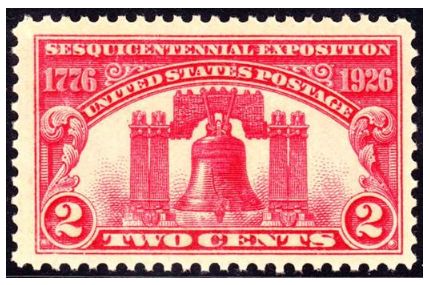
Going back another 50 years, the concept of any protection of the 150th anniversary’s branding essentially evaporates. The celebration was marked primarily by a 1926 world’s fair in Philadelphia, known as the “Sesqui-Centennial International Exposition.” The celebration was organized by a privately incorporated association rather than a federally established commission. There was no government-owned registered wordmark to speak of, and no national licensing machinery. This was in part because the legal toolkit we know today simply was not established at the time. The Lanham Act, which governs much of modern trademark law, was not passed until 1946. Instead, any brand protection back then had to rely on the comparatively weak Trademark Act of 1905. Given Philadelphia’s central role in the anniversary, the de facto logo of America’s 150th birthday was the Liberty Bell. With no legal protections on the symbol, vendors were free to slap the symbol on souvenirs, watch fobs, and flags.
So, when you see the AMERICA 250® symbol, know that it represents an evolution in the way that the United States has learned to treat its own anniversary as a brand worth protecting. Happy 250th!
The content of this article is intended to provide a general guide to the subject matter. Specialist advice should be sought about your specific circumstances.
[View Source]