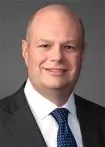
Federal Deposit Insurance Corporation ("FDIC") Vice Chair Travis Hill gave a speech earlier this week, titled "Recent Bank Failures and the Path Ahead," at the Bipartisan Policy Center. The speech appears to be Vice Chair Hill's first public speech since taking office in January. Vice Chair Hill is one of the two Republican members of the FDIC Board that President Biden first announced his intent to nominate in September 2022 and which we reported on at the time.
Vice Chair Hill discussed the recent failures of Silicon Valley Bank ("SVB") and Signature Bank, as well as the self-liquidation of Silvergate Bank. He noted that all three were basically classic bank runs precipitated by rising interest rates and apparent poor interest rate risk management. However, he highlighted that the difference in the most recent bank failures is the speed with which they occurred, noting SVB's $42 billion one-day outflow of deposits compared to $2.8 billion peak outflow from the failing Washington Mutual in 2008.
Vice Chair Hill suggested there is still learning to do on these most recent failures, but mentioned two targeted changes that could help in the future.
First, he noted that there may be reason to pre-populate a data room for some set of insured depository institutions to speed up the process when the FDIC becomes receiver of a failed bank. Such access to information, for both the FDIC and possible bidders, could aid in speeding up a sale of the failed institutions, and preserve more franchise value in the resolution.
Second, he said "the question of whether regional banks should issue long-term debt to absorb losses in resolution ahead of depositors and the Deposit Insurance Fund will warrant careful consideration in the months ahead." This is a question that Acting Comptroller of the Currency Michael Hsu raised in April of last year. Vice Chair Hill also posited that one way to possibly address the interest rate risk encountered by SVB would be to "hold capital against some – or all – unrealized losses on their bond investments." However, he noted that "these types of proposals also have well-known downsides, including, for example, (1) the tendency for market prices to exaggerate fluctuations in value during times of stress, and (2) the incongruence of banks' capital requirements being driven by changes in the market value of securities, while ignoring changes in the value of loans."
Vice Chair Hill also took some time in his speech to defend the statutory changes made in 2018 through the S. 2155 bill sponsored by Senator Michael Crapo (R-ID). He stated: "[t]he reasons for SVB's failure are quite straightforward and easy to explain, and those rule changes had nothing to do with them." In a Q&A that followed his remarks, Vice Chair Hill also spoke of his vote at the FDIC Board to recommend that Treasury Secretary Yellen invoke the systemic risk exception to the Federal Deposit Insurance Act's requirement to follow the least-cost resolution, and while a tough decision and not one he took likely, he believes that it helped to stop the contagion.
In his concluding remarks, Vice Chair Hill said, "[W]e should closely review the lessons to be learned from the recent failures, and be open to targeted changes to our framework, but we should be humble about what our rules and policies can accomplish, and avoid the temptation to overcorrect."
The content of this article is intended to provide a general guide to the subject matter. Specialist advice should be sought about your specific circumstances.