

- within Corporate/Commercial Law topic(s)
- in United Kingdom
- with readers working within the Law Firm industries
The FIFA World Cup is one of the most commercially valuable sporting events in the world. The 2026 tournament has again shown why major events are so attractive to brands, with huge audiences and substantial sums invested in exclusive sponsorship rights. Closer to home, the Glasgow 2026 Commonwealth Games and the European Athletics Championships in Birmingham have provided further reminders of the role of event branding, sponsorship and the commercial attraction of big ticket events. For non-sponsors, the opportunity to join the conversation is obvious, but doing so requires careful consideration given the legal, commercial and reputational risks.
The World Cup has provided some of the most eye-catching recent examples, but similar issues arise whenever non-sponsors seek to gain an association with a high profile sporting event.
Although there is no standalone cause of action for ambush marketing in the UK, rights holders have a broad range of legal tools at their disposal. The challenge for marketers is understanding where creative, topical marketing ends and unlawful conduct begins.
What is ambush marketing?
Ambush marketing is a marketing strategy whereby a business seeks to create an association with a sporting event, team or athlete without obtaining official sponsorship rights.
The objective is to benefit from the publicity, goodwill and audience surrounding a major event while avoiding the cost of becoming an official sponsor.
Importantly, not every campaign linked to a sporting event amounts to ambush marketing, and not every example of ambush marketing is unlawful.
Broadly speaking, ambush marketing can be grouped into three categories.
Ambush by association
This occurs when brands seek to associate themselves with an event, team or athlete without authorisation. These activities may mislead the public into believing that the brand is officially connected with the event.
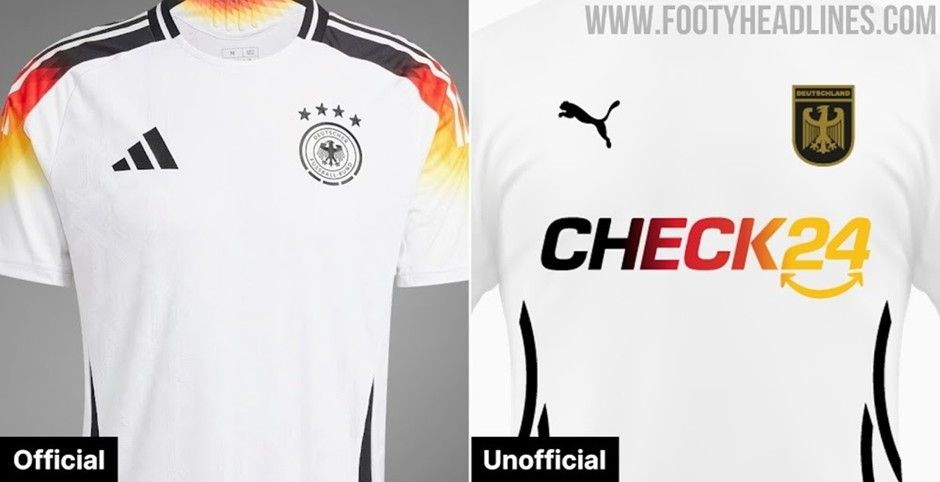
One of the most talked-about recent examples occurred during UEFA Euro 2024. German comparison website Check24 reportedly distributed millions of replica-style football shirts bearing its own branding. Although the shirts closely resembled Germany’s national colours, they deliberately avoided UEFA branding, the German Football Association crest and Adidas branding. The campaign achieved enormous visibility throughout the tournament without making obvious use of protected tournament trade marks.
Source: Footy Headlines
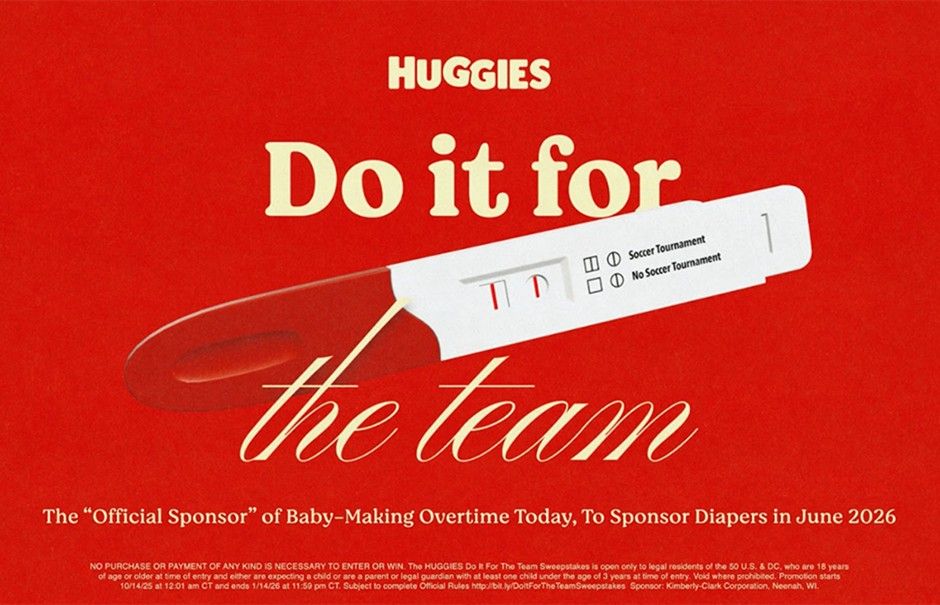
Similarly, ahead of the 2026 FIFA World Cup, Huggies launched a “Do it for the team” campaign encouraging would-be parents to “add one more player to the team”. The campaign avoided official FIFA branding,but leaned heavily on football language and the World Cup calendar. It is a useful example of how a brand can evoke the excitement surrounding an event without necessarily presenting itself as an official sponsor.
Source: Huggies/GUT Miami
Ambush by intrusion
Rather than implying sponsorship, ambush by intrusion seeks commercial exposure by placing branding within, immediately around or otherwise close to an event environment. Common activities include supplying branded products to attendees, buying advertising space near venues or fan zones, or arranging highly visible stunts around match-day locations.
In the Zalando case, the Italian Competition Authority fined the online retailer after it displayed a billboard near the official UEFA Euro 2020 Football Village in Rome. Although the billboard did not reproduce official tournament branding, regulators concluded that the combination of football imagery, participating national flags and tournament-themed messaging created an unauthorised commercial association with the event.
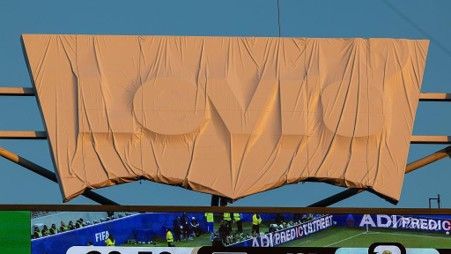
During the 2026 FIFA World Cup, FIFA applied its clean-stadium rules requiring non-sponsor branding to be covered at host venues, including Levi’s Stadium, which is being referred to as “San Francisco Bay Area Stadium” for tournament purposes. In response, Levi’s turned the restriction into its own marketing moment by using images of the covered stadium sign across social media and stores.
Source: Getty Images
Opportunistic marketing
Opportunistic marketing around major events is typically reactive and highly creative. It is often witty, timely and edgy, and can therefore generate significant exposure.
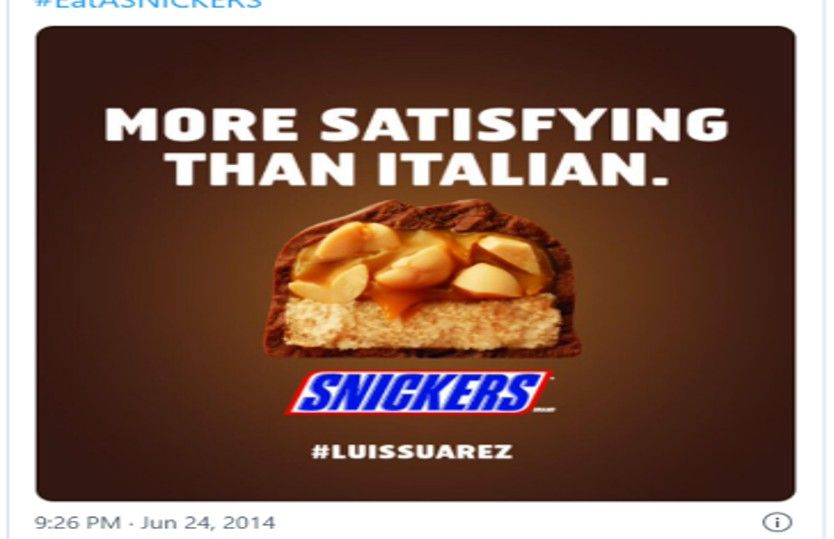
One of the best-known examples came during the 2014 FIFA World Cup, when Uruguay striker Luis Suarez bit Italy’s Giorgio Chiellini. Snickers reacted within minutes with a topical social media post that was widely shared. The brand capitalised on a moment that had captured global attention without suggesting an official association with FIFA. This example showcases how reactive marketing can generate exposure whilst potentially staying on the right side of the law.
Where does the legal risk arise?
Although ambush marketing is not itself actionable under UK law, organisers and rights holders have several legal avenues available.
Trade marks
Trade mark law is often the primary enforcement tool against ambush marketing.
Major event organisers, including FIFA, typically own extensive portfolios of registered trade marks protecting event names, logos, slogans, emblems and other branding. Businesses should avoid using official branding, or identical or similar signs, in a way that creates confusion or takes unfair advantage of the reputation attached to those marks.
Passing off
Rights holders may also rely on the common law tort of passing off.
To succeed, the claimant must establish:
- goodwill in the relevant name, branding or get-up;
- a misrepresentation leading the public to believe that an official commercial connection exists; and
- resulting damage, or a likelihood of damage.
Copyright
Official logos, mascots, artwork and promotional materials may also attract copyright protection. Recent UK events illustrate the importance of distinctive brand assets: Glasgow 2026’s Finnie and Birmingham 2026’s Bab the Bull were prominent parts of their respective event identities.
Reproducing these materials without permission may amount to copyright infringement.
Advertising and consumer protection law
Marketing campaigns should also comply with the CAP Code and consumer protection legislation, including the unfair commercial practices regime under the Digital Markets, Competition and Consumers Act 2024.
Advertisements must not materially mislead consumers into believing that a commercial relationship, sponsorship or endorsement exists where none does. Businesses should therefore consider not only whether protected branding is being used, but also the overall impression created by the campaign.
Beyond intellectual property
Intellectual property rights are only one part of the picture.
Major sporting events rely heavily on contractual measures to protect sponsor exclusivity. Ticket terms and conditions commonly prohibit promotional activity within venues, while clean venue policies restrict non-sponsor branding inside and around stadiums, fan zones and other controlled areas.
The precise package of protections differs from event to event and from country to country. Rights holders may rely on a combination of intellectual property rights, ticket terms, venue agreements, clean venue policies and, in some cases, event-specific legislation. Businesses should therefore check the rules applying to the particular event rather than assuming there is a single anti-ambush regime.
Enforcement can also continue after the final whistle. Rights holders may review campaigns after an event and pursue infringements retrospectively. A post-event complaint should therefore be assessed on its merits rather than dismissed simply because the event has finished.
Practical tips for advertisers and brand owners
Before running a campaign that seeks to associate a brand with a major sporting event, businesses should consider whether it uses any trade marks or other official indicia owned or controlled by the organiser, and whether the overall presentation could suggest an official commercial connection.
Practical suggestions: five dos and five don’ts for non-sponsors
- DON’T use official trade marks, logos, slogans, mascots, trophy imagery or confusingly similar designs.
- DON’T underestimate the potential legal, commercial and reputational consequences of ambush marketing.
- DON’T use event names or other protected indicia in a way that suggests an official association unless authorised.
- DON’T re-post official content or use official footage, photography, artwork or hashtags without permission.
- DON’T use tickets, hospitality packages or match access for promotional purposes unless the relevant terms expressly permit it.
- DO seek specialist legal advice before running marketing or PR activity that refers to a major sporting event.
- DO use generic sporting, supporter or seasonal language where appropriate, rather than protected names or indicia.
- DO consider adopting an anti-ambush marketing policy and approval process, including for social media and real-time posts.
- DO keep records of your creative rationale, clearance checks and risk assessment.
- DO obtain relevant consents and check image rights, club and national team rules, and sponsor conflicts when using players.
Final thoughts
Major sporting events present significant opportunities for brands, whether or not they are official sponsors. The World Cup has provided some of the most visible and high-profile examples.
The most successful campaigns are often those that capture the excitement surrounding an event without creating the impression of an official association. As recent examples demonstrate, there is an important distinction between creative, topical marketing and conduct that infringes intellectual property rights, breaches contractual provisions or misleads consumers.
Ambush marketing exists on a spectrum. Understanding where the legal boundary lies allows businesses to take advantage of the commercial opportunities surrounding major sport while staying firmly onside.
The content of this article is intended to provide a general guide to the subject matter. Specialist advice should be sought about your specific circumstances.
[View Source]