Launching an iGaming business involves more than obtaining a licence. Many operators focus only on licensing and underestimate the importance of corporate structuring, banking, compliance, and operational setup.
The success of an iGaming operation often depends on how the business is structured before the licence application is submitted. Regulators, banks, payment providers, and platform partners increasingly assess ownership structure, operational substance, compliance procedures, and financial flows before approving a business relationship.
A properly structured iGaming business improves licensing certainty, supports access to banking, and reduces operational risk.
Why structuring matters before licensing
Many licensing delays originate from poor preparation rather than regulatory rejection.
Regulators and financial institutions increasingly review:
- Ownership structure
- Source of funds
- Corporate transparency
- Payment flows
- Compliance systems
- Operational substance
A weak structure may lead to:
- Delays in licence approval
- Banking difficulties
- Payment provider rejections
- Increased compliance scrutiny
Early planning creates a more stable operational foundation.
Step-by-step guide to starting an iGaming business
Step 1: Choosing the right jurisdiction
The choice of jurisdiction affects licensing, banking, taxation, and operational flexibility. Different jurisdictions suit different business models.
For example:
- Curaçao remains widely used for online casinos and sportsbooks
- Nevis has emerged as a growing option for international operators
- Anjouan attracts businesses seeking flexible and cost-efficient structures
The appropriate jurisdiction depends on:
- Target markets
- Type of gaming activity
- Banking requirements
- Risk profile
- Long-term business strategy
The licensing strategy should align with the operational structure from the outset.
Selecting a jurisdiction solely based on speed or cost often creates operational limitations later, particularly in banking and payment processing.
Step 2: Company formation and corporate structure
The corporate structure forms the foundation of the iGaming operation. In practice, many operators use multiple entities for operational and compliance purposes.
Common structures include:
- Holding companies
- Licensed operating companies
- Payment agent entities
- Technology or software entities
- Marketing and affiliate companies
This separation helps manage operational risk and improves transparency.
The structure must clearly identify:
- Shareholders
- Directors
- Ultimate beneficial owners (UBOs)
- Key operational personnel
Clear ownership and management structures improve regulatory and banking assessments.
Many operators initially focus only on the licensing entity. However, regulators and payment providers increasingly assess the wider operational structure, including payment agents, management control, and financial transparency.
Step 3: Payment agents and financial flow structure
Payment structuring is one of the most important aspects of an iGaming operation.
Many operators use separate payment agent entities to manage:
- Customer deposits
- Payment processing
- Merchant relationships
- Crypto-to-fiat transactions
This structure may improve operational flexibility and support relationships with payment service providers.
Payment agents are often established in jurisdictions that provide access to banking infrastructure and payment processing solutions. Poorly planned payment structures frequently create delays after licensing.
Step 4: Banking and payment solutions
Access to banking remains one of the main challenges for iGaming businesses.
Banks and payment providers assess:
- Licensing jurisdiction
- Source of funds
- Corporate structure
- Compliance framework
- Business model
Businesses with weak documentation or unclear structures often face onboarding difficulties.
Operators should prepare:
- Corporate documentation
- Compliance policies
- Source of wealth information
- Operational descriptions
- Payment flow explanations
Early banking preparation improves operational readiness after licensing.
One of the most common operational challenges arises after licensing, when businesses seek stable banking and payment-processing relationships. Poor planning at the structuring stage frequently creates operational delays after licensing approval.
Step 5: Compliance and regulatory preparation
Compliance obligations begin before the licence is issued.
Operators must implement:
- AML procedures
- KYC systems
- Risk management policies
- Transaction monitoring systems
- Responsible gaming measures
Regulators increasingly review applicants’ operational readiness before approving licences. In practice, strong compliance preparation improves approval certainty and operational stability.
Step 6: Preparing the licence application
The licensing process depends heavily on preparation.
A complete application generally includes:
- Corporate documentation
- Business plans
- Compliance manuals
- Source of funds declarations
- Due diligence documentation for shareholders and directors
- Technical and operational descriptions
Incomplete or inconsistent applications often lead to delays.
The quality of the submission directly affects approval timelines. Licensing delays often stem from inconsistencies among the business model, ownership structure, and operational setup presented to the regulator.
Step 7: Key persons and management approval
Regulators often review more than the ownership structure. In many jurisdictions, approval may also extend to CEO, COO, CFO, CTO, Compliance Officer and MLRO.
These individuals may need to complete fit-and-proper assessments and provide due diligence documentation. This review process forms part of the broader regulatory assessment of operational suitability.
Businesses should ensure that management structures, reporting lines, and operational responsibilities are clearly defined before submission.
Step 8: Operational substance and long-term planning
Modern iGaming structures require operational substance and long-term planning.
Regulators and financial institutions increasingly assess:
- Decision-making structure
- Management control
- Operational presence
- Financial transparency
- Ongoing compliance procedures
Businesses that focus only on obtaining a licence often face operational problems later. A sustainable structure supports long-term scalability. Operators that invest in proper structuring from the outset are generally better positioned for expansion, access to banking, and future regulatory changes.
Common mistakes iGaming operators make
Many operators face avoidable problems due to poor planning.
Common issues include:
- Choosing the wrong jurisdiction
- Weak corporate structuring
- Delayed banking preparation
- Poor compliance systems
- Inconsistent documentation
- Underestimating payment processing challenges
These issues frequently delay launches and increase operational costs.
Some businesses spend months restructuring operations after obtaining a licence because the original setup did not support banking, payments, or scalability.
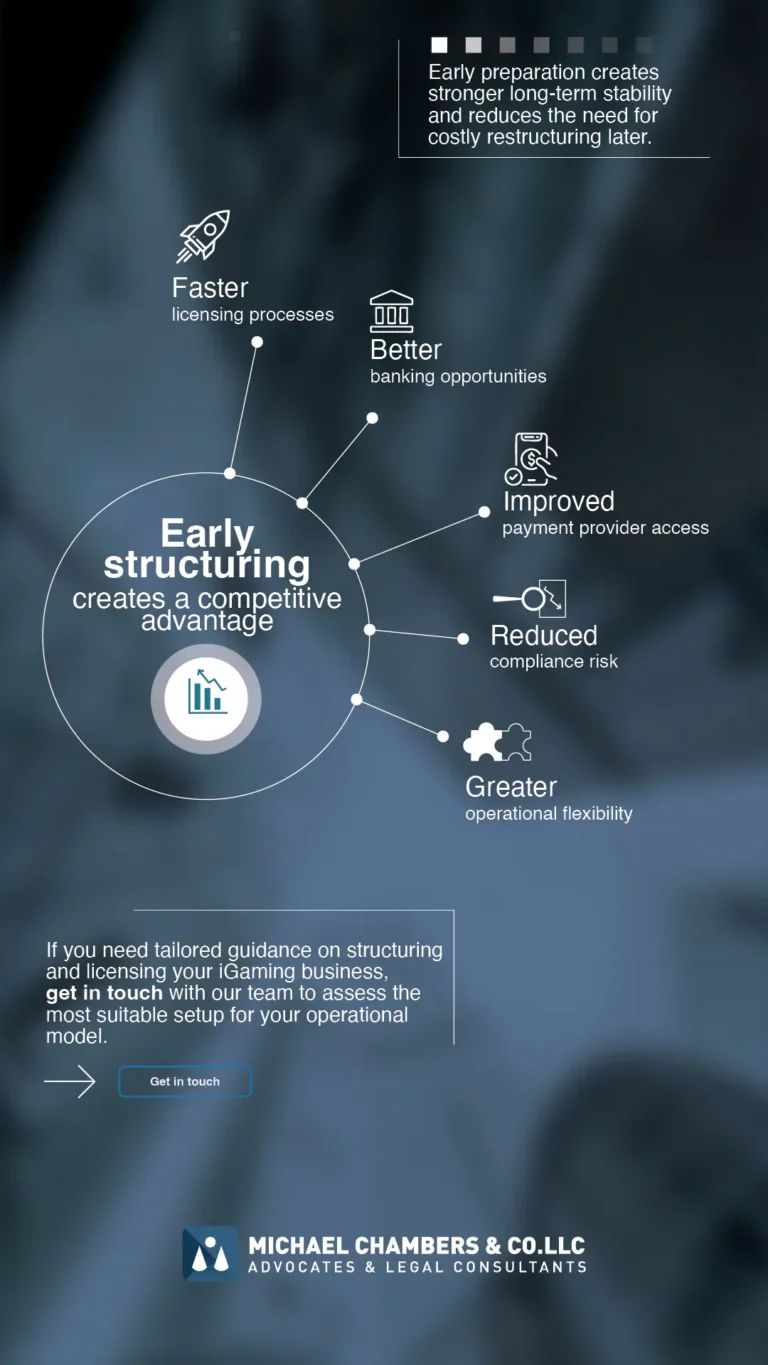
Why early structuring creates a competitive advantage
Businesses that structure operations properly from the beginning often experience:
- Faster licensing processes
- Better banking opportunities
- Improved payment provider access
- Reduced compliance risk
- Greater operational flexibility
Early preparation creates stronger long-term stability and reduces the need for costly restructuring later.
The content of this article is intended to provide a general guide to the subject matter. Specialist advice should be sought about your specific circumstances.
[View Source]