Spain is the fourth-largest economy in the European Union, yet in the context of institutional fundraising for private capital, it has historically lagged behind smaller markets such as the Netherlands and the Nordic countries.
This is largely due to the structure of Spain’s retirement system. Unlike those markets, Spain relies heavily on a pay-as-you-go state pension system, while funded occupational pension schemes (either defined benefit or defined contribution) remain relatively underdeveloped. As a result, Spain has accumulated a smaller pool of institutional retirement assets available for investment in private markets.
In the context of private wealth, however, Spain is an increasingly relevant market. Household savings behaviour has evolved significantly in recent years, with cash allocations falling to their lowest level in two decades, investment funds recording three consecutive years of strong net inflows and regulatory reforms widening access to private assets1. These trends are expanding the opportunity set for private capital managers seeking to raise capital from Spanish wealth investors.
In our previous private wealth report, we covered the UK, France, Germany and Italy. This article expands the analysis to Spain by examining the sources of private wealth in the country, the principal investment vehicles and distribution channels and the routes through which foreign private capital managers can access this investor base.
Sources of capital and key channels
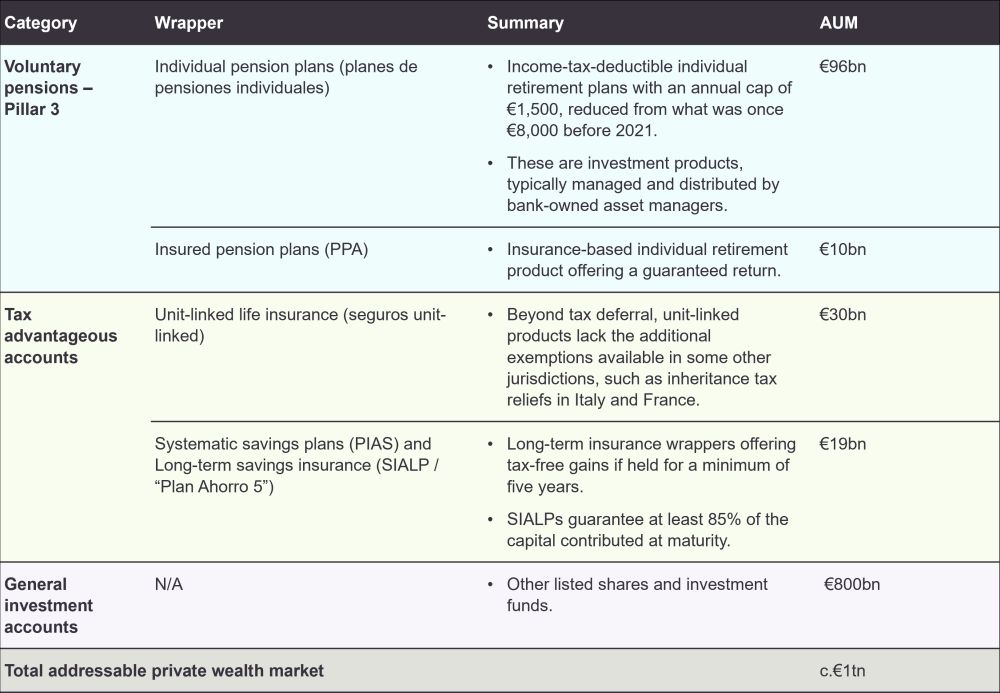
Spain has a relatively small and stagnant individual pension market. Reforms in recent years have reduced the attractiveness of individual pension plans by lowering annual contribution allowances, as policymakers have sought to encourage the development of occupational pensions instead.
Tax-advantaged wrappers are also less prominent within Spanish private wealth than in markets such as the UK and France, where ISAs and assurance-vie contracts respectively represent important pools of invested household assets. As a result, a larger proportion of Spanish household wealth sits outside dedicated retirement and tax-efficient wrappers and is instead held in general investment accounts. This has contributed to a bank-led distribution model, with most investors accessing private markets through their banking and wealth management relationships.
Figure 1 – Sources of capital and key channels, Spain
Source: Inverco, UNESPA and Eurostat.
Private markets adoption
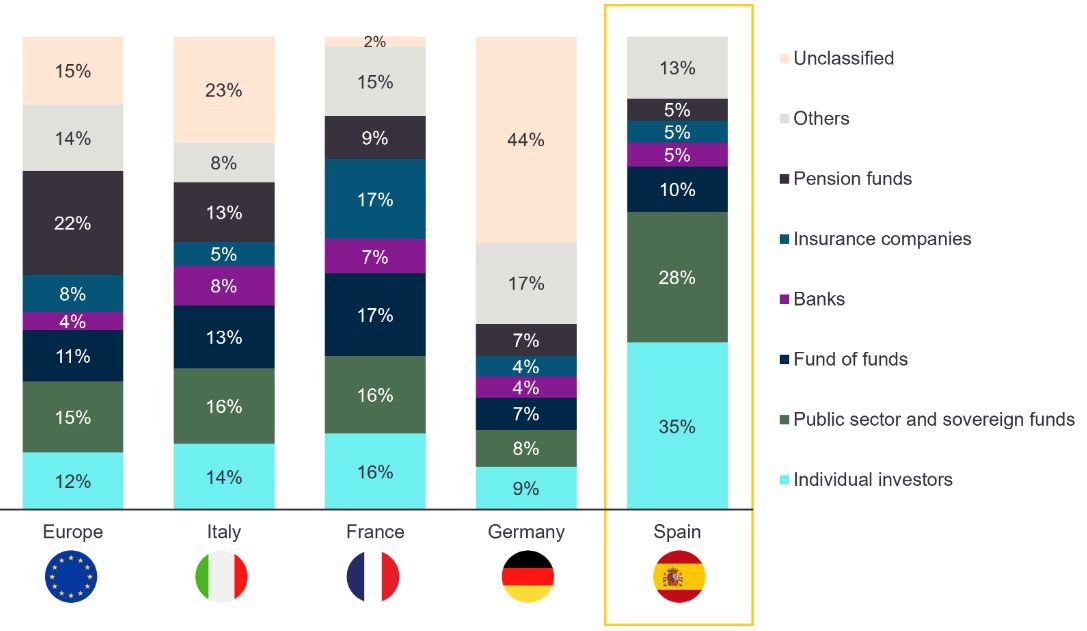
Private wealth investors account for approximately 35% of the private equity capital raised in Spain, nearly three times the European average, giving wealth investors a particularly prominent role in the domestic fundraising market. Access to private assets has also widened in recent years as regulatory reforms have reduced minimum investment thresholds for certain domestic fund structures.
Figure 2 – Private equity fundraising by investor types
Source: OECD, Invest Europe.
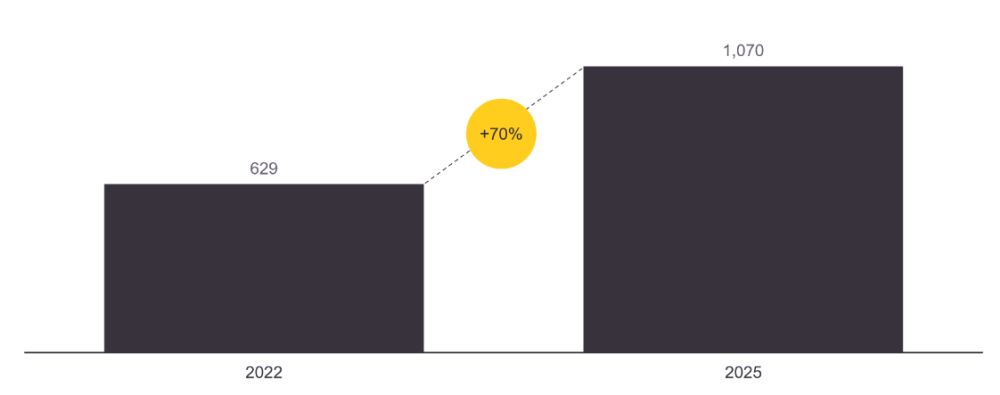
Since 2022, the number of wealth-accessible Spanish private equity products has increased by 70%2. This is attributed in part to the 2022 reforms that reduced investment minimums from €100,000 to €10,000 for certain Spanish-domiciled private markets products3. Considering the past decade, Spanish private equity products available to private wealth saw their AUM quadruple to c.€43bn4.
Figure 3 – Growth in the number of Spanish private equity and venture capital vehicles (ECRs), 2022-2025
Source: Macfarlanes’ analysis of CNMV data.
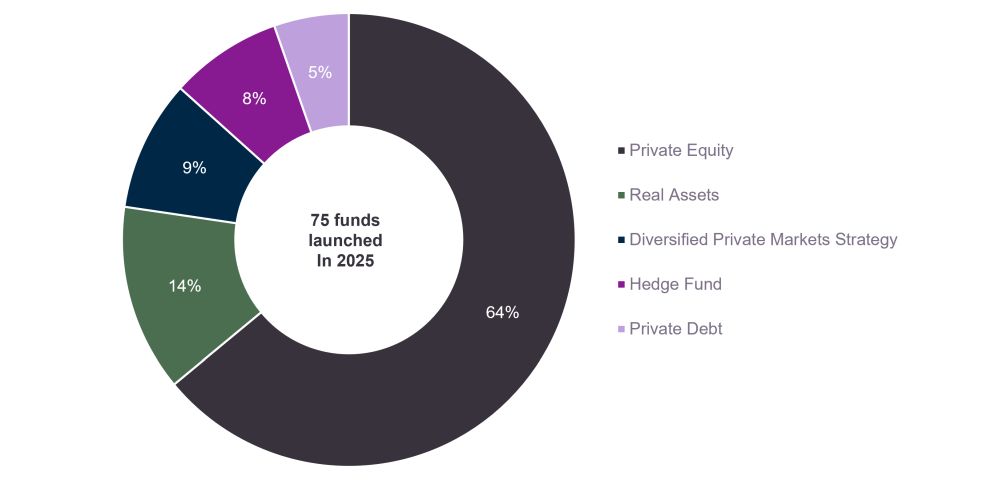
This growth has so far not been consistent across all private market strategies. An analysis of local vehicles launched in 2025 for private markets access – frequently utilised for both domestic and international strategies – highlights a significant concentration in private equity5. This asset class accounted for 65% of all funds registered whereas private debt represented only 5% of the year’s launches. According to local partners, this can be attributed to:
-
private debt strategies being less suited for local structures; and
-
a preference for local structures for ease of distribution and potential tax benefits.
Figure 4 – Asset classes of Spanish private markets funds (FCR and FIL) launched in 2025
Source: Macfarlanes’ analysis of CNMV data.
However, as the ELTIF market grows in Spain, more opportunities seem to arise for private debt to be distributed in the country. In 2025, Spanish investors committed €380m to ELTIFs with private debt-focused strategies representing 77% of that figure6. While this still pales in comparison to private equity fundraising it indicates a positive trend with substantial room for growth.
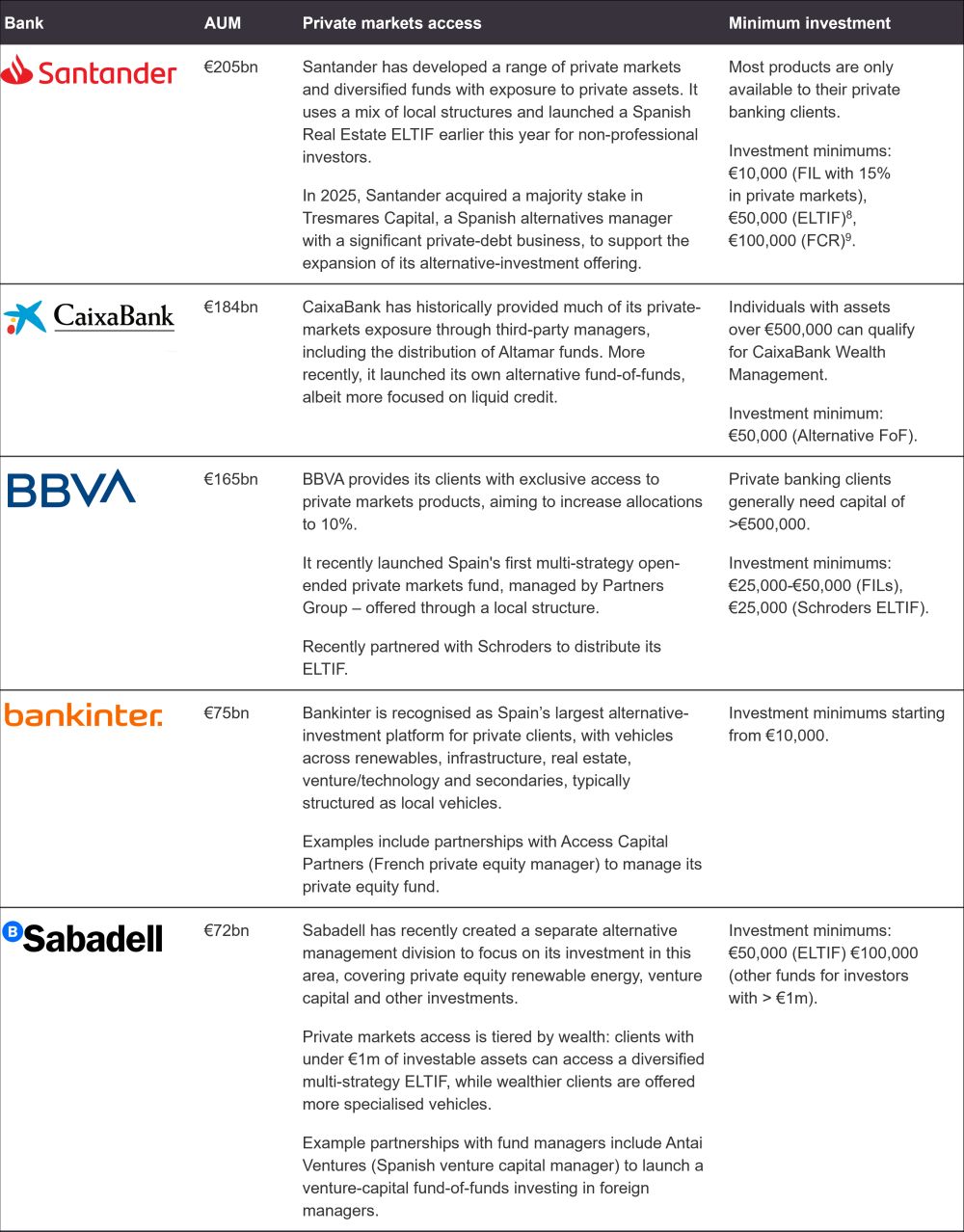
This growing adoption of private markets is also evident among Spain’s largest banks, which are expanding the distribution of alternative products to their private banking clients. Several institutions have partnered with foreign asset managers to broaden their offerings. BBVA, for example, has set an ambitious target of increasing the average allocation to private markets within its clients’ portfolios from 2% to 10%7 and has recently partnered with Partners Group and Schroders.
Figure 5 – Spain’s five largest banks are increasingly providing access to private markets
Source: Companies' reports and press releases.
Distribution channels and routes to entry for foreign capital managers
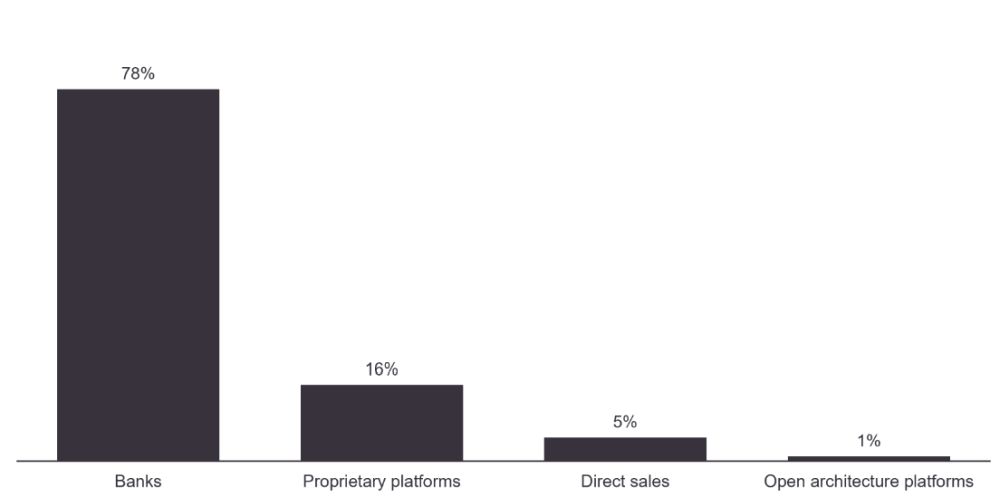
Within private wealth, banks account for 78% of distribution – access to private wealth is largely determined by inclusion on private-bank platforms, discretionary mandates and approved product shelves. The Spanish market is among the most bank-dominated in Europe, with banks holding 65% of financial-sector assets, compared with a European average of 40%10.
Figure 6 – Spain's private wealth distribution channels
Source: European Fund and Asset Management Association, 2024.
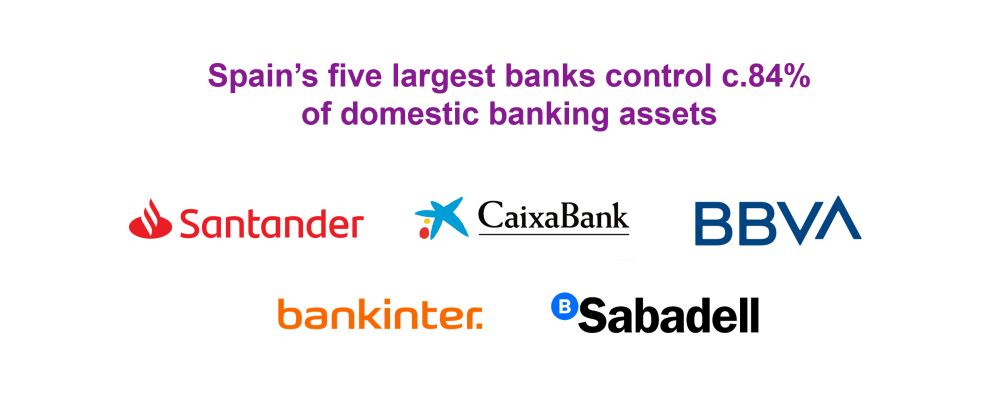
The Spanish banking market is also concentrated, with Spain’s five largest banks controlling approximately 84% of domestic banking assets11. Individual investors, particularly in mass-affluent segments, commonly purchase investment products through the banking group with which they maintain their principal financial relationship.
Routes to entry for foreign private capital managers
Foreign private capital managers seeking to access Spanish private wealth will often need to establish, or participate in, a local Spanish structure. This reflects a combination of regulatory requirements, local tax and operational considerations and distributor preference, as many distributors are already familiar with the local products which can be marketed to a wide range of private wealth clients. For example, local products such as the FCR, can be distributed to non-professional clients with minimum investments of €10,000, while to invest in a Luxembourg UCI Part II the individual must be deemed a professional investor.
Although local structures are often important for accessing Spanish private wealth, it is relatively uncommon for foreign managers to establish and manage their own Spanish products directly. This is largely due to the need for local regulatory permissions and familiarity with Spanish product and distribution requirements. Instead, foreign managers typically partner with Spanish entities that already have the relevant authorisation and infrastructure in place.
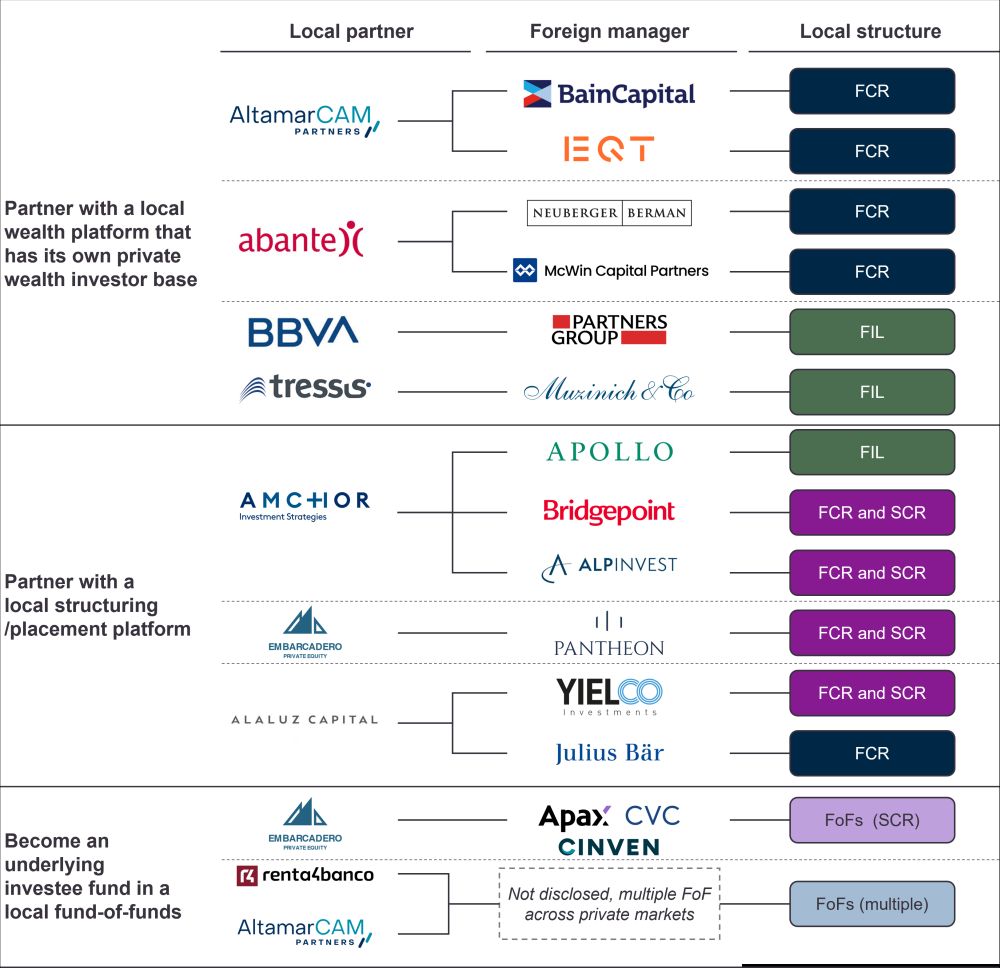
Broadly, foreign private capital managers targeting Spanish private wealth through a local vehicle have three main routes to market:
1. Partner with a local wealth platform that has its own investor base
The local partner creates the Spanish vehicle and contributes a meaningful proprietary distribution channel (private bank or wealth manager).
2. Partner with a local structuring/placement platform
The local partner creates the Spanish vehicle and typically supports fundraising through third-party private banks, wealth managers, family offices and institutions, rather than relying primarily on its own captive client base.
3. Become an underlying fund in a local fund of funds (FoF)
The foreign manager is selected as one of the underlying investments of a Spanish FoF which in turn is distributed to private wealth.
Figure 7 – Examples of foreign managers distributing via local products
Source: Company reports and press releases.
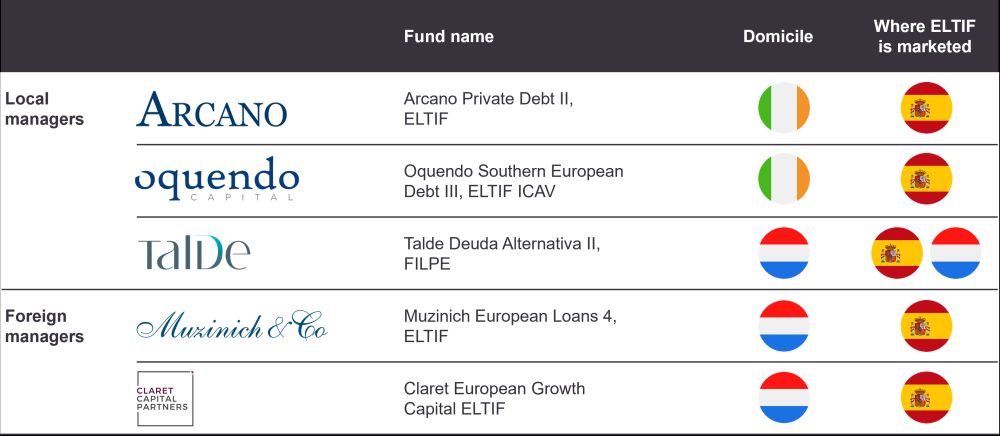
As EU-harmonised vehicles, foreign ELTIFs can be marketed in Spain. These have been gaining traction in recent years, particularly for private debt strategies which are less suited to local structures and the tax benefits they afford. Local partners indicate that, under certain conditions, foreign ELTIFs may be able to qualify for certain tax exemptions for the benefit of Spanish investors. Several foreign-domiciled ELTIFs have been established primarily for distribution in Spain, including by Spanish managers.
Figure 8 – Examples of foreign domiciled private debt ELTIFs marketed in Spain
Source: Macfarlanes’ analysis of the ESMA register of authorised European long-term investment funds (ELTIFs).
The optimal route will depend on the manager's commercial objectives and the preferences of its local partner. Wealth platforms that contribute their own distribution capabilities may seek exclusive or preferential arrangements, which reflects the highly competitive nature of Spain's private wealth market. By contrast, structuring and placement platforms may offer greater flexibility by enabling products to be distributed through multiple private banks, wealth managers and other intermediaries.
These routes are also not mutually exclusive. Larger international managers can pursue several simultaneously, combining dedicated local vehicles with broader distribution through third-party fund of funds and wealth platforms to maximise coverage.
Structures most suitable for wealth distribution
As can be seen in figure 9, there are three structures that are most prevalent in the Spanish market for private wealth distribution. The choice between these is influenced by three main considerations: the underlying investment strategy, the requirements of the intended distributor and the tax treatment for the target investor base.
Figure 9 – Private markets structures most suitable for Spanish private wealth
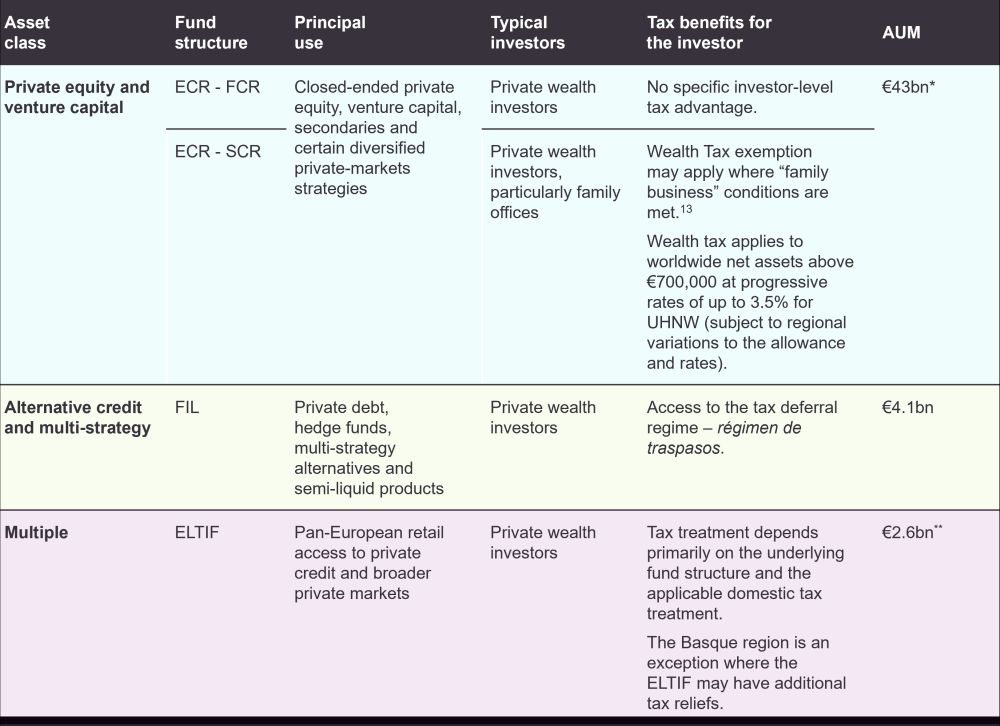
Note: *Includes an SME variant of ECR targeting small-scale unlisted businesses; **Represents the amount invested by Spanish investors.
Sources: CNMV and Scope Group.
ECR (Entidad de Capital Riesgo) - Private equity vehicle
The ECR is the most commonly used Spanish local structure through which private wealth investors access private markets strategies. ECRs can take two legal forms – the SCR (Sociedad de Capital Riesgo), a corporate vehicle, and the FCR (Fondo de Capital Riesgo), a contractual scheme.
These structures may invest in equity or equity-linked instruments in non-financial, non-real estate, unlisted companies and are subject to diversification requirements. Both sit within the same regulatory framework and benefit from tax advantages at the vehicle level, including exemptions on qualifying dividends and capital gains. In practice, however, the two structures tend to serve different wealth investor groups.
Wealthy Spanish individuals can be subject to an additional wealth tax – typically from €700,00012 in assets. Subject to certain conditions, SCR vehicles may qualify for an exemption known as the “family business exemption”13. This potential tax benefit can make the SCR a particularly attractive vehicle for family offices and ultra-high-net-worth investors.
The FCR, by contrast, is the more common structure for distribution through private-banking platforms. Unlike SCRs, FCRs are not subject to corporate governance requirements that give investors significant participation or control rights. Investors therefore play a passive role, making the structure well suited to manager-led vehicles distributed at scale.
FIL (Fondo de Inversión Libre) – Open-ended alternative investment vehicle
The FIL is Spain's open-ended alternative investment vehicle. In Spain, one of the biggest draws of an FIL structure for local residents is its compatibility with the tax-deferral regime (régimen de traspasos). This allows investors to move their money between qualifying funds without triggering immediate capital gains tax.
ELTIF (European Long Term Investment Fund)
Although not the dominant structure in Spain, ELTIFs have continued to grow in popularity, particularly for private debt investing. According to Scope, most ELTIFs that have received investment from Spanish investors are available to non-professional investors (c.90%) and are predominantly foreign-domiciled (c.80%)14.
Feeders and co-investment
Spanish local vehicles can provide access to foreign private-market strategies through commitments to underlying funds or direct co-investments alongside them. However, ECRs are subject to diversification requirements – including a general 25% limit on exposure to a single qualifying investment – which means they are generally not used as pure single-fund feeders.
Key policy tailwinds and barriers
Introduction of lower minimums for private capital investments: Since 2022 (ECR) and 2024 (FIL), investment minimums for private capital dropped from €100,000 to €10,000 (investment must be advised and a 10% concentration cap for smaller investors). This has supported product adoption, with banks and discretionary fund managers increasingly offering private capital exposure below the previous €100,000 threshold.
Absence of a scalable private markets wrapper: Unlike France (assurance-vie), the UK (ISA/SIPP) or Italy (PIR), Spain has no largely adopted, private-markets-friendly tax wrapper. The 2024 OECD Capital Market Review of Spain recognises this gap, recommending the creation of a dedicated tax-advantaged individual savings account to help channel Spain’s large pool of household deposits into capital markets. How this recommendation is implemented remains to be seen15.
Key takeaways
-
Private wealth is a proportionally more significant investor segment in Spain than in most other European countries, accounting for approximately 35% of the private equity capital raised in the country.
-
Banks remain the principal gatekeepers for private wealth. All of the top five banks in Spain are looking to increase their private markets offerings and several have partnered with foreign private capital managers.
-
Local structures are often required for broad access to private wealth distribution. Foreign managers will typically access the market through partnerships with Spanish managers, wealth platforms or fund of funds rather than establishing their own local management operation.
Footnotes
1 INVERCO, Financial Savings of Spanish Households, 2025
2 Considering FCR and SCR.
3 Reforms in 2022 reduced the minimum investment in ECRs from €100,000 to €10,000 with the same reduction extended to FILs in 2024.
4 CNMV, Bulletin II, 2025
5 Considers FCRs and FILs, which are the most commonly distributed vehicles for broad private wealth access.
6 Scope Group, ELTIF market overview, 2026
7 Capital Riesgo, BBVA aims to increase the weight of private markets to 10% in its Private Banking portfolios, 2026
8 elEconomista, Santander's manager opens its hedge fund to small investors, 2025
9 Iberian Property, Santander launches a fund of up to €300M to invest in retail, 2026
10 Banco de España, Financial Stability Report, 2025
11 Daiwa Capital Markets, Spain – Banking Sector Review, 2025
12 The wealth tax can vary significantly by region, some regions apply significant reliefs or rebates.
13 Broadly, the SCR must carry out a genuine economic activity, the relevant family member must hold at least 5% directly, or 20% jointly with certain family members, and a qualifying family member must be actively involved in its management and derive the majority of their earned income from that role.
14 Scope Group, ELTIF market overview, 2026
15 OECD, Capital Market Review of Spain, 2024
Macfarlanes is a pre-eminent law firm advising a global client base across Private Capital, Private Wealth, M&A and Disputes.
Visit our website to learn more about our services and how we can assist.
The content of this article is intended to provide a general guide to the subject matter. Specialist advice should be sought about your specific circumstances.
[View Source]