
It follows legal fault lines that are influenced by court rulings, regulatory enforcement, and changing frameworks that specify what businesses are allowed to do, where they are allowed to operate, and how they can compete.
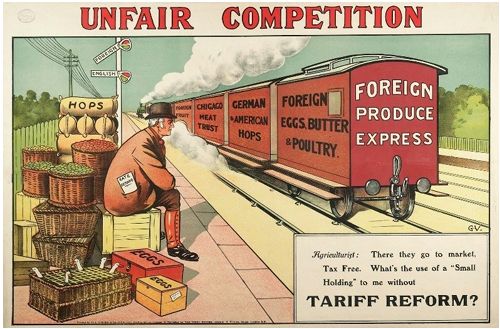
International business is not conducted in a vacuum. It follows legal fault lines that are influenced by court rulings, regulatory enforcement, and changing frameworks that specify what businesses are allowed to do, where they are allowed to operate, and how they can compete.
Developments in China and the United States show us how legal systems are influencing global trade and reacting to economic pressures. The legal landscape surrounding cross border business is becoming ever more organized, assertive, and significant.
COURTS AS ARCHITECTS OF TRADE POLICY
After the U.S. Supreme Court ruled that certain emergency tariffs exceeded constitutional limits, the administration has begun exploring other avenues to reimpose trade restrictions.
Among the tools under consideration are Section 301 of the Trade Act of 1974, which ad dresses unfair or discriminatory trade practices, and Section 232 of the Trade Expansion Act of1962, which allows tariffs on national security grounds.
These offer a more legally durable foundation for trade action. The administration has already indicated that sectors with deeply integrated global supply chains, such as telecommunications equipment, batteries, industrial chemicals, and plastics, could face renewed scrutiny.
Rather than relying on broad executive powers that are vulnerable to challenge, tariff policy is more so being channeled through formal frameworks designed to withstand review. Measures that emerge from structured investigative processes tend to be more resilient and less likely to be overturned in court.
For businesses in affected industries, this means that market access will also be shaped by legal processes that can redefine the rules of trade.
TRADE STABILITY IS INCREASINGLY A LEGAL OUTCOME
Tariffs remain a defining feature of the economic relationship between the U.S. and China, but recent legal developments may be introducing greater stability.
Following the Supreme Court rulings, effective tariff rates on some Chinese exports have declined, bringing their treatment closer to that of other major trading partners.
Analysts suggest that this narrowing gap could contribute to a more predictable and transparent trade environment. These rulings simultaneously reinforce that trade policy does not exist outside the law.
Courts can shape how (and how far) those powers are exercised. This legal oversight serves an important stabilizing function. It reduces the likelihood of abrupt policy shifts and ensures that changes must pass through established channels.
This does not eliminate uncertainty, but it does mean that policy changes are more likely to follow a defined, observable process.
Court decisions do not resolve underlying trade tensions. What they do is channel those tensions into formal legal frameworks. In doing so, they provide clearer signals about the durability, scope, and legitimacy of trade measures, allowing for more informed planning.
STRENGTHENING INVESTOR PROTECTION
Recent judicial initiatives in China are aimed at strengthening the integrity of financial markets and improving legal protections for investors.
To view the full article please click here.
The content of this article is intended to provide a general guide to the subject matter. Specialist advice should be sought about your specific circumstances.
