
Download a PDF copy of this Blog here.
An application for Judicial Review (“JR Application”) in the Federal Court can be an important tool for taxpayers to challenge decisions by the Canada Revenue Agency (“CRA”) that appear unreasonable, including decisions denying interest and penalty relief.
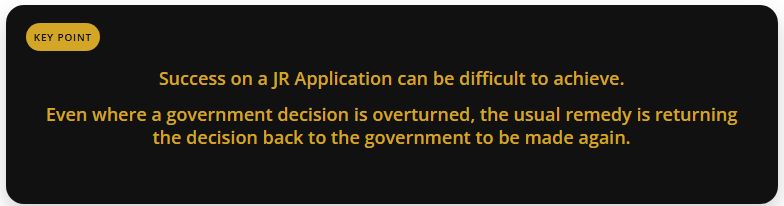
However, the recent Federal Court of Canada decision demonstrates that obtaining relief beyond the usual remedy of remitting the matter back for a redetermination (i.e., a new decision) remains difficult, even where the CRA agrees that its own decision was unreasonable.
LG Electronics Case
In LG Electronics Canada Inc. v. Attorney General of Canada, 2026 FC 895 [LG Canada], LG Electronics (the “Applicant”) applied to the CRA’s advance pricing arrangement program (the “APA”) to address inter-company transactions between the Applicant and its South Korean (“SK”) parent company. The APA involved both the Minister of National Revenue (the “Minister”) and a bilateral APA (“BAPA”) with tax authorities in Canada and SK, and was aimed at determining fair market value for the Applicant's imported electronics.
The APA process was completed in October 2017, with the Minister reassessed in November 2018. The Applicant then made requests for relief from interest and penalties under s. 220(3.1) of the Income Tax Act (“ITA”), based on certain alleged CRA errors in processing the Applicant’s advanced payments made to the CRA.
The Minister denied relief, but on a second review, cancelled certain (but not all) arrears interest, but upheld the penalties (the “Decision”).
On Judicial Review, CRA agreed its decision was unreasonable but disputed the Federal Court's jurisdiction to make the proper decision. Ultimately the Federal Court agreed with the CRA and refused to grant full interest and penalty relief, instead remitting the decision back to the Minister for another decision. In doing so, the Court confirmed that the usual remedy on judicial review is to set aside the decision and remit the matter for redetermination, because Parliament made the administrative decision-maker the Minister, not the Courts.
The Court also rejected the Applicant's request for other additional remedies, like (1) issuing directions to the Minister that contained certain findings of fact, (2) allowing the Applicant to make fresh submissions, and to (3) set deadlines for the Minister' s new decision. In the Court's view these directions were inappropriate because the matter before it was NOT an exceptional case justifying departure from the usual remedy (remitting the matter back to the Minister for a new decision), and that the Applicant had not provided clear evidence or jurisprudence justifying additional relief.
Takeaways
The decision of the Federal Court in LG Canada is a good reminder that even in a successful Judicial Review Application does not necessarily mean the Court will substitute its own decision or significantly constrain the next administrative decision made by the government. Rather, even where a first decision is found to have been unreasonable, the usual remedy will be to remit the matter back to the administrative decision-maker for a new decision.
For help challenging CRA decisions, please click here.
For an updated Index of our Tax Appeals Series, click here.
The content of this article is intended to provide a general guide to the subject matter. Specialist advice should be sought about your specific circumstances.
[View Source]