- within Real Estate and Construction topic(s)
- in United States
- with readers working within the Banking & Credit industries
- within Real Estate and Construction topic(s)
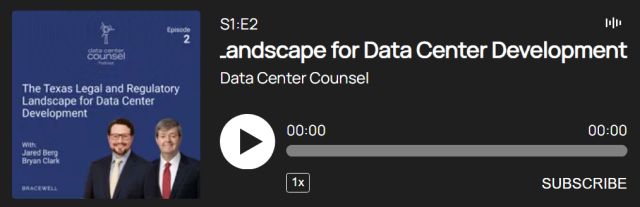
The Data Center Counsel Podcast returns for an episode on the evolving legal and regulatory framework governing large-load interconnections in Texas, with a focus on data centers and other energy-intensive facilities. Hosts Jared Berg and Bryan Clark examine how large-load projects have historically connected with the ERCOT grid and explain why a surge in speculative and overlapping interconnection requests has strained that process.
They dive into Texas Senate Bill 6, exploring how it seeks to standardize interconnection requirements, improve transparency, address cost allocation and enhance grid reliability following Winter Storm Uri. The conversation also examines emerging solutions that are poised to reshape how large loads plan, finance and secure power in Texas.
Episode Highlights
[1:53] How Large-Load Interconnections Traditionally Worked: Bryan outlines the historical interconnection process for large loads in Texas, emphasizing the central role of transmission and distribution utilities as the interface between customers and ERCOT. Utilities conducted studies, coordinated with ERCOT committees and managed construction timelines and cost recovery through rate base mechanisms. This utility-led, project-by-project approach worked — until the volume of large-load requests exploded.
[7:17] The Queue Problem and Speculative Interconnection Requests: Jared explains how first-come, first-served interconnection practices became strained by developers submitting multiple requests across utility territories to hedge project uncertainty. While often necessary to attract tenants, this surge of speculative requests slowed studies and clogged the queue, creating uncertainty for both developers and grid planners.
[8:26] Senate Bill 6 and a New Regulatory Framework: Bryan breaks down Senate Bill 6, describing how it aims to rationalize the interconnection process through disclosure requirements, site control standards and upfront study payments. The law also addresses broader market concerns—such as grid reliability, cost-sharing and transparency.—.reflecting lessons learned from Winter Storm Uri and Texas's evolving power demand.
[15:20] Curtailment and Demand Response Behind-the-Meter Solutions: A key portion of the discussion focuses on SB 6's "kill switch" authority, which allows ERCOT to curtail large loads during energy emergencies. In exchange, large-load customers gain access to new demand response programs and are incentivized to invest in behind-the-meter generation or backup power to maintain reliability and operational continuity
[23:58] ERCOT's Proposed Batching Process for Interconnections: The episode closes with a look at ERCOT's batching approach, which would group interconnection requests into defined study phases rather than handling them individually. Bryan explains how batch-based studies could bring clarity, reduce delays and create more predictable timelines.
The content of this article is intended to provide a general guide to the subject matter. Specialist advice should be sought about your specific circumstances.