

- within Insolvency/Bankruptcy/Re-Structuring, Law Department Performance, Litigation and Mediation & Arbitration topic(s)
How can states improve care transitions for justice-involved individuals? Community reentry demonstrations provide a partial waiver of the Medicaid Inmate Exclusion Policy (i.e., MIEP) and authorize federal Medicaid funding for pre-release services provided to incarcerated individuals. States can fund initiatives such as comprehensive Medicaid outreach and enrollment prior to release, enhanced case management surrounding the transition period and behavioral health linkages with community providers (CMS State Medicaid Director Letter on Community Reentry, April 17, 2023). These services are typically targeted to at-risk groups, including individuals with behavioral health needs and those with chronic physical health conditions.
What is the Medicaid Inmate Exclusion Policy?
- From the establishment of Medicaid in 1965, federal law has
prohibited Medicaid from paying for the care of incarcerated
individuals, except for services rendered during inpatient stays in
non-correctional medical facilities.
- In the early days of Medicaid, this policy had limited impact
because Medicaid was not initially targeted to the predominantly
adult male prison population, and because the prison population was
much smaller. The growth of the prison system, combined with
Medicaid expansion, have amplified the impact of the Medicaid
Inmate Exclusion Policy by limiting funding available to provide
transition services for otherwise Medicaid-eligible populations
reentering the community.
- The bipartisan 2018 SUPPORT Act signaled federal desire to improve continuity of care for justice-involved individuals, particularly those struggling with substance use disorder; CMS has since acted upon this federal mandate and begun to approve limited waivers of the Medicaid Inmate Exclusion Policy.
How can A&M Help States Navigate the Medicaid Inmate Exclusion Policy?
- Proven record of helping states assess program
needs and successfully pursue Medicaid waivers, including 1115
demonstrations targeted to behavioral and physical health
needs
- Robust project management skills to oversee
the complex waiver application, implementation and compliance
processes
- Prosci-certified change management leaders
experienced in guiding system-wide transformation across agencies
and stakeholders
- Deep understanding of stakeholder engagement
best practices, supported by training in person-centered
approaches
- Blend of policy, data and finance expertise that inform all analysis and guidance provided to states to achieve programmatic goals
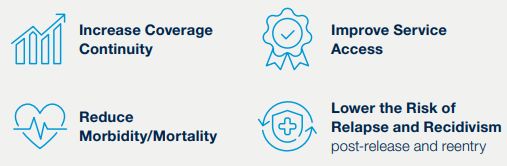
Four Ways Community Reentry Demonstrations Are Effective
Community reentry demonstrations are a powerful tool to:
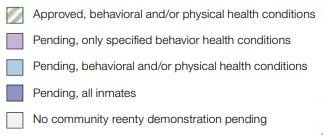
Which States are Pursuing Community Reentry Demonstrations?
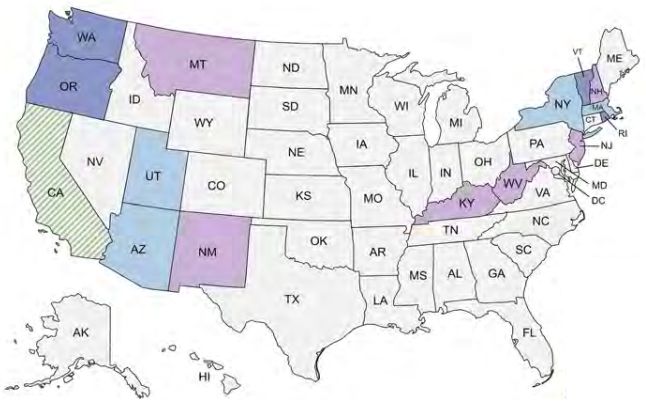
Map created using data sourced from Kaiser Family Foundation; as of April 12, 2023
Eligibility Criteria for Inmate Inclusion
Originally published 1 June 2023
The content of this article is intended to provide a general guide to the subject matter. Specialist advice should be sought about your specific circumstances.


