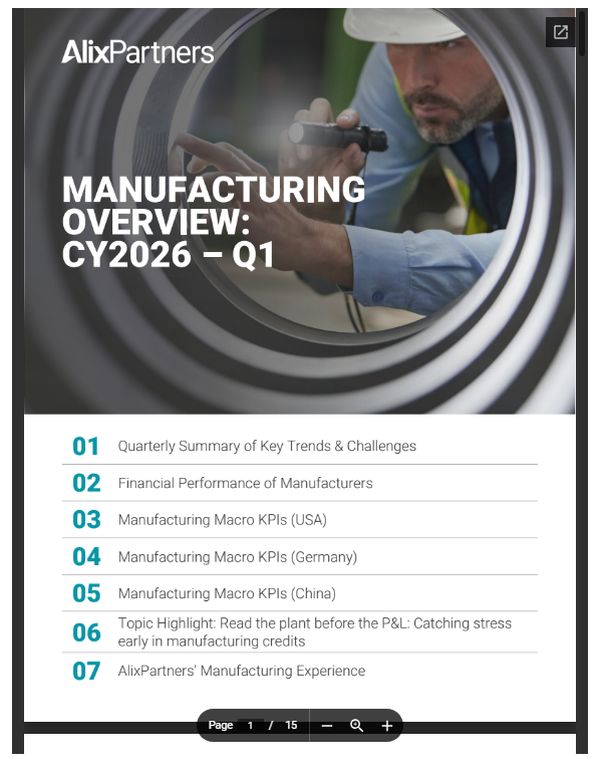
The AlixPartners Manufacturing Overview: CY2026 – Q1 is now available, providing an analytical look at the sector's performance as manufacturers contend with heightened geopolitical uncertainty and margin compression.
This quarter reveals adaptation, not recovery. Revenues entered 2026 flat as manufacturers navigated ongoing trade volatility and policy shifts, with margins remaining mixed across industries and regions. The response has been swift: productivity and asset utilization have become the central levers for profitability, driving accelerating investment in automation, robotics, and co-bots.
Performance diverged sharply by geography. The United States maintained firm demand as tariff effects began to normalize, though capacity utilization remains below historical levels, signaling continued caution. Germany strengthened on rising exports and improved business sentiment, posting its strongest production trends of the period. China delivered uneven growth concentrated in auto and advanced manufacturing, even as overall capacity utilization declined and investment remained selective.
Labor markets tightened further despite softening employment. Meanwhile headcount contracted quietly across regions as manufacturers optimized existing workforces, yet wages continued climbing without plateau. This structural shift toward automation and higher-skill roles is now defining the competitive landscape.
A critical challenge is emerging in identifying which performance declines are cyclical and which have become structural. The report includes a focused analysis on reading operational stress signals before financial statements reveal damage. Explore the full Q1 2026 Manufacturing Overview below.
The content of this article is intended to provide a general guide to the subject matter. Specialist advice should be sought about your specific circumstances.
[View Source]