
EDITORIAL TEAM
'Gbite Adeniji, Jumoke Fajemirokun, Makana Nria, Aimua Enadeghe, Fortune Ude, Peter Okediya
FOREWORD
Nigeria's power and renewable energy sector received accelerated momentum as the nation deepened its transition toward sustainable energy solutions. Comprehensive reforms and targeted incentives have established a foundation for significant commercial shifts across the power value chain, with a pronounced focus on decentralizing the grid and expanding renewable capacity.
The trajectory of this sector through 2026 will be primarily driven by the government's ability to advance the power infrastructure projects currently under development. A robust, bankable regulatory environment will be necessary to drive investment into the development of large-scale renewable energy resources. As the transition accelerates, the systemic integration of clean energy into the national mix remains a critical point of focus for both public and private stakeholders.
In this annual roundup of The Conduit, which we launched as our monthly newsletter in 2025 to track developments across the sector, we consolidate our insights into a comprehensive review. We discuss regulatory developments, notable transactions and projects across the electricity and renewables sector, and the key challenges that constrained performance during the year. We conclude with an outlook on anticipated regulatory issues and the market trends that are likely to shape the sector in 2026.
We hope that this publication provides context, clarity and insights for investors, operators and policymakers engaging with Nigeria's electricity and renewables landscape - 'Gbite Adeniji Managing Partner.
1. ELECTRICITY MARKET DYNAMICS
Electricity market performance in 2025 continued to reflect the structural tension between incremental reform gains and deep-seated capacity, liquidity, and infrastructure constraints. Policy and regulatory interventions improved revenue assurance and investor confidence; however, limited grid infrastructure, evidenced by recurring grid collapses, alongside gas supply shortfalls, persistent cost-recovery gaps and other structural inefficiencies, impacted overall market outcomes.
1.1 Electricity Supply and Generation Trends
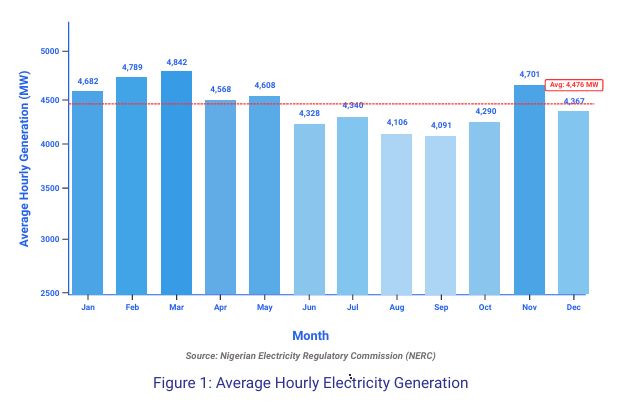
Grid electricity supply remained constrained throughout 2025. Despite installed generation capacity in excess of 13,000 MW, according to NERC data, average daily generation remained under 5000 MWh/h in 2025. This significant gap between installed capacity and delivered power continued to be driven by gas supply constraints and transmission bottlenecks. As a result, grid electricity supply remained insufficient to meet the estimated 18,345 MW nationwide demand, reinforcing the sustained need for captive generation and distributed power solutions across residential, commercial, and industrial segments.
1.2 Tariff and Cost Recovery Dynamics
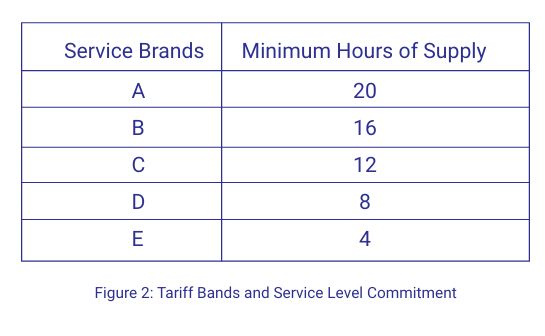
NERC continued to implement the service-based electricity tariffs under the Multi-Year Tariff Order (MYTO) framework. Customers in Band A, who are guaranteed a minimum of 20 hours of daily electricity supply, were subjected to higher tariffs closer to cost reflective levels, with average tariffs exceeding N200/kWh. While these measures improved revenue performance within select customer classes, broader cost recovery remained challenged by foreign exchange volatility, rising gas prices, constrained collections and inflationary pressures.
1.3 Market Liquidity and Collections Performance
Market liquidity showed modest improvement in 2025, with collection efficiency improving from an average of 75.56% in 2024 to an average of 77% by Q3 2025, peaking at 85% in October 2025. This improvement is likely attributable to enhanced revenue collection measures, stricter enforcement against meter tampering and bypass, and the meter rollout under various Federal Government programmes, which has resulted in 56.06% of active customers being metered as of October 2025, up from 45.72% as of August 2024. Ikeja Electric, Eko Electricity Distribution Company and Abuja Electricity Distribution Company made impressive improvements within the year with Ikeja Electric achieving 100% collection efficiency in Q2. Notwithstanding these gains, the electricity market continued to record material payment shortfalls, with NERC data estimating a shortfall over N600 billion in 2025 billings. These liquidity constraints continued to limit the ability of market participants to achieve cost recovery and fully meet contractual obligations across the value chain.
To view the full article please click here.
The content of this article is intended to provide a general guide to the subject matter. Specialist advice should be sought about your specific circumstances.