
- within Intellectual Property topic(s)
- in United States
- within Intellectual Property topic(s)
- within Employment and HR, Finance and Banking and Consumer Protection topic(s)
Industrial design protection is one of the core pillars of intellectual property law, enabling creators and businesses to secure exclusive rights over the visual features that define and distinguish their products. As consumer purchasing decisions increasingly rely on design, appearance, and user experience, protecting the aesthetic components of products has become critical not only for brand identity but also for commercial success. In India, the framework for industrial design registration provides a structured pathway for recognising and protecting these aesthetic innovations, ensuring that creators receive the legal certainty and competitive advantage necessary to invest in new designs. The Indian legislation governing design rights balances two key objectives: encouraging creativity and preventing unfair competition.
Legal and Procedural Framework of Industrial Designs in India
The Designs Act, 2000 and the Design Rules, 2001, regulate the registration and protection of designs in India.
Section 2(a) defines the "article" as an article of manufacture and any substance, artificial, or partly artificial and partly natural and includes any part of an article capable of being made and sold separately.
Section 2(d) defines "design" as 'only the features of a shape, pattern, configuration, composition or ornament of lines or colours that are applied to any article that is two dimensional, three dimensional, or both by an industrial process or any means whether mechanical, manual or chemical, separated or combined, which in the finished article are judged solely by the eye. A "design", however, does not include any mode or principle of construction or anything that is, in substance, a mere mechanical device. Designs law also excludes from registrability any trademark or property mark or any artistic work under copyright law.
Purpose and Importance of Design Protection
The importance of protecting the aesthetic features of products through design registration is that it enhances marketability, drives economic growth, and prevents unauthorised imitation. The owner can export, import, license or sell the rights to others. The design for registration must be original, distinctive, and capable of being applied to an article through an industrial process. The functional aspects of a product cannot be registered as designs, and protection is limited to the visual appeal rather than the utility. When a design is registered, the registered proprietor of the design shall have copyright in the design for a period of ten years from the date of application, which may be extended by a further five years. The design term is 15 years (with an extension).
Registration of a design can be cancelled at any time, even after receiving the certificate of registration. Upon receiving a petition for cancellation, the Controller of Designs may cancel the registration of a design if it is already registered or published in India or elsewhere before the date of registration; is not a new or original design; is not registerable under Section 4, or is not a design as defined under Section 2(d) of the Designs Act.
For the purpose of registration of Industrial Design under the Design Act 2000, goods to which the design is applied are classified as specified in the Locarno classification, an international classification administered by WIPO. TheIndian Patent Office (IPO) branch in Kolkataserves as thehead office for Designs.
Types of Design Applications
There are 2 types of design applications: ordinary and reciprocity. Ordinary applications are those which do not claim any priority. Reciprocity applications are those that must be filed within six months of first filing abroad. Ownership rights can be claimed by natural persons, legal entities, and companies, with special provisions available for startups and small entities. The fee structure is different for these three categories.
Information Required to File Design Application
The following information must be submitted to file a design application in India:
- Form-1 along with the prescribed fees.
- Name of the applicant with complete address and nationality.
- Name of the article.
- Class number to which the article belongs under the Locarno classification.
- Status of the applicant.
- Priority details, such as the name, address of the applicant, application number, date of filing, and country.
- Address of service in India.
Design Requirements and Drawings
Multiple embodiments are not allowed in a single design application; a separate application is required for each embodiment. If a design is to be registered for more than one class, a separate application should be filed for each class.
Dotted/broken lines may be used in representation to indicate those elements of the article for which no protection is sought. Dotted lines identify elements which are not part of the claimed design. In such a case, features of design for which protection is sought must be shown in solid lines in the drawing. A disclaimer in the representation sheets must be provided for the disclaimed portions shown in dotted/broken lines. Handmade drawings, shading or exploded/sectional views showing the use of the article are not allowed.
Documents Required for Filing a Design Application
The following documents are required while filing a design application in India:
- Form-1: Name, address of the applicant, class number, title, entity status, priority details, if any
- Power of Attorney/General Power of Attorney: The GPOA should be ink-signed by the authorised signatory of the applicant company and should be filed along with the application. If not filed along with the application, the deadline is six months from the date of filing the design application. Stamp duty should be adequately paid. No notarization or legalisation is required. It is mandatory to submit a physical copy of the GPOA.
- Certified Priority Document: If a priority is claimed from a conventional country, a certified copy should be filed along with the application. If not filed with the application, it can be filed within 3 months from the date of filing the application on payment of official fees per month. Alternatively, the DAS code can be applied at the time of filing the design application to retrieve from the Design Office.
- Representation Sheets: The name of the applicant should be mentioned in the top left corner of the representation sheets, with the total number of sheets on the right side. It should contain clear drawings with 7 views (perspective, front, back, left, right, top, and bottom). The statements of novelty and disclaimers are provided in the representation sheets. Each representation sheet should be signed by the authorised signatory.
- MSME/DIPP Certificate to claim the status of a small entity and a startup.
Procedure of Design Application in India
The first step is to conduct a preliminary search to check for existing registrations similar to the proposed design. This helps avoid conflicts and reduces the chances of rejection. Once the design application is filed, it is examined, and a First examination report is issued within one or two months from the date of filing the application. If the Examiner is satisfied, the design is accepted, and a registration certificate is issued within two months.
In the event of objections, a response to the examination report should be filed within 6 months of the filing date. An extension of 3 months beyond the 6-month due date is available by submitting a request with an official fee prior to the expiry of the due date. If any objection is still pending, the Design Office may call for a personal hearing to discuss and address the pending issues, if any. If all the objections are addressed in the response to the examination report to the satisfaction of the Controller/Examiner, the application will be accepted within 6 months, and a Certificate of Registration will be issued within 6-10 months from the date of filing. Thereafter, the design is published in the official journal.
The objections raised are both procedural and substantive in nature. Procedural objections relate to the application process and may include missing documents or failure to pay required fees, errors in applications, title, class number, or clear drawings. Substantive objections focus on whether the design fails to meet the criteria for registration, such as novelty, aesthetic appeal, or originality. If the design is already published or contrary to morality or public order, it involves a mechanical process.
GUI Case: UST Global Singapore Pte Ltd vs Controller of Patents and Designs
The appellant (UST Global) challenged an order dated September 4, 2019, passed by the Assistant Controller of Patents of Designs under the Designs Act 2000, refusing an application bearing Application no. 298921 filed on October 30, 2017, for registration of a design titled "Touch Screen" for a novel surface ornamentation, which is a Graphical User Interface.
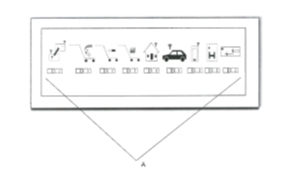
The Controller initially refused the application on the grounds that a GUI did not qualify as a finished article suitable for industrial processes. Although the Calcutta High Court suggested reconsideration based on the Locarno classification, the Controller upheld the refusal; hence, according to the Design Office, GUI cannot be treated as the design of any article. Further, ICON/GUI does not follow the process of industrial manufacturing but is mainly created by software development processes.
Trends and Challenges
Since its last amendment in 2000, the law governing design protection has not significantly evolved to keep pace with the rapidly changing landscape of functional designs and the swift shifts in design trends across industries such as fashion, technology, automotive, and user interfaces. This oversight is concerning, as these sectors continuously innovate, creating new and complex design challenges that the current legal framework does not adequately address. Furthermore, the absence of a substantive examination process for design registrations has raised significant concerns. Without this critical review, the burden of challenging invalid registrations disproportionately falls on third parties, which not only complicates the enforcement of intellectual property rights but also stifles competition and creativity.
Recent Developments
Courts are increasingly addressing non-traditional design elements, particularly in graphical user interfaces (GUIs) and digital interfaces, recognising their significance in modern design practices. As technology evolves, the legal system is adapting to ensure adequate protection for these innovative designs. The Locarno Classification, the international system used for the classification of industrial designs, is gaining prominence in assessing the registrability of new-age designs. In India, the government has launched various schemes and financial incentives to promote design registration among entrepreneurs and innovators. These initiatives include substantial reductions in official registration fees, making it easier for individuals and businesses to protect their creative work and contribute to the overall growth of the design industry.
Conclusion
As industries increasingly integrate advanced technology, user-centric aesthetics, and digital interfaces, Indian design law must continue to adapt to address emerging categories. There is also an urgent need to modernise the law to ensure the system remains aligned with global standards and industry realities. Accurate classification, consistent representation, and proper documentation remain essential foundations for enforceable design rights. At the same time, businesses are encouraged to adopt integrated IP strategies that combine design protection with trademarks, copyrights, and patents to strengthen market exclusivity and reduce infringement risks.
The content of this article is intended to provide a general guide to the subject matter. Specialist advice should be sought about your specific circumstances.