- within Employment and HR topic(s)
- with Senior Company Executives, HR and Inhouse Counsel
- with readers working within the Accounting & Consultancy, Business & Consumer Services and Technology industries
The Pay Transparency Directive is the EU’s latest effort to achieve its longstanding principle of equal pay for equal work.
The centrepiece of the Directive is a requirement that all employers with more than 100 workers must regularly report detailed information regarding the organisation’s gender pay gap. If this reporting reveals a gap of 5% or more within any job category and the gap cannot be explained by objective and non-discriminatory factors, the employer has six months to eliminate the gap. If it fails to do so, the employer must engage in an extensive pay audit process (a ‘joint pay assessment’), with oversight by the employee representatives.
The Directive also gives employees and prospective employees a number of individual pay transparency rights. For example, it requires employers to include salary ranges during the hiring process; prohibits employers from asking about a job candidate’s salary history; and prohibits efforts by employers to prevent employees from sharing salary information. It also gives employees the right to demand disclosure of information on pay levels and pay criteria. This includes access to average pay data relating to comparators and broken down by gender. These individual rights are set to apply largely irrespective of headcount, and so will impact employers with less than 100 workers.
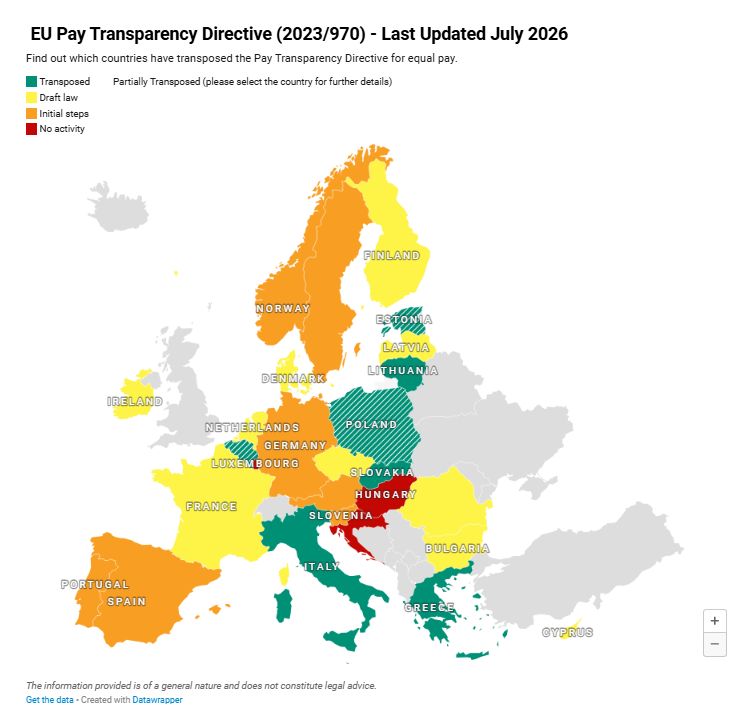
Member States were required to transpose the Directive by 7 June 2026. This map shows the current status of transposition across Europe.
The content of this article is intended to provide a general guide to the subject matter. Specialist advice should be sought about your specific circumstances.
[View Source]