

- with readers working within the Business & Consumer Services industries
The holiday season brings people together to decorate their homes, exchange gifts, and gather with family and friends. While these traditions feel timeless, many of the holiday staples we cherish are relatively recent inventions made possible by the patent system. As you pour a glass of eggnog and take a break wrapping presents, let us explore a few groundbreaking patents that have shaped how we celebrate.
String lights draped across trees, lamp posts, and rooftops are among the most iconic holiday decorations. Over the years, many innovations have brightened our festivities, but U.S. Patent No. 6,319,056 is notable for introducing parallel-wired circuitry in string lights. This invention keeps the rest of the strand lit even when one bulb fails and improves fuse protection efficiency during short circuits to prevent fire, making holiday lighting more reliable and safer for everyone.
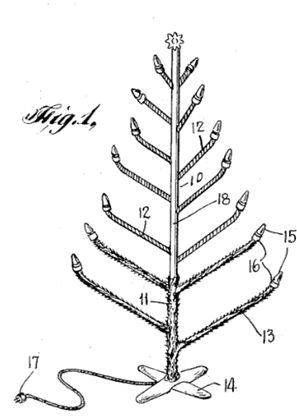
Speaking of fire hazards, traditional pine Christmas trees have the tendency to dry up and can increase the risk of catastrophic fires in a household. Thankfully, a number of inventors have concocted artificial Christmas tree alternatives. One of the earliest iterations is disclosed in U.S. Patent No. 1,656,148. The '148 patent, issued in the 1920s, describes an artificial Christmas tree construction using branch-like elements designed to resemble natural foliage. Although a bit rudimentary, patents like this laid the groundwork for the highly realistic artificial trees of today.
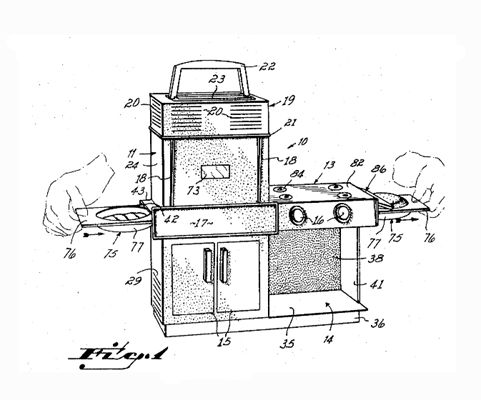
As some parents know, a tree is nothing without presents beneath it. To help with this, toy companies continuously innovate to create the next big seasonal gift that every kid will want. One of the most iconic toys, Kenner Product's Easy-Bake-Oven, was granted Patent No. 3,368,063 in 1968. The patent describes a play oven with a heating chamber, a cooling chamber, and tracks to transfer baking pans between the two. The stated goal of the patent was to "provide a miniature but fully operative oven that is as safe as possible for a child to operate." With over 30 million units sold, it is safe to say that Kenner Products succeeded in that goal.
While some people relish the idea of a snow-filled holiday season, for others it's an icy nightmare. Fortunately, countless innovations have made snowblowers a modern convenience that takes much of the hassle out of dealing with snow. The earliest known patent for a "snow-removing machine" is U.S. Patent No. 1,703,786, granted to Arthur Sicard in 1929. The '786 patent describes a device with a fan blower and cutting blades, designed to be used alongside a truck, with the purpose of "remov[ing] snow . . . much faster and better than can be done by expert hand labor." While we cannot stop the snow from falling, thanks in part to Mr. Sicard's invention, at least we can now move it elsewhere.
There is no doubt that countless utility patents influence the season, but there are an equal amount of design patents that shaped the visual appearance of the holidays.
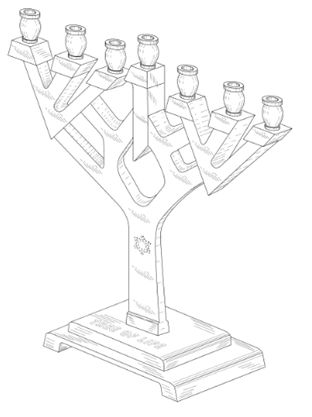
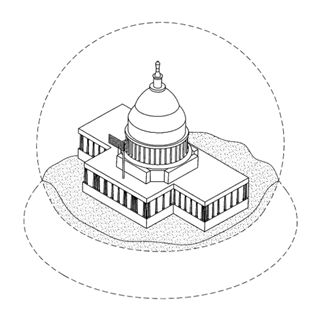
For example, D715,513 is directed to a menorah with interconnected and crisscrossed candle holders, reminiscent of a tree. Meanwhile, D634,242 presents a new twist on snow globes by featuring the Capitol building seated squarely in the middle.
Both utility and design patents have played indispensable roles in shaping our modern holidays, from enhancing safety and convenience to enriching festive aesthetics. As we enjoy the glow of holiday lights, the elegance of a menorah, or the charm of a uniquely styled snow globe, we are witnessing the creativity and protection the patent system brings to our cherished traditions.
The content of this article is intended to provide a general guide to the subject matter. Specialist advice should be sought about your specific circumstances.
