

On December 18, 2025, the Federal Energy Regulatory Commission (FERC) took a significant step to break up the log jam that is precluding large load and data centers to receive power in the PJM Interconnection, L.L.C. (PJM) region of the United States.1 FERC issued an Order finding that PJM's existing rules that pertain to generation that interconnects with load behind the point of interconnection (BTMG) are unjust and unreasonable and must be revised. FERC's directives to PJM likely signal what FERC may require in some form throughout the nation.
There are many sub-parts and requirements that FERC directed, but in general FERC's directives fall into two categories.
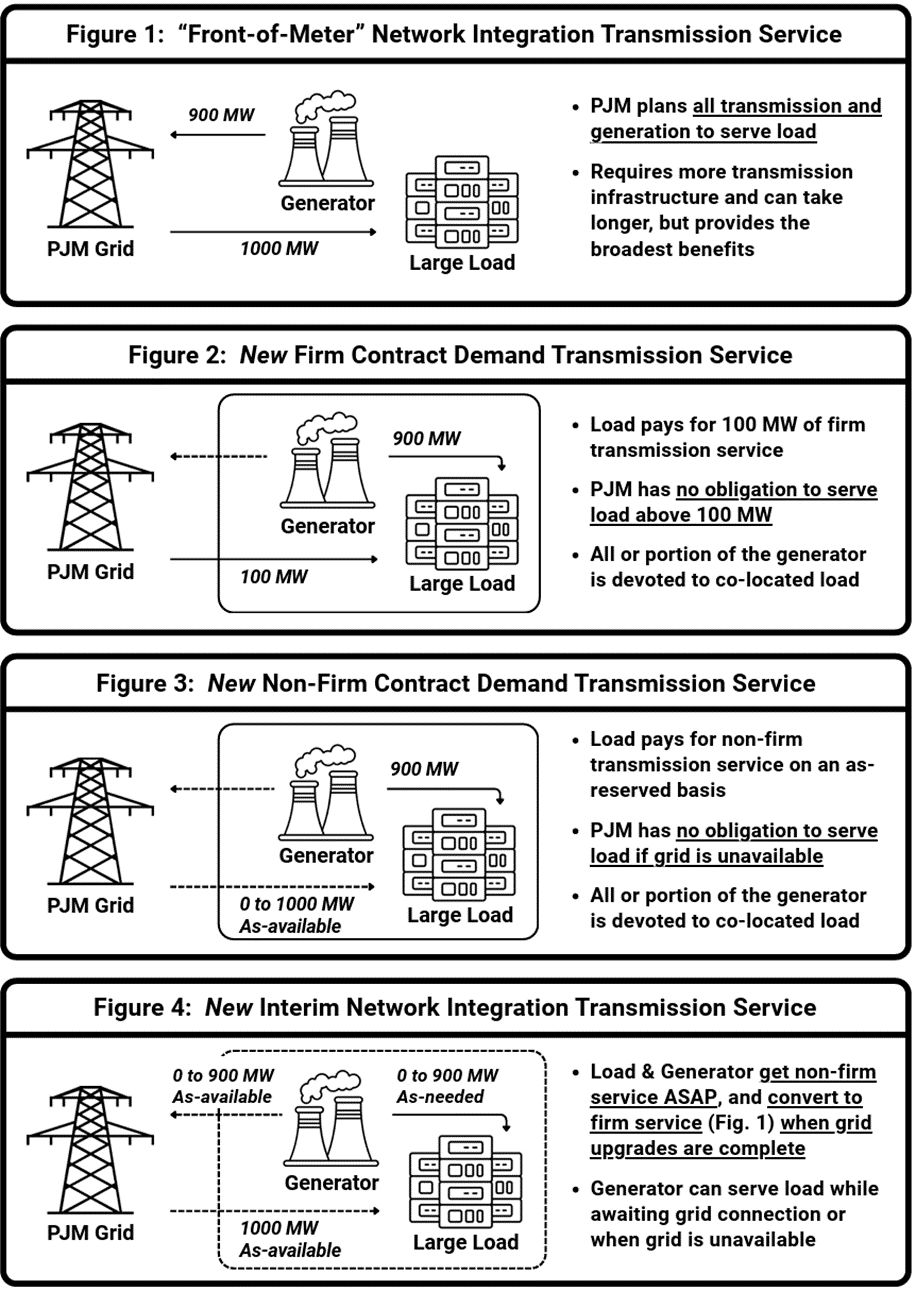
First, BTMG should be evaluated by PJM only to the extent of actual intended injection to the grid. FERC explains that, if a 1,000 MW generator will use 900 MW to serve co-located load and lean on the PJM transmission grid for only 100 MW, then PJM need only study the 100 MW.
FERC directed PJM to submit Tariff revisions by January 19, 2026, that address this concept for new and existing generation. The Tariff revisions must also address how customers can make use of (i) provisional interconnection service, (ii) the ability to request interconnection service below nameplate capacity, (iii) the potential to accelerate the interconnection process under certain circumstances, and (iv) surplus interconnection service to interconnect new generating facilities seeking to serve co-located load.
Second, FERC ordered PJM to create three new transmission services to accommodate co-location arrangements that are willing to limit energy withdrawals from the transmission system:
- Firm Contract Demand Transmission Service (highest priority before any need for interruption/curtailment)
- Non-Firm Contract Demand Transmission Service (lower priority and willing to be interrupted)
- Interim, Non-Firm Transmission Service (until the transmission grid is built to accommodate the Contract Demand transmission service).
PJM must file Tariff revisions that address these services by February 16, 2026. FERC's Order included a pictural chart of the types of transmission service, which is reproduced below.
The Order also lists 11 questions that PJM must address by February 16, 2026, that bear on the rates, terms and conditions of service. FERC will conduct a paper-hearing process. Responses to PJM's initial brief are due March 18, 2026, and replies to those responses are due April 17, 2026. The FERC Order can be found at this link: https://elibrary.ferc.gov/eLibrary/filelist?accession_num=20251218-3081
Footnote
1. PJM Interconnection, L.L.C., et al., 193 FERC ¶ 61,217 (2025).
The content of this article is intended to provide a general guide to the subject matter. Specialist advice should be sought about your specific circumstances.

