
The cliché of the starving artist is in fact a lived reality for many, but not in a romanticized way. Many Canadian artists have incomes at or below the poverty line.1 Visual artists (except at the highest levels) are poor cousins in the creative economy. Unlike writers or musicians who benefit from ongoing sales and use of their work, artists rarely profit from future sales. Indigenous artists have been especially and historically disadvantaged.
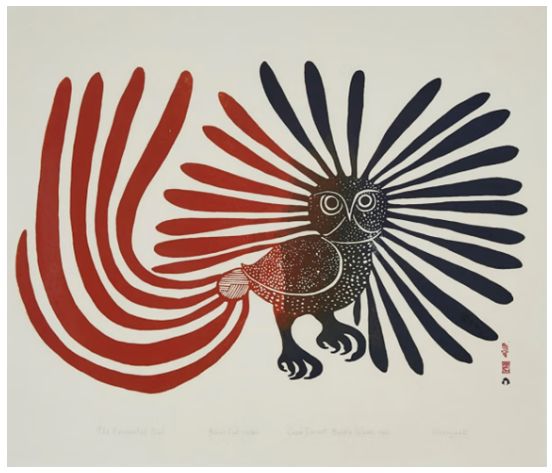
When artworks increase in value and sell again on the secondary market, many are in on the profit– except the artist. In an oft-cited example, a print by Kenojuak Ashevak, which originally sold for $24 in 1960, was later re-sold at auction in 2018 for $216,000. The artist's estate received no portion of the 10,000-fold increase.
That is about to change.
By way of the 2025 Federal Budget, Canada has signaled its intention to amend the Copyright Act (the "Act") to introduce an Artist's Resale Right ("ARR").2 When implemented, this reform will align Canada with 80 jurisdictions, including the European Union, the United Kingdom, and Australia. It also aligns with international law. The major copyright treaty, the Berne Convention, recognizes but does not mandate the ARR.3 Canada is not reinventing the wheel. France, ever the champions of artistes, introduced artists' resale rights in 1920, and the EU mandated harmonized ARR regimes across all member states in 2006. Australia adopted the ARR in 2009, followed by New Zealand in 2024. In the United States, advocates have pushed for similar legislation since the 1970s, and although several bills have been introduced, none have passed to date. California, always an outlier, has a version of the ARR with mixed results.4
Canada's announcement reflects long-standing recommendations from Canadian arts stakeholders, and draws on decades of international experience.5
What is the Artist's Resale Right?
The ARR, also known as droit de suite, entitles artists to receive a percentage of the sale price (commonly a 5% royalty) each time their original artwork is resold on the secondary market, typically via galleries, dealers, or auction houses. The intent is straightforward: the economic value of an artwork often rises over time, and ARR ensures that artists share that appreciation rather than benefiting only from the initial sale.
The Current Law: What's Still Missing?
Although current copyright law offers comprehensive protection of creators' economic and moral rights, it contains no mechanism for artists to receive royalties on secondary sales.
Introducing ARR will fill this gap by adding a statutory entitlement specifically tied to the resale of physical artworks, an area traditionally outside the scope of intangible copyrights.
How Will the New Right Work?
The federal government's announcement signals a strong policy direction but leaves practicalities to be set out in further enacting legislation and regulation. These matters are still-to-be-determined:
- the royalty percentage;
- thresholds for eligibility;
- the types of works covered;
- the applicable resale channels; and
- the administrative body responsible for collecting and distributing royalties.
While the devil may be in the details, the government's intention is clear: artists, and particularly visual artists, make significant cultural contributions to the nation, and ought to be rewarded for these contributions on an ongoing basis. Because art is a societal good, Canadian art is poised to receive a long overdue boost. (In recognition of the importance of well-fed artists Ireland has gone a step further, enacting a permanent basic income for artists in 2026.6). The promise of the ARR is that by putting money in the pockets of artists and their heirs, starving artists will become a rare relic of the past.
Footnotes
1 https://statsinsights.hillstrategies.com/p/chrc-artists-survey-2024
2 Government of Canada, "Canada Strong: Budget 2025" (2025), online: https://budget.canada.ca/2025/report-rapport/toc-tdm-en.html; Copyright Act, RSC 1985, c. C-42.
3 Berne Convention, Article 14ter (1)
4 ARR in California did not survive a constitutional challenge – see https://mail.arts.ca.gov/resources/rra.php
5 House of Commons, Shifting Paradigms: Report of the Standing Committee on Canadian Heritage, 42-1 (May 2019).
6 https://www.businessinsider.com/ireland-basic-income-artists-permanent-2025-10
The content of this article is intended to provide a general guide to the subject matter. Specialist advice should be sought about your specific circumstances.