
We receive a fair number of intellectual property ("IP") case reports from Taiwan, and we like to report on these Taiwanese cases for one simple reason – these tend to be well written and they are easy to follow.
In this article, we discus two recent Taiwanese IP cases - one of these cases deals with golf, whereas the other considered something quite different, flower designs. So let's tee off and see who blossoms.
YUNIX- Golfer trade marks
A Taiwanese company, Yunix International Corp. ("Yunix"), registered what is described as the 'golfer trade marks' in Taiwan over the period 1983 to 2019 – representations of some of these trade marks appear below. The trade mark registrations cover a range of goods such as clothing, apparel, sportswear and the like.

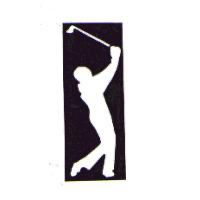
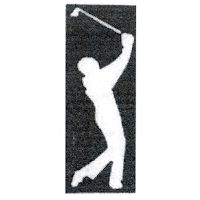
A claim of trade mark infringement
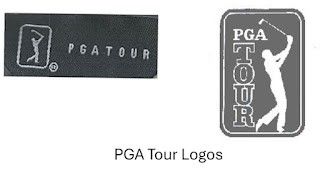
Things went perfectly well... until they didn't. What happened was that Yunix had at one stage been faced with a claim of trade mark infringement, a claim that was based on trade mark registrations featuring the words PGA TOUR. But on 7 October 2025, Taiwan's IP Court dismissed this infringement claim. The court's rationale was as follows – consumers would not confuse Yunix's golfer trade marks (above) with the PGA Tour Inc's trade marks (see below).
Below follows some of the court's reasoning
Yes, the trade marks are indeed similar: The PGA Tour logo is clearly similar to Yunix's trade marks and it is used in similar apparel.
But... as a result of extensive use, consumers are able to distinguish: As a result of the PGA's continuous and extensive use of its PGA Tour logo, the court was of the view that the evidence was sufficient to prove that consumers would be able to distinguish the PGA Tour logos from Yunix's golfer trade marks. Indeed, the evidence of trade mark use and strong brand recognition suggested that consumers would be more familiar with the PGA Tour logo, with the result that there would be no confusion. These words say it all:
'While the PGA Tour Logo was found similar to Yunix's asserted trade marks and was used in similar apparel products, the Court concluded that there would be no confusion because the PGA Tour Logo was actually more famous and recognizable among the consumers.' As a result 'there is no actual confusion, and... no intent to mimic Yunix's asserted trade marks.'
Well, that's not something that happens much!
YUKI – flower designs
In this case, a decision of Taiwan's Intellectual Property Office ("TIPO") was taken on appeal to the Taiwan's Petitions and Appeal Committee of the Ministry of Economic Affairs.
The background and an official emblem
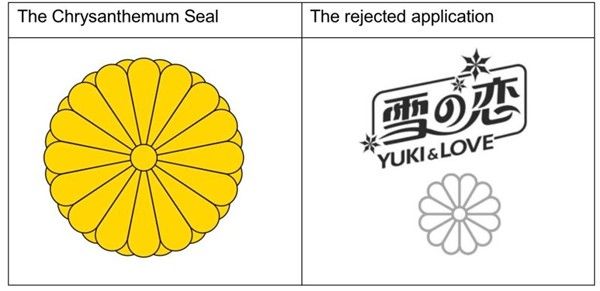
The TIPO had rejected a trade mark application for the mark YUKI & LOVE logo on the basis that the flower design featured in the mark was too similar to Japan's official emblem, the Chrysanthemum Seal. The visual below makes it clear what they look like:
The finding of the Appeal Committee
On 16 October 2025 the Appeal Committee upheld the decision of the TIPO to reject the application. The Appeal Committee made the following observations:
- State emblems are verboten: Taiwan's trade mark legislation makes this very clear – In terms of Article 30.1.2., trade marks that are identical or similar to national flags, official seals, or state emblems of foreign countries (as recognized under Article 6 ter of the Paris Convention) cannot be registered.
- It's not the number of petals that count: The Appeal Committee was not persuaded by arguments to the effect that the flower design has 12 petals instead of 16. It said that the two designs 'featured symmetrical petals radiating from the centre, creating a similar overall impression'.
- Far too similar: The Appeal Committee said that the flower design 'constituted the dominant portion of the trade mark', which had the effect that the 'applicant's trade mark was considered visually similar' to the Chrysanthemum Seal, and therefore rejected.
Final words
Taiwan's recent IP rulings show a practical, evidence-based approach. In the golfer trade marks case, the court accepted that the logos look similar, but still found no confusion because the PGA TOUR logo is well-known. In short, real consumer recognition matters a great deal in Taiwan, even when marks look alike.
The YUKI flower case is different. When a mark resembles a country's emblem, the rules are strict. Small tweaks, like changing the number of petals or the styling, do not help if the overall look is close to a protected national symbol, especially when that element is the main part of the mark.
Taken together, the message is simple: a strong reputation can avoid confusion in ordinary disputes between private brands, but it cannot overcome clear legal bans on lookalikes of state emblems. Brand owners should build distinctiveness early and avoid designs that resemble official symbols.
*Reviewed by Ilse du Plessis, Executive in ENS' Intellectual Property Practice.
The content of this article is intended to provide a general guide to the subject matter. Specialist advice should be sought about your specific circumstances.