
- with readers working within the Property industries
- within Family and Matrimonial, Litigation, Mediation & Arbitration and Law Department Performance topic(s)
- in United States
Performance evaluations can be highly valuable when done correctly. However, when mishandled, they can demotivate employees, create confusion, and even foster resentment. Below are some of the most common mistake's organizations make during these exercises:
- Avoiding Errors in Employee Performance Evaluations1
- Absence of Clear Evaluation Criteria
Providing feedback without well-defined goals or benchmarks leads to ambiguity and subjectivity. Employees may feel unfairly assessed when expectations are not clearly communicated, making it difficult for them to understand where improvement is needed.
- Infrequent Feedback
Relying solely on annual reviews allows issues to accumulate or go unnoticed. Supervisors should consistently provide feedback throughout the year. Ongoing communication is essential for guiding performance and building trust between employees and management.
- Bias and Favoritism
Subjective influences such as personal preferences, recency bias2, or the halo3 effect can compromise the fairness of evaluations. To maintain credibility, assessments must be grounded in objective, consistent data and applied uniformly across all employees.
- One-Way Communication
When managers dominate the conversation, employees may feel silenced, which can lead to disengagement and unresolved concerns. Employees should be given the opportunity to express their perspectives and raise issues. Open dialogue fosters mutual understanding and helps resolve matters amicably.
Effective evaluations should encourage two-way communication, promote reflection, and build trust between managers and staff.
- Overemphasis on Weaknesses
Focusing solely on an employee's shortcomings can be discouraging and counterproductive. While no one is perfect, everyone strives for excellence in their roles. A balanced approach is essential as it acknowledges strengths, celebrates achievements, and identifies areas for growth. This not only motivates employees but also reinforces a culture of continuous improvement.
- Vague or Generic Feedback
Statements like "You need to improve" offer little direction and can leave employees confused or frustrated. Feedback should be specific and actionable. For example, saying "Aim to reduce response time by 20% over the next quarter" provides a clear goal and path forward.
- Lack of Follow-Up
Setting goals without revisiting them leads to stagnation. Regular follow-through demonstrates leadership's commitment and reinforces accountability. When progress is tracked and discussed, employees stay engaged and motivated to improve.
- Using Evaluations as Punitive Tools
Performance reviews should be developmental, not disciplinary. If evaluations are perceived as punitive, employees may become defensive or disengaged. The focus should be on growth, support, and constructive feedback not punishment.
- Ignoring Emotional Intelligence
The delivery of feedback is just as important as its content. Tone, empathy, and timing play a significant role in how feedback is received and interpreted. Even well-intentioned critiques, if delivered harshly or insensitively, can damage morale and strain relationships. Managers must approach evaluations with emotional intelligence listening actively, showing empathy, and choosing the right moment to foster trust and encourage growth.
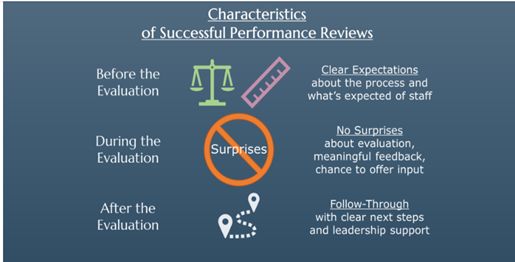
Transforming Performance Assessments into Growth Opportunities4
- What Are the Positive and Negative Effects of Performance Evaluation?5
Performance evaluations can be a powerful tool or a potential challenge, depending on how they are implemented. Below is a breakdown of both the positive and negative effects they can have on employees and the workplace.
2.1. Positive Effects of Performance Evaluation
- Improved Performance
One of the main benefits of performance evaluations is that they provide clear, constructive feedback. This helps employees understand their current performance, what is expected of them, and how they can improve in handling their tasks and responsibilities.
- Goal Alignment
Evaluations help ensure that individual employee efforts are aligned with team objectives and the overall goals of the organization. This alignment promotes consistency and productivity across departments.
- Motivation and Recognition
Recognizing employees' achievements during evaluations boosts morale and encourages continued high performance. When employees feel appreciated, they are more likely to stay engaged and motivated.
- Career Development
Performance evaluations are useful for identifying employees' strengths and areas for growth. This information can guide decisions on promotions, training, and career development, benefiting both the employee and the organization.
- Improved Communication
Evaluations foster open communication between managers and employees. Regular feedback builds trust, encourages dialogue, and promotes a transparent workplace culture.
- Increased Accountability
Evaluations help create a culture of accountability by clearly outlining expectations and responsibilities. Employees are more likely to take ownership of their roles when they understand what is required of them.
2.2. Negative Effects of Performance Evaluation6
- Stress and Anxiety
Performance evaluations can create stress and anxiety, especially when they are perceived as intimidating or punitive. This fear can lead to employee disengagement and reduced job satisfaction.
- Bias and Unfairness
Evaluations may be influenced by personal relationships or favoritism, where certain loyal or well-connected staff receive more favorable ratings. Subjective judgments can undermine trust and negatively impact team morale.
- Demotivation
Instead of inspiring improvement, poorly handled evaluations can demotivate employees especially if there is an excessive focus on weaknesses or a lack of recognition for accomplishments. This can leave employees feeling unappreciated and discouraged.
- Poor Implementation
Infrequent, vague, or inconsistent evaluations can lead to confusion and frustration. When feedback lacks clarity or structure, it reduces the overall effectiveness of the performance management process.
- Resistance to Feedback
Without a culture that encourages openness and constructive dialogue, employees may resist feedback. If managers deliver criticism harshly or unclearly, employees can become defensive or feel personally attacked.
- Short-Term Focus
Some performance evaluations emphasize immediate results over long-term growth and innovation. This can pressure employees to focus only on quick wins, potentially stifling creativity and professional development.
- Ways to Maximize the Positivity of Performance Evaluations7
To ensure performance evaluations contribute positively to employee growth and organizational success, the following best practices should be adopted:
- Use Clear and Objective Criteria
Supervisors should base evaluations on well-defined, measurable, and transparent performance standards. This reduces bias and ensures employees understand how their performance is assessed.
- Provide Regular and Constructive Feedback
Heads of departments or managers should offer feedback on a consistent basis not just during annual reviews. Constructive feedback helps employees improve continually and builds trust in the evaluation process.
- Focus on Development, Not Just Judgment
Employees and evaluators alike should view performance evaluations as a tool for growth, not punishment. The emphasis should be on identifying opportunities for learning, improvement, and career progression not merely pointing out shortcomings.
- Train Managers in Emotional Intelligence and Communication
Organizations should invest in training for supervisors and managers to enhance their emotional intelligence and communication skills. Being able to manage their own emotions and understand others' feelings allows managers to deliver feedback in a way that is empathetic, respectful, and motivating.
- What Organizations Do to Support Employees After Performance Evaluations
At the end of a performance evaluation cycle, organizations that are committed to employee development often take the following supportive actions:
- Provide Constructive Feedback and Follow-Up
Rather than just handing over a report, managers should hold one-on-one sessions to discuss the feedback in depth, answer questions, and clarify expectations moving forward. This helps employees understand their strengths and areas for improvement.
- Set Development Goals
New goals are set collaboratively, and regular check-ins are scheduled to track progress. This keeps employees engaged and accountable. However, some organizations often work with employees to establish personalized development goals that align with both individual career aspirations and company objectives. This may include skill-building, project assignments, or leadership development.
- Training and Skill Building
If gaps are identified, organizations may offer workshops, online courses, or coaching to help employees build the necessary skills. Nevertheless, based on evaluation outcomes, many companies provide access to training programs, workshops, or courses to help employees grow in the areas identified during the review.
- Recognition and Rewards
Outstanding performers are often acknowledged through bonuses, promotions, public recognition, or other incentives. This reinforces positive behavior and boosts morale. Acknowledging strong performance through bonuses, raises, promotions, or public recognition helps reinforce positive behaviors and motivates continued high performance.
- Personalized Development Plans
They work with employees to create tailored growth plans based on evaluation outcomes. This might include training programs, mentorship, or stretch assignments that align with the employee's strengths and areas for improvement. For employees needing improvement or showing leadership potential, HR and managers may collaborate to build Employee Development Plans that outline clear steps for growth over the next review cycle.
- Career Pathing and Succession Planning
Evaluations often feed into long-term career planning. Employees may be identified for future leadership roles or guided toward new opportunities within the organization. Likewise, organizations could schedule one-on-one career development discussions where employees can talk about their aspirations and how the company can support them through mentoring, stretch assignments, or internal mobility.
- Encourage Supervisor's Support and Check-Ins
Post-evaluation, effective organizations promote ongoing supervisor support, including regular check-ins to monitor progress and offer guidance not just annual reviews.
- Promote Internal Opportunities
If the evaluation identifies employees ready for new challenges, HR may facilitate internal job transfers, project rotations, or promotions that align with employee goals.
- Address Concerns or Dissatisfaction
Some organizations offer access to counseling, wellness programs, or employee assistance services, especially if the evaluation process was emotionally taxing. However, when evaluations raise concerns, proactive organizations listen to employee feedback and take steps to resolve misunderstandings, reduce stress, or adjust expectations where necessary.
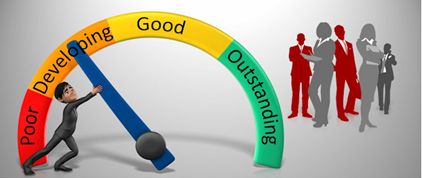
Performance Appraisal: Its Process and Types:8
- Conclusion
In a nutshell, evaluations are not verdicts, they are launchpads. With the right approach, they can propel employees towards new achievements and deeper self-awareness.
Organisations can adopt a springboard mindset and a growth-oriented mindset that views challenges as opportunities for development and a proactive, execution-focused approach to achieving goals. This approach also views performance evaluations as opportunities rather than judgments for the benefit of both employees and organizations as listed below:
- Shows Leadership Potential
Employees who actively embrace and act on feedback demonstrate maturity, self-awareness, and initiative. These are core traits of effective leaders and often make employee's strong candidates for promotion and leadership roles.
- Builds Resilience and Adaptability
Rather than being discouraged by criticism, employees with a growth-oriented mindset use it as fuel for self-improvement. They adapt more quickly to change and come back stronger after setbacks.
- Strengthens Relationships
Responding positively to feedback fosters mutual respect and trust between employees, managers, and peers. This contributes to a more collaborative, supportive, and psychologically safe workplace.
- Drives Career Progression
Employees who handle evaluations constructively are more likely to be recognized for development opportunities such as promotions, training programs, and leadership tracks.
Footnotes
1 Srikant Chellappa, "Performance Appraisal Mistakes To Avoid As A Manager" available at
https://engagedly.com/blog/performance-appraisal-mistakes-to-avoid-as-a-manager/ accessed 2nd October 2025.
2 "Recency bias is a type of cognitive bias that occurs when people give more weight or importance to recent events or information than to older ones, even if the older information is equally or more relevant. In other words, it is when your judgment is influenced mainly by what happened most recently, instead of considering the full picture over time for example during a performance appraisal, a manager might rate an employee highly just because they did very well in the last month, even though their performance earlier in the year was poor or if an employee made a mistake recently, the manager might rate them low, forgetting their strong performance in previous months" See, Alejandro Betancourt, "The Cognitive Biases We Need to Outsmart to Be Better Humans" available at https://medium.com/bottomline-conversations/the-cognitive-biases-we-need-to-outsmart-to-be-better-humans-38471df310aa accessed on 13th November 2025.
3 The halo effect is a type of bias that occurs when a person's overall impression of someone (usually based on one positive trait or action) influences how we judge that person's other qualities or performance. In simpler terms, it means seeing someone as entirely good or capable just because they did one thing well, even if that judgment is not accurate. See, Lasky Jack, EBSCO Knowledge Advantage "Halo Effect" available at https://www.ebsco.com/research-starters/psychology/halo-effect accessed on 14th November 2025.
4 Katie Sullivan Porter, "Transforming Performance Assessments into Growth Opportunities", Clear Mission consulting LLC, available at https://leadershipcircle.com/blog/performance-assessments-growth-opportunities/ accessed on 4th November 2025.
5 Jalil Damus, "Performance evaluation: advantages and disadvantages", available at https://actiosoftware.com/en/performance-validation-pros-and-cons/ accessed 2nd October 2025.
6 Raj Jain, "Common Mistakes Performance Evaluation and How to Avoid Them", available at https://www.cse.wustl.edu/~jain/cse567-17/ftp/k_02mst4.pdf accessed on 2nd October, 2025.
7 See, Jennifer Herrity "10 Tips To Give Useful Performance Reviews (With Examples)" available at accessed 2nd October 2025.
8 Kasum Wagle, "Performance Appraisal: Its Process and Types" available at https://publichealthnotes.com/performance-appraisal-its-process-and-types/ accessed on 4th November 2025.
The content of this article is intended to provide a general guide to the subject matter. Specialist advice should be sought about your specific circumstances.