

- within Media, Telecoms, IT and Entertainment topic(s)
- with readers working within the Automotive, Banking & Credit and Healthcare industries
- within Media, Telecoms, IT and Entertainment topic(s)
- within Media, Telecoms, IT, Entertainment, Insurance and Finance and Banking topic(s)
The gaming industry has witnessed the introduction of a landmark legislation, which has impacted the operations and existence of the online gaming industry, as a whole. The Promotion and Regulation of Online Gaming Act, 2025("Online Gaming Act" or "Act") and the Draft Promotion and Regulation of Online Gaming Rules, 2025 ("Draft Rules") have provided a unified legal framework for regulating online games and online betting across India.
The Online Gaming Act received the assent of the President of India on 22 August 2025. However, the Central Government has not yet notified any date in the Official Gazette, as to when it shall come into force, as required under Section 1 (3) of the Act.
Further, although the Draft Rules were released on 2 October 2025 by the Ministry of Electronics and Information Technology ("MeitY") and were kept open for public consultation until 31 October 2025, these Draft Rules have also not been finalised and come into force and effect.
The Act brings about significant changes from the previous legislations, prohibiting "Online Games" which involve any stakes or expectations of monetary returns.
This FAQ seeks to provide an understanding of the key provisions of the Act and an insight on the Draft Rules:
1. What is the new Online Gaming Act about and its scope of applicability?
The Online Gaming Act is a legislation passed by Parliament of India which inter alia bans "Online Money Games" and establishes a regulating authority to regulate "Online Games". The Act extends to the whole of India and applies to all Online Games played by users in India, including operators offering Online Games from outside India.
2. What are the categories of Online Games under the Act?
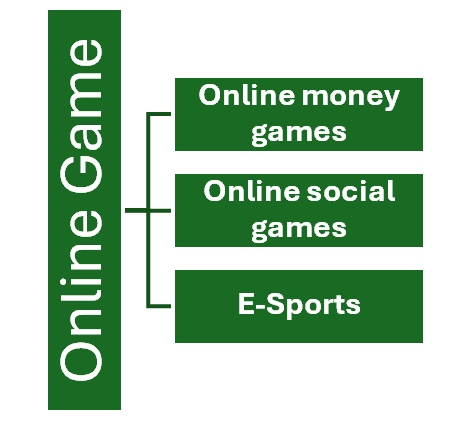
Under the Act, "Online Games" are classified in three categories: "Online Money Games", "Online Social Games" and "E-Sports":
- Online Money Games: This category includes all Online Games which are played by paying any fees or money, with the expectation of winning money or monetary awards or any "other stakes", irrespective of whether winning is based on chance or skill.
The expression "other stakes" includes anything which may be recognised as equivalent or convertible to money, and includes credits, coins, token or objects or any other thing else which can be purchased by directly or indirectly paying money.
- Online Social Games: This category of Online Games includes games played for entertainment, recreation and skill-building, which do not involve staking of money or expecting to win money. This category allows for the playing of games free of cost or which might require a subscription fee or a one-time fee to play the game, provided such fee does not have the nature of a wage or bet.
- E-Sports: These are organised, competitive Online Games played in either individual or team formats, and which require physical dexterity, mental agility, strategic thinking or other similar skills to be played. E-Sports can require a registration or participation fees, and performance-based prizes as well. The E-sport must be recognised under the National Sports Governance Act, 2025.
3. Which Online Games are prohibited under the Act?
The Act implements a blanket ban on Online Money Games. The prohibition also extends to any "Online Money Gaming Services", which has been defined to include any services offered by a person, which has the effect of aiding, abetting or inducing Online Money Games.
Additionally, the Act prohibits any person from:
- aiding, abetting, inducing or being involved in the advertisement, promotion or influence of any Online Money Game, whether directly or indirectly.
- facilitating or authorising payments, transfers or financial transactions towards payments for any Online Money Games. (includes banks, financial institutions, payment gateways and wallets).
4. Which Online Games are permissible under the Act?
The Act permits E-Sports and Online Social Games. With respect to E-Sports, the Act aims to promote and develop E-Sports and establish it as a legitimate form of competitive sport in India. With respect to Online Social Games, the Act provides for creation of platforms and programmes to support and encourage the development of such games for recreational and educational purposes in India.
5. Why has the Act been enacted and what objectives does it seek to achieve?
As per the Press Release1 dated 21 August 2025, issued by the Press Information Bureau of the Government of India, the Act has been enacted to address rising concerns over the harmful impact of Online Money Gamesin India, including addiction, heavy financial losses, fraud, and mental health issues.
The objectives of the Act are twofold: (i) protecting users and public interest by banning Online Money Games, preventing misuse of payment systems, and safeguarding against fraud, addiction, and money laundering; and (ii) promoting positive aspects of gaming such as E-Sports, social and educational games, and skill-based innovation. By establishing a central framework, the law aims to balance consumer safety with economic and technological growth, positioning India as a regulated but thriving hub for safe and responsible Online Gaming.
6. Is the regulation of Online Gaming a matter within the legislative domain of the Centre or the States?"
While betting and gambling falls under Entry 34 of the State List in the Seventh Schedule of the Constitution of India, the Central Government has justified the introduction of the Online Gaming Act as a matter of public interest. Further, given that Online Gaming typically exceeds state boundaries and frequently involves foreign operators, the Centre has deemed it necessary to establish a uniform national framework.
7. Who has the statutory mandate to implement and oversee compliance with the Act?
The statutory mandate to implement and oversee compliance with the Online Gaming Act principally lies with the Central Government, with no powers or authority being given to the State governments.
Rule 5 of the Draft Rules proposes the establishment of a central regulatory authority, i.e. the "Online Gaming Authority of India" which would recognise, register and monitor Online Games and distinguish between the three types of Online Games.
8. What powers is the Online Gaming Authority proposed to have?
Rule 10 of the Draft Rules provides the Online Gaming Authority with powers and functions which inter alia include recognising, categorising and registering Online Games, inquiring into any complaint relating to an online game, imposing penalties in the event of non-compliance with the Act and cancelling or suspending any registration. Rule 10 (3) gives the Online Gaming Authority the same powers as a civil court, for the purpose of discharging its functions.
9. What is the process for registration of an Online Game under the Draft Rules, 2025?
Rules 12 to16 of the Draft Rules stipulates the process for registration of any Online Game. The application for registration must be made as per Rule 12 of the Draft Rules, to the Online Gaming Authority and include details of the name and description of the game, targeted age group, revenue model, grievance redressal mechanism, and user safety features.
The Online Gaming Authority will first determine whether the game is an Online Money Game or not, on a suo moto or application basis, under Rule 13. If the Online Game is eligible for registration, the Authority shall issue a Certificate of Registration within 90 days. The certificate shall be valid for up to five years, unless suspended or cancelled.
10. Is there scope to appeal the decisions of the Online Gaming Authority under the Draft Rules?
As per Rule 11 of the Draft Rules, an appeal against any decision of the Online Gaming Authority, including determination of the type of game, registration, cancellation, or penalty, can be filed before the Appellate Authority, i.e., the Secretary to Government of India in the MeitY. Such an appeal must be filed within 30 days of receiving the Online Gaming Authority's decision by the aggrieved party in writing. The Appellate Authority may confirm, modify, or set aside the decision after giving the appellant an opportunity of being heard. The appeal has to be disposed of within 30 days of receipt.
11. What are the penalties imposed for offering, advertising, or facilitating Online Money Games under the Act?
The Online Gaming Act lays down strict penalties for anyone involved in offering Online Money Games or Online Money Gaming Services:
- Offering or running an Online Money Gaming Service: Jail up to 3 years or fine up to INR 1 crore, or both. Any repeat offence will attract imprisonment of 3-5 years, plus a fine of INR 1 to 2 crore.
- Advertising or promoting Online Money Games: Jail up to 2 years or fine up to INR 50 lakh, or both. A repeat offence will attract imprisonment of 2-3 years, plus a fine of INR 50 lakh to 1 crore.
- Facilitating payments/transactions for Online Money Games (banks, FIs etc.): Jail up to 3 years or fine up to INR 1 crore, or both. A repeat offence will attract imprisonment of 3-5 years and a fine of INR 1 to 2 crore.
Further, the Act provides that when a company commits an offence under this Act, every person responsible/ in charge of that part of the company, will be liable for commission of the offence.
All of the above offences are cognizable and are non-bailable.
12. Are there any interpretational challenges or legal ambiguities under the Act?
- Unclear criteria for regulation: The Central Authority can decide which games qualify as Money Games, but the Act does not clearly specify the standards or process, which may lead to inconsistent decisions.
- Banking and payment restrictions: Banks and payment providers must block transactions related to money games, but identifying all such transactions could be operationally complex and challenging.
- The blanket ban on Online Money Games (skill-based) may amount to denial of the constitutional right to livelihood for thousands of professional players who earn a living through skill-based platforms. By banning all Online Money Games without a distinction between skill and chance, the Act arbitrarily extinguishes a legitimate source of livelihood, violating Article 21 of the Constitution of India which guarantees the right to life and personal liberty, including the right to pursue a profession.
13. How does this new regulatory framework differ from the old framework?
The Act differs from the old framework in the following ways:
- Subject matter: The previous regulatory framework comprised of the Public Gambling Act, 1867, along with various state legislations, since betting and gambling fall under the State List. However, this regime primarily addressed traditional forms of betting and gambling and did not formally recognize online gaming, gambling, betting, or waging. In contrast, the Act specifically addresses the digital landscape, regulating online gaming broadly while prohibiting Online Money Games, thereby creating a distinct and modern legal framework.
- Codified Act: The old regime was governed by multiple State legislations, the legality of games involving money depended on the specific provisions laid out in each State legislation, which varied widely in scope and application. In contrast, the Online Gaming Act establishes a single, codified central legislation that applies uniformly across India, providing clarity and consistency in regulating online gaming and money-based games.
- Test for legality: Under the old regime, the judiciary developed the 'skill-versus-chance' test to determine the legality of games involving money. Subject to each State legislation, a game was permissible if it required a certain degree of skill. The Online Gaming Act, however, dispenses with this distinction, prohibiting any Online Games that involve monetary stakes, regardless of whether they are games of skill or chance.
14. Have the previous laws on gaming and gambling been repealed?
No, the previous laws on gaming and gambling, including the Public Gambling Act, 1867 and the various State gambling legislations, have not yet been repealed. The Online Gaming Act operates concurrently as a central law, specifically regulating Online Gaming and money-based games, while traditional state laws continue to govern physical betting and gamblingwithin their respective jurisdictions. Further, as per Section 18 of the Online Gaming Act has an overriding effect and stipulates that the provisions of this Act shall be in addition to, and not in derogation of the provisions of any other law currently in force. However, in the event of any inconsistency between the provisions of this Act and those of any other law, the provisions of the Online Gaming Act shall prevail to the extent of such inconsistency.
15. Does the prior differentiation between "games of skill" and "games of chance" still hold good in law?
Under the previous regime, the legal difference between a "game of skill" and a "game of chance" was impertinent in deciding the legality of a game. Any monetary earning in games of skill such as rummy, and sports fantasy games were permissible. However, under the Act, the key question in determining the legality is whether the game involves staking money with the hope of winning more? If yes, it would fall under the ambit of"Online Money Games", irrespective of whether skill is utilised or not.
16. Is the Online Gaming Act aligned with global practices based or based on any foreign legislation?
While India's law is quite strict, there are partial similarities with legislations of other jurisdictions. Key global practices that resemble India's approach include:
- Japan: In Japan, gambling is governed by the Penal Code, which explicitly bans online gambling. This prohibition extends to accessing and participating in foreign online casinos, even if those platforms are legally operated abroad. An amendment to the Act on Countermeasures Against Gambling Addiction, commonly known as the Anti-Gambling Act, also outlaws websites that facilitate illegal online gambling or promote offshore gambling services. However, Japan permits certain forms of physical gambling, such as land-based casinos located within designated Integrated Resort zones, provided they are licensed under the 2018 IR Implementation Law. Japan's stance closely mirrors India's, as both nations prohibit online gambling and enforce criminal penalties on those who operate, engage in, or advertise such activities, while still allowing regulated physical gambling venues.
- China: Mainland China enforces a comprehensive ban on gambling, permitting only two government-operated lotteries. The cornerstone of this prohibition is Article 303 of the Criminal Law of the People's Republic of China, which outlaws gambling for profit and related activities. This restriction encompasses all forms of gambling, including physical casinos, sports wagering, poker, online platforms, and private betting. Additionally, the Chinese government actively blocks access to overseas gambling websites. Violations of these laws can lead to harsh penalties, such as substantial fines and imprisonment of up to three years. Compared to India, China's regulatory stance on gambling is notably more stringent.
- Singapore: The Gambling Control Act, 2022 states that any person who advertises unlawful gambling is said to commit an offence and shall be liable for a fine. This provision penalising the advertising of any prohibited games or forms of gambling is also provided for under the Online Gaming Act.
Conversely, Western regulatory regimes differ from India's and focus more on licensing and regulating rather than prohibiting real money games:
- United States of America: The United States operates under a dual regulatory framework where individual states have the primary authority to regulate online gambling, while federal laws establish certain boundaries. The federal regulatory framework of the Unlawful Internet Gambling Enforcement Act ("UIGEA") of 2006 does not prohibit online gambling but rather states that if the online gambling transaction is illegal under state or federal law, banks and payment processors will be required to block the transaction. State governments remain in control of legalizing online gambling operations within one state's borders. They have the authority to allow different forms of online gambling, including online casinos, online poker, online sports betting, and fantasy sports and can establish their own regulatory authority. This differs from India's centralized prohibition approach, as operators must obtain separate licenses for each state in which they wish to operate
- Australia: The Interactive Gambling Act, 2001 prohibits many forms of interactive gaming i.e. a gambling service provided on broadcasting, datacasting, telephone, and online platforms. Certain interactive gambling services such as online blackjack, poker, roulette or slot machines, and any advertisements of the same are prohibited. Further, all regulated interactive gambling requires licensing. Similar to the Indian legislation, the Australian Act provides for an authority i.e. the Australian Communications and Media Authority ("ACMA") which maintains a list of all licensed interactive gambling providers that are permitted to operate in Australia and any complaint of services offered or advertisements made can be made to the ACMA.
- United Kingdom: The Gambling Commission, set up under the Gambling Act, 2005, is the primary regulator of the UK gambling industry. It regulates various forms of gambling, including online gambling, issues licenses to operators who meet the relevant requirements, investigate complaints and impose penalties for non-compliance. The Commission is vested with similar functions as an authority that is to be set up under the Indian Act. Furthermore, the UK has specific regulations for remote gambling operators offer their services to UK residents, mandating that they obtain a license.
While the Indian statute bears similarities with respect to procedure, most Western regulatory regimes, focus on licensing and regulating rather than prohibiting real money games. The Indian Online Gaming Act bans all Online Money Games, failing to distinguish between games of chance and skill for prohibition.
Note: Please be advised that the responses provided under Serial Numbers 7 to 10 are premised upon the Draft Rules, which remain subject to public consultation and have not yet been brought into force. Consequently, such responses may require revision should the Draft Rules undergo any modification prior to their formal notification.
The content of this article is intended to provide a general guide to the subject matter. Specialist advice should be sought about your specific circumstances.
