AFCA has changed its Approach to Responsible Lending in response to feedback and consultation from financial firms and consumer groups.
Key Takeaways
Responsible Lending Complaints
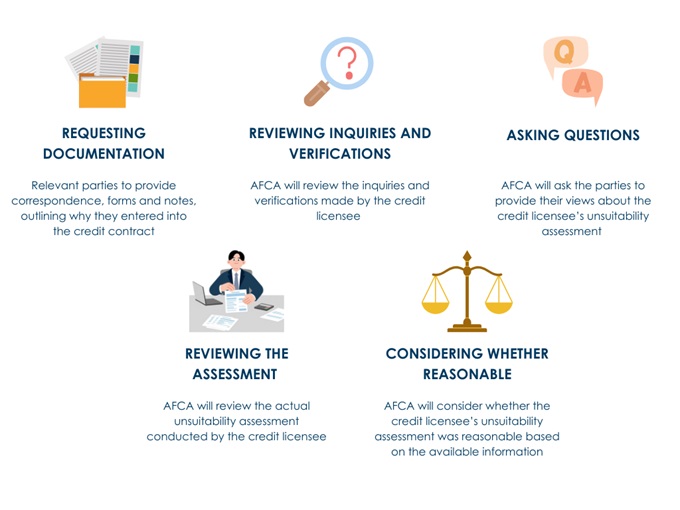
AFCA will investigate whether the credit licence holder has met the responsible lending obligations by:
While the Responsible Lending Approach is intended to be a guide that summarises how AFCA deals with responsible lending complaints, the update to the Responsible Lending Approach also:
- acts a reminder for credit licensees to be compliant with their responsible lending obligations under the National Credit Act;
- highlights that complaints escalated to the external dispute resolution phase may involve AFCA conducting its own unsuitability assessment as to whether the credit contract was unsuitable for the complainant; and
- emphasises that credit licensees:
- must be familiar with and implement their own responsible lending policy;
- should identify any gaps in their responsible lending processes that may result in non-compliance with their responsible lending obligations and a potential complaint; and
- ensure there is adequate documentation, showing how they assessed and/or approved each credit application and that this information is easily accessible, given AFCA will request this information when investigating a complaint.
Key Themes
AFCA identified five key themes from the feedback it received prior to updating the Responsible Lending Approach:
- the Responsible Lending Approach has enabled early settlements and resolutions allowing licensees to proactively resolve complaints
- AFCA should apply the Responsible Lending Approach consistently to complaints, including specifying how the Responsible Lending Approach is being applied to a specific complaint
- clarification of some loss calculation concepts which are included in the Responsible Lending Approach
- providing more definitive guidance about serviceability and unsuitability assessments
- expanding the scope of the Responsible Lending Approach to cover more issues including non-coded loans and broker conduct
We have summarised some key issues from the Responsible Lending Approach which can help Australian Credit Licence holders understand how AFCA deals with responsible lending complaints.
How AFCA assesses responsible lending complaints
To consider a responsible lending complaint, AFCA will;
- gather information about the credit application and approval process;
- assess whether the credit licensee met its responsible lending obligations; and
- consider all the circumstances to determine a fair outcome.
During the gathering and assessment phase, AFCA will investigate whether the credit licensee met its responsible lending obligations by:
- asking the relevant parties to provide documentation such as correspondences, forms and notes, outlining why they entered into the credit contract;
- reviewing the inquiries and verifications the credit licensee made before entering the credit contract with the complainant;
- asking the relevant parties to provide their views about the credit licensee's unsuitability assessment;
- reviewing the actual unsuitability assessment conducted by the credit licensee; and
- considering whether the credit licensee's unsuitability assessment was reasonable based on the available information.
How AFCA determines if credit licensees have met their responsible lending obligations
To do this, AFCA will consider whether the credit licensee:
- made reasonable inquiries about the complainant's financial situation, requirements and objectives;
- undertook reasonable verification of the complainant's financial situation; and
- provided a credit contract that was not unsuitable for the complainant.
In short, AFCA will:
- review how the credit licensee took steps to comply with the responsible lending requirements in the National Credit Act; and
- review the information the credit licensee used in its unsuitability assessment;
- revise the unsuitability assessment (if required) and determine if the credit contract was unsuitable; and
- consider the following:
- the National Credit Act, regulatory requirements and guides such as the ASIC Regulatory Guide;
- industry codes;
- the credit licensee's policies such as their responsible lending policy;
- industry practices; and
- past determinations AFCA and its predecessor schemes made.
Background
AFCA Approach documents help consumers and financial firms to better understand how AFCA reaches decisions about key issues. AFCA developed the Responsible Lending Approach to help credit licensees understand how it considers responsible lending complaints.
While the Responsible Lending Approach does not paint a definitive picture of how AFCA will respond to all responsible lending complaints, it is intended to help credit licensees understand how AFCA:
- assesses compliance with the responsible lending rules;
- applies legal principles, regulatory guidance and industry codes when reviewing responsible lending complaints;
- determines fair outcomes where the credit licensee breaches its responsible lending obligations;
- determines compensation and calculates loss and benefits; and
- aims to provide outcomes that are fair to all parties.
It is important to note that the Responsible Lending Approach predominantly focuses on the obligations of a credit provider as opposed to brokers and other credit assistance providers. This does not mean that AFCA will not hear responsible lending complaints about non-credit providers.
Responsible lending complaints are complaints about credit contracts regulated by the National Consumer Credit Protection Act 2009 (Cth)" ("National Credit Act"), that are wholly or predominantly for personal, domestic or household purposes, or for the purchase or improvement of residential investment property, including personal loans, home loans, consumer leases, credit cards and small amount credit contracts.
The Responsible Lending Approach also applies to complaints relating to Buy Now Pay Later products, except Low Cost Credit Contracts where the provider has elected to be subject to a modified responsible lending obligation. The Responsible Lending Approach does not deal with Low Cost Credit Contracts.
Further Reading
- National Consumer Credit Protection Act 2009 (Cth)
- The AFCA Approach to Responsible Lending (Guide)
- Updates to the AFCA Approach to Responsible Lending (Media Release)
- ACL Responsible Lending Policy
The content of this article is intended to provide a general guide to the subject matter. Specialist advice should be sought about your specific circumstances.