
Australian employers can expect more arbitration as the industrial relations (IR) reforms make bargaining more complex, resource heavy and less productive, according to our most recent At the bargaining table pulse survey.
To get a pulse on the state of enterprise bargaining in Australia, we surveyed 65 senior industrial relations and human resources leaders, including directors and executives and asked them to share their experiences and insights more than three years after the Australian Government introduced its IR reforms.
The respondents represent almost 60 large national and international organisations across the manufacturing & engineering, education, transport, banking, oil & gas, mining, retail & hospitality, telecommunications and energy sectors.
Pulse survey highlights
Bargaining timelines expose employers to greater risk of arbitration
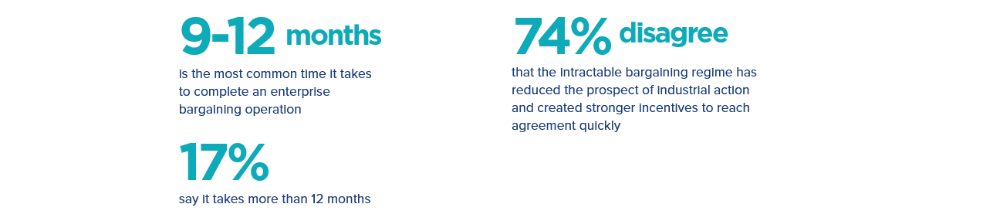
These bargaining timeframes are significant. After nine months of bargaining, and provided the current agreement has been expired for 9 months, unions and employees are able to request that the Fair Work Commission end bargaining by arbitration."
Rohan Doyle, Partner
Growing employer discontent with the bargaining process
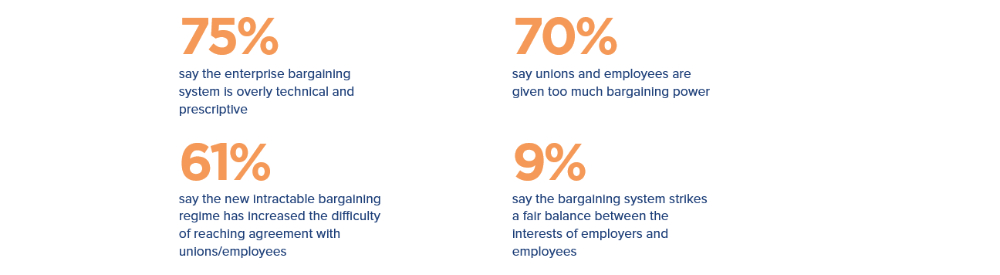
Employers have less flexibility to negotiate and are directing resources towards the risk of arbitration rather than achieving timely, productive and sustainable bargaining outcomes which could have long terms benefits for all parties."
Rachel Dawson, Partner
AI conditions emerge in enterprise agreements

Concerns over multi-enterprise bargaining

Psychosocial harm is a real bargaining risk
Broader economic and geopolitical pressures, combined with misaligned expectations, leave both sides with less flexibility and make agreements harder to reach, increasing the risk of psychosocial harm.”
Rachel Dawson, Partner
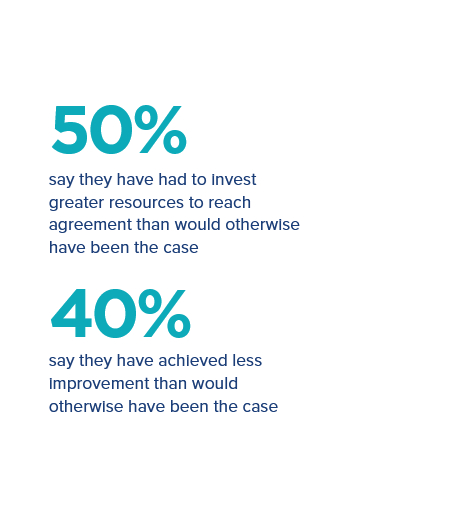
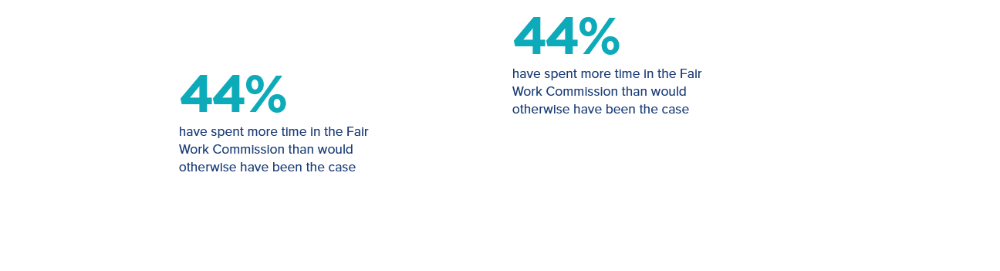
Impact of reforms felt through process and resource demands, not productive bargaining outcomes
Employers want better negotiation and skills training to improve prospects of reaching agreement

What has come through surprisingly clearly is that employers feel there is an underinvestment in negotiation skills, with only 30% of their lead negotiators formally trained.”
Rohan Doyle, Partner


The content of this article is intended to provide a general guide to the subject matter. Specialist advice should be sought about your specific circumstances.
[View Source]