
Manatt, Phelps & Phillips LLP are most popular:
- within Immigration topic(s)
2025 saw a sustained increase in health AI policy activity at federal, state, and self-regulatory levels. Across states and in Washington, policymakers are increasingly focused on nuanced tensions: protecting patients from harm, preserving and encouraging innovation, and defining how—and when—AI should be treated like a traditional health-care tool.
Current State
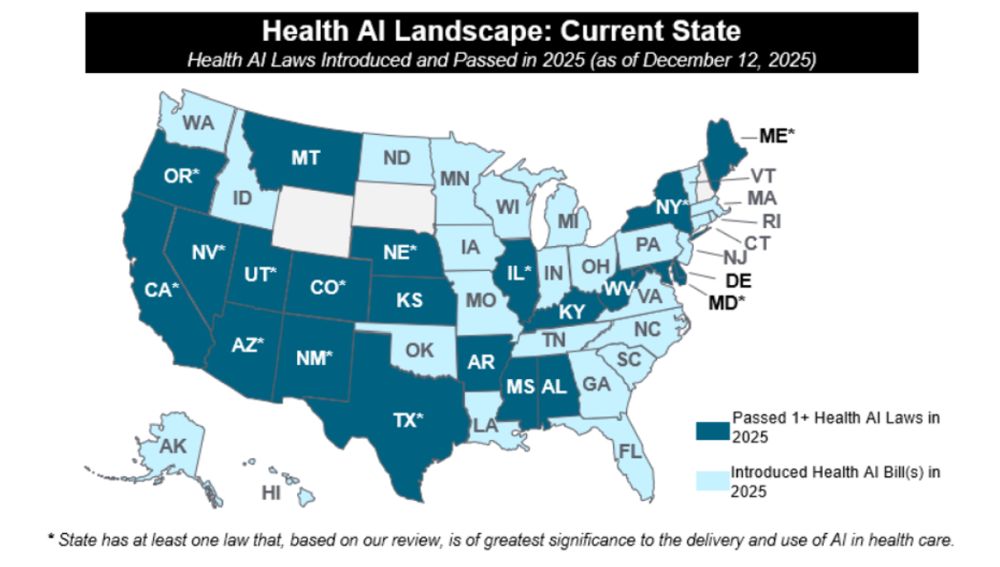
- Over 250 AI bills impacting health care were introduced in 47 states.
- A total of 34 of those bills were passed and enacted into law in 21 states.
- Key themes included:
- Heightened attention on AI chatbots (particularly related to mental health)
- Use of AI in clinical care
- Transparency
- Payor use of AI
- Emergence of "AI Sandboxes" for testing of innovative AI tools
- For a full analysis of each theme and the bills, click here.
Looking Ahead to 2026
As health systems, payors, and technology developers continue to integrate AI into clinical and operational workflows, 2026 is poised to be another pivotal year for AI policy in health care. Key issues to watch include:
- Federal efforts to preempt state laws through executive orders, administrative rules, and legislation.
- Both heightened interest in and scrutiny of general-use AI chatbots deployed as companions or for mental health support, with states beginning to align on more targeted legislative language that provides pathways for adoption while mitigating some of the most harmful risks.
- Continued initiatives by CMS and FDA to promote AI adoption through pilot programs, reimbursement model proposals, and regulatory guidance—including more details on the ACCESS model.
- Growing interest in regulatory sandboxes at both federal and state levels to foster innovation while managing risk.
- Emerging clinical use cases driving state legislation and board regulations.
- Ongoing debate over patient consent and disclosure requirements before AI is used to augment care, and the general usefulness of consent/disclosure as a construct for AI tools.
- Colorado's next move on its Transparency and Anti-Discrimination Law—will lawmakers pursue amendments or further delay implementation?
The content of this article is intended to provide a general guide to the subject matter. Specialist advice should be sought about your specific circumstances.