
- in South America
- within Real Estate and Construction topic(s)
PART II — THE PROMISE AND PERIL OF THE WASHINGTON ACCORDS: A CRITICAL ANALYSIS OF THE PROS, CONS, AND STRATEGIC RISKS
The Washington Accords have been framed as a diplomatic masterstroke capable of ending decades of volatility between the Democratic Republic of Congo and Rwanda, stabilizing the Great Lakes region, and unlocking unprecedented economic potential. Yet, when evaluated carefully, the Accords reveal a far more complex picture—one where legitimate promises of transformation coexist with deep structural risks, ambiguous sovereignty implications, and potential geopolitical aftershocks that could reverberate across East Africa and the African Union for years.
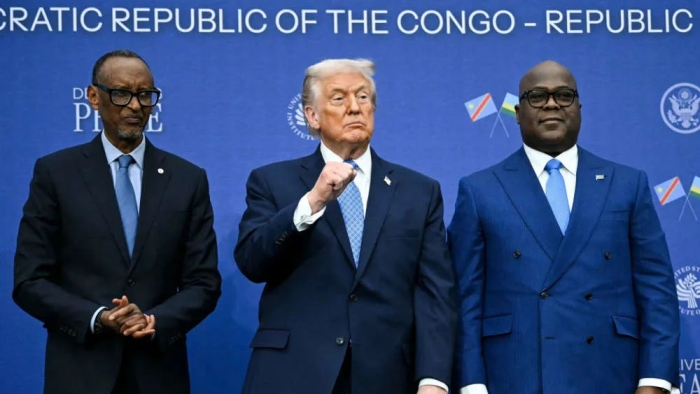
As with any sweeping regional framework, the strength of the Washington Accords lies not only in their aspirations but in the architecture designed to carry them. In Part I, I examined the texts: the Joint Declaration, the REIF, the U.S.–DRC Strategic Partnership Agreement, and the shadow of two undisclosed U.S. security MOUs which were signed but remain unavailable. Together, they form a lattice of political, economic, institutional, and security arrangements that must now be interrogated for their viability and their implications.
Part II now turns to a rigorous assessment of the advantages, weaknesses, contradictions, and strategic risks embedded in these agreements—because it is only through honest scrutiny that policymakers, investors, and regional actors can anticipate the path ahead.
A. The Potential Upside: Where the Accords Could Deliver Real Transformation
There is no denying that the agreements—if implemented faithfully—could deliver structural changes in the Great Lakes region that previous peace initiatives failed to achieve. The difference this time is the alignment of incentives: security, economic modernization, governance reform, and global supply-chain geopolitics are now intertwined, creating pressure on all parties to behave differently.
1. A credible attempt to remove the economic incentives for war
The REIF directly targets the long-standing economic drivers of conflict: illicit mineral flows, differential taxation between DRC and Rwanda, smuggling networks, unregulated artisanal mining, and porous borders that have funded armed groups for decades. By harmonizing tax policies, strengthening joint inspections, formalizing ASM, and committing to third-party traceability and OECD-aligned due diligence, Rwanda and the DRC are attempting—for the first time—to address the financial mechanics that keep conflict alive.
If implemented, this could reduce the revenues of armed groups, cut off corrupt intermediaries, and redirect mineral value to legal supply chains.
The challenge is that these reforms require integrity, capacity, and transparency—three things that historically have been fragile in both countries. But the ambition, for now, is a positive signal.
2. A new logic of regional integration built on infrastructure and shared assets
The REIF is perhaps the most detailed bilateral integration blueprint ever produced in the region: joint energy development (Ruzizi III, Lake Kivu methane, regional power pooling); cross-border logistics systems; digital connectivity; harmonized border management; and coordinated transport infrastructure including lake, road, air and potentially rail linkages.
Regional integration has long been a rhetorical aspiration, but the REIF provides implementable, phased measures, institutional oversight, and direct links to the Lobito Corridor—positioning the Great Lakes as a future logistics and industrial hub.
This alignment, if it takes root, could unlock:
- reduced transportation costs;
- standardized cross-border commerce;
- efficient movement of goods and labor;
- new industrial value chains;
- and increased investor confidence.
3. A strong push toward governance reform and mineral sector modernization
The U.S.–DRC Strategic Partnership Agreement is explicit about governance improvements: judicial reform, anti-corruption measures, VAT reimbursement timelines, simplified tax procedures, and a central tax authority for mining companies. These reforms could—if implemented—address long-standing investor concerns about unpredictability, bureaucracy, and leakage.
Furthermore, the Agreement's focus on formalizing artisanal mining, improving labor and safety conditions, and boosting transparency in cobalt and other critical minerals aligns with global ESG expectations and could significantly enhance Congo's international reputation.
4. Expanded energy capacity and industrial potential
The focus on Grand Inga, cross-border energy transmission, and value addition through beneficiation reflects an attempt to shift the DRC away from exporting raw minerals and toward becoming a hub for industrial processing. Energy has always been the single greatest bottleneck to Congo's industrialization, and if new investments materialize, they could fundamentally reshape the economic landscape.
B. The Downsides, Ambiguities, and Strategic Vulnerabilities
The Washington Accords contain meaningful risks—some conceptual, some practical, and some geopolitical. Ignoring these risks would be irresponsible because they could undermine the entire architecture.
1. The sovereignty dilemma: how much autonomy does the DRC retain?
The Strategic Partnership Agreement creates a Strategic Asset Reserve (SAR) that prioritizes U.S. companies with a right of first offer and ties mineral allocation and project eligibility to U.S. national security and supply chain objectives.
Through the Joint Steering Committee, the U.S. also gains influence over:
- project eligibility;
- ownership structures;
- offtake guidelines;
- supply-chain alignment;
- and tax incentive frameworks.
This is an extraordinary level of influence by any external power over one country's mineral assets. While the deal promises economic benefits and improved governance, it raises legitimate concerns about asymmetric power between the parties. For a country historically exploited for its resources, this becomes a sensitive political question.
2. Overreliance on political goodwill in Kigali and Kinshasa
The Accords require trust, coordination, data sharing, joint inspections, and harmonized policy execution. Yet:
- Rwanda and DRC have historically viewed each other as security threats.
- Accusations of proxy warfare have never fully disappeared.
- Their previous agreements have collapsed due to mistrust.
Expecting this bilateral partnership to suddenly sustain deep integration is optimistic. Political shocks—election cycles, military incidents, leadership transitions—could destabilize the entire framework.
3. Fragile institutions and implementation gaps
On both sides of the border, weak administrative capacity, corruption, parallel power networks, and inconsistent enforcement have undermined every major reform effort in the past 20 years. The REIF's implementation requires:
- functional local governments;
- coordinated border agencies;
- empowered regulators;
- disciplined security forces;
- predictable taxation;
- and real-time data systems.
Without these, even the most meticulously drafted agreements will remain theoretical.
4. China's potential counter-moves
The Washington Accords clearly signal a geopolitical pivot: the U.S. is now positioning itself as a long-term strategic partner in Congo's mining sector, directly challenging China's dominance over cobalt and other critical minerals. China currently holds the majority of refining capacity and significant stakes in major Congolese mining operations.
The U.S.–DRC Strategic Partnership Agreement could provoke:
- increased Chinese diplomacy in Kinshasa;
- renegotiation of Chinese mining contracts;
- pressure through economic or political channels;
- intensified competition over infrastructure development.
The region risks becoming a theatre for great-power rivalry—a dynamic that often destabilizes rather than strengthens governance.
5. Too many ambitions, too little sequencing
The Accords cover:
- peace and security;
- mineral governance;
- industrialization;
- energy;
- tourism;
- public health;
- environment;
- ICT;
- agribusiness;
- border management;
- and regional integration.
This is a vast policy agenda that would challenge even highly capable states. Without strict prioritization and sequencing, the risk is bureaucratic overload, reform fatigue, and dilution of focus.
6. The missing texts: security MOUs and the unknown commitments
Two security memoranda of understanding were signed alongside the Accords, yet their contents remain unavailable. Given the centrality of security sector reform, demobilization, border stabilization, and counter-insurgency to sustainable peace, the absence of public oversight over these instruments is concerning.
These MOUs may govern:
- joint operations;
- intelligence sharing;
- limits on support to armed groups;
- U.S. military involvement;
- use of surveillance technologies;
- training or equipping forces;
- and accountability mechanisms.
Without full transparency, regional civil society, the AU, and the international community cannot evaluate whether these security commitments align with human rights norms, sovereignty concerns, or regional stability objectives.
C. A Deal of Enormous Potential—and Enormous Vulnerability
Ultimately, the Washington Accords represent one of the most ambitious attempts in decades to reshape the conflict dynamics of the Great Lakes region. They signal a shift from purely political peace agreements to economic and institutional peace-building, anchored in mineral governance, regional value chains, energy systems, and joint institutional oversight.
If the commitments hold, the region could finally break the cycle of violence and unlock the prosperity that its people have long deserved.
But the risks are just as profound:
- geopolitical rivalry,
- institutional fragility,
- elite interests,
- mistrust between neighbours,
- and opaque security arrangements.
The Accords exist in a delicate balance between promise and peril. Their success will depend not simply on the texts, but on whether the political actors involved—domestic, regional, and global—act in good faith and in the interest of the populations whose lives have been shaped by these conflicts.
Part III will examine what this new architecture means for the East African region and for the African Union, and whether it represents a new model of continental integration—or a new dependency disguised as partnership.
The content of this article is intended to provide a general guide to the subject matter. Specialist advice should be sought about your specific circumstances.
[View Source]