- in United States
- within Cannabis & Hemp topic(s)
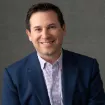
James Ryan founded RYCO Capital in 2018 and has led the firm since its inception. Since establishing the company, James has personally overseen all aspects of its growth and operations. His team has grown and expanded, and he has been a contrarian to great success, acquiring multifamily properties across New York City.
Prior to founding RYCO Capital, James held leadership and finance roles across real estate development and early-stage technology firms. He earned his BA in Political Science from Yale University.
The Dealmakers' Edge with A.Y. Strauss
Contrarian Investing and Building for the Long Term with
James Ryan
Insights from James Ryan on Contrarian Investing in New York City Multifamily
When New York passed the Housing Stability and Tenant Protection Act in 2019, capital fled the multifamily market overnight. When COVID hit in early 2020, the exodus accelerated. James Ryan saw something different: supply constraints in the tightest housing market in the country, with assets trading at prices that still cash-flowed even if rents stayed flat.
RYCO Capital's family office structure gave James an advantage most syndicators don't have – he could say no to deals that didn't make sense and wait for the right opportunities. Between 2020 and 2024, while others stayed on the sidelines, he bought across Brooklyn and Manhattan, raised capital by showing protected downside scenarios, and built a team capable of executing complex, multi-year value-add projects.
In this episode of The Dealmakers' Edge, Aaron and James discuss contrarian investing, raising capital without fee pressure, building quality assets that can hold through market cycles, and managing the grind of daily operations while staying focused on long-term goals.
1:40 – Growing up in Rochester and starting in Brooklyn real estate after Yale
3:31 – Family office background in Rochester and buying out father's partner after a tragic loss
5:33 – Looking at secondary markets in 2019 and finding everything overpriced
6:10 – How the Housing Stability and Tenant Protection Act changed the NYC market overnight
7:35 – Closing on four Brooklyn properties in January 2020 and what happened next
8:48 – The thesis: supply constraints and New York City isn't dead
11:21 – Raising capital and focusing on deals the team believes in
12:28 – Underwriting for downside protection and returning principal to investors
15:38 – Why having institutional backing prevents deal-making adrenaline
18:41 – Building a vertically integrated team that executes at a high level
23:22 – Managing adversity, the daily grind, and staying focused on long-term vision
26:08 – Work-life balance, family time, and avoiding hustle culture
Transcript
Aaron Strauss: You're listening to The Dealmakers' Edge with A.Y. Strauss, diving deep into stories behind commercial real estate leaders. Hello, everybody, and welcome to The Dealmakers' Edge. Today, I'm excited to be joined by a friend of mine, James Ryan, who has been on a tear buying a lot of multifamily in New York City, and his company, RYCO Capital, has really grown. His team has grown and expanded, and he's been a contrarian to great success.
Since establishing RYCO in 2018, James has personally overseen all aspects of its growth and operations. Prior to founding RYCO Capital, James held leadership and finance roles across real estate development and early-stage tech firms, and he earned his BA in political science from Yale University. In this conversation, James is going to talk about his approach to acquiring, managing great real estate, raising capital, and also just juggling all the demands that go with the territory. Hope you enjoy the episode.
Hey, everyone. Today, I'm joined by my friend, James Ryan, who I haven't spoken to in a while but really been watching his exciting up-and-coming career, buying a lot of exciting properties and deals, and definitely someone who's accomplished a lot at a young age and who's continuing to accomplish and who has yet to probably even hit his stride because I really think your ambition and your talent are really coming together in a really great spot right now. So welcome here. Can't wait for you to share your story.
Without further ado, maybe we'll start with your personal background, where you grew up, how you got started in the business, and then we'll gear it from there.
James Ryan: Sounds great. Well, thank you again for having me on the podcast. I always like talking about myself, so I'm very happy to be doing it here.
I'm originally from Rochester, New York. I spent my first 18 years of life there. I went to Yale for college and then right out of college, I found work at a small real estate developer in Brooklyn.
So I've been a nearly lifelong New York stater, and I've been in New York City now for the last 16 years, always doing stuff in and around real estate and entrepreneurship. I've worked for a number of startups, both in real estate and in tech, but really have been focused on real estate for the past 10 or 11 years. I live in Brooklyn.
Actually, I moved to Brooklyn right out of college and moved to Park Slope, which is not really where you want to be when you're 22 and single. But I wanted to save money by living out there, and that was near where our office was. Then just through random chance and momentum, I stayed there.
But now I'm married with kids, and now I really understand why everyone loves Park Slope because that is a neighborhood made for young families. So I've been out in Brooklyn for 16 years. I've been there almost longer than I was in Rochester.
Aaron Strauss: That's awesome. I know you've been doing a lot the last few years as the market in New York has shifted. Again, New York City is a tale of many, many stories and sub-markets and asset classes and a lot of micro stories, if you will.
But maybe you can tell your story about investing in Manhattan. I know coming out of COVID, New York was a no-fly zone. You just said, "Look, long-term, we're going to start buying. We're going to raise capital. We're going to acquire." You've been on a tear.
You've bought some really large deals, some mid-sized deals, and raised capital through difficult climates. You're still buying. So we'd love to hear about how that story started to get going.
James Ryan: Best place to start is we actually did not start buying stuff in New York City. We started up in Rochester within the office asset class. So my family has been office real estate people in Rochester since the 60s.
My grandfather was the developer of suburban office parks in the 60s, 70s, 80s as companies were moving out of the city of Rochester into the first or second ring suburbs. My dad bought that business from him. We're a family that doesn't hand things down. We buy stuff.
So my grandfather, when he was retiring around the year 2000, called my dad and said, "Would you like to join the business?" And my dad said, "Yeah, of course." My grandfather's like, "All right, write me a check."
So my dad bought the portfolio and the management business from my grandfather in 2000, 2001. My dad's more of a leasing person, more of an operations person, and has bought more stuff over time, but has never sold anything up in Rochester.
He actually bought that portfolio with a 50-50 partner in 2000. His partner was the CEO of a local shopping REIT. Very smart guy, more of a silent partner, more of an asset manager. That partnership worked really well for 17 years. But that partner of his died very tragically and suddenly in a ziplining accident in 2017 in the fall. What that precipitated was a series of events where I found capital to buy out my dad's partner's interest.
Because when his partner had died, his ownership went to his kids. All really smart, all very nice, good heads on their shoulders, but none of them are in real estate. A true 50-50 partnership between my dad and the estate of his former partner just didn't work for either side.
So I found capital to buy out the old partner's interests and become partners with my dad up in Rochester office. That then started what was a larger project or a larger idea to expand the portfolio and expand the business outside of Rochester.
So in 2019, we started looking for multifamily opportunities in secondary cities, secondary growing cities. So Columbus, Charlotte, Minneapolis, those usual suspects of the 2010s. I spent 2019 going to probably 10 or 12 different cities looking at opportunities.
What I found was everybody else and their dog and their grandmother had the same idea as we did. Garden style, class B, light value add. Those were in very high demand across all those cities.
Some of the prices being paid to acquire those just didn't make sense to me. At the same time in 2019, as I'm sure you're very, very aware of, you had this new set of laws passed in New York called the Housing Stability and Tenant Protection Act, which effectively prohibits the conversion of rent control to rent-stabilized apartments to fair market.
Overnight, that market changed. A lot of capital left. This was in the summer of 2019. I caught wind of that and started to look at it and just came to it with fresh eyes and said, "Okay, I understand why capital is leaving." Basically, a cottage industry of developers who would buy these rent-stabilized buildings, do the work, and go through all the legal process to convert them to fair market. That business plan no longer works. Why would they stay?
That makes sense from their perspective. But looking at it from more of an operator's perspective and looking at it through a supply and demand lens, what that set of laws effectively did was turn new supply of anything other than newly built luxury fair market units to zero.
You're talking about new supply going to zero in New York City, which already has a very tight supply, lack of land, high construction costs, high regulatory environment already even before HSTPA. It's also New York City.
So even this crushing demand generally of high-income, high-credit people layered on top of this now even supercharged low supply environment. Yet, because all this capital was leaving, you could buy good property in nice parts of Brooklyn. For example, Crown Heights is where we bought our first deals for a five-and-a-quarter cap.
Whereas we looked at an asset that we liked in Columbus, Ohio, in Sunbury, Ohio, which is 45 minutes or so outside of Columbus. Garden style, 2000 era build, light value add. Everyone who looked at that deal in Columbus had the same business plan; ultimately traded for a four and a quarter cap. This is an asset surrounded by cornfields, no real supply constraints. So that's what led us to New York.
We were looking everywhere else, didn't like the pricing, and then thought, "Okay, in a very supply-constrained location in New York City, you can buy at five and a quarter caps, cash flow from day one, and you can buy a product that has some decent upside."
Now, it turned out that that thesis was not exactly right because we closed on our first four assets in January. It was January 16th, 2020. There is a little-known global event that happened shortly thereafter that you might be familiar with. Blew up that purchase. Actually, we still own those properties today. They're doing fine.
We paused for a second, reconsidered what was going on, and ultimately decided to add a second leg to our investment thesis around New York City, which was that New York City is not dead. So between 2020 and 2024, we bought a ton of product all under, let's say, a double-barrel thesis, investment thesis, which supply and demand.
So continued supply constraints, continued good demand would drive rents continuously higher over time. Then two, New York City is not dead. This is a great time to buy assets. We were underwriting that rents would come back to pre-COVID levels by 2024, I think. It was like a four-year recovery. Ultimately, they came back above. They're above 2019 levels by early 2022.
So we were not exactly right in our forecast, but we were generally directly right on both sides of that investment thesis. So that's what led us to New York. That's what led us to buy lots of properties between 2020 and 2024.
We were lucky enough to find capital that would support us in doing that. That's largely what RYCO Capital has been about the last five years. We still own 800,000 square feet or so of office up in Rochester. That's doing fine, but it's office. So it's not exactly doing gangbusters, but we have a very competent team up there. Really where we've grown a lot here is New York City. We've built out a vertically integrated team to do the construction, the property management, the asset management. That's where we sit today.
Aaron Strauss: That's terrific. I think I remember sitting with you. It must have been 2022 or something like that.
I remember sitting with you for coffee. It really felt at that moment that you were the only person on earth buying New York City multifamily. I mean, I remember brokers during that time sitting around. Everyone's moping. Then it's COVID and 2019 rent laws coming out. I remember thinking, "It takes a lot of guts to be contrarian."
Now that you sit here and you've performed on your thesis and you've done well and you've raised significant capital, it takes courage to be successful and to go one direction when all the noise is trying to say something else. That's pretty awesome. That's pretty solid.
I think also just raising capital when you're in those quirky markets, if you will, like the run-up in the Southeast on multifamily or in places like Ohio that you described, there's endless capital chasing it. But to attract capital when all the headlines are trying to tell another story, that's to your credit. Maybe we could talk about raising capital in general.
I know you've raised a lot. You've got some very significant partners, and you're always acquiring. So maybe you could talk about how you go about raising capital. What kind of conversations you're having with your investors, and some of your goals in that?
James Ryan: I think it starts with just being first finding deals that we really like and we believe in. We're lucky enough given our capital backing where we can support our overhead and keep our team together without doing a lot of deals to generate constant fee income. That allows us to be a little bit pickier and a little bit, let's say, more detailed in our underwriting of potential assets.
When we find a deal that we like, we really like it. So when we're going out to talk to investors, I think partially what comes through is we actually believe in what we're selling. We're putting real money into these deals, and there's a lot of skin in the game, and we're not doing deals just to do deals.
We want to own great assets, and we want to deliver on what we're telling our investors. I think that's part of it. I think the other part, going back to what you're saying about being contrarian during COVID in New York, we don't have a crystal ball.
So I can barely tell you what I'm going to eat for lunch tomorrow, let alone what interest rates are going to be in three or four years. I think proper underwriting is having your base case as to what you expect to happen and then understand the variances, both good and bad, as to what can come off of that base case.
We focus a lot on the downside. So if things don't go according to plan, we're still able to return principal. We're still able to generate cash flow to our investors.
The downside is protected. If things change to the upside, great, that's the upside. But what we try to communicate and how we structure our deals and the assets that we buy, downside protection is a very important part of the story, not just the vision for what this asset will be in three or four years and the crazy cap rate that we'll get when we sell it.
That was when we were underwriting during COVID in New York City. It was contrarian. In some instances, I'm surprised of how contrarian it was because you do the underwriting. You're still buying great assets in Greenwich Village, East Village, West Village. At the prices we were paying and where rents were at the time, we still had a pretty clear path to get to a 5.5%, a 6% unlevered yield.
Interest rates at the time were 3% or 4%. Even if we were off on our rent forecast, you're still getting to, okay, at the downside, 5% to 5.5%, interest rates are 3% and 4%. So I think that story helped a lot.
And showing that like, look, it's unlikely that unless a nuclear bomb goes off in New York or COVID 2.0 hits at the same time that COVID 1.0 is ongoing. Like if New York City is truly dead, we could have some problems. But barring that extreme downside scenario, we're going to hold on to this asset.
We should be able to generate cash flow, even if we're not making a 20% to 30% return on the upside. Now, if the deal works and we generate the rents we think we will and the cap rates compress to where we think we will, we will generate that 20% or 30% upside.
But, again, we can't predict the future. So that very detailed, careful underwriting, I think, is important to us. I think the other part, too, is it's not just the spreadsheet. It's the asset. I think people fall in love with spreadsheets and how great they function and how much money it looks like you're going to make. But the first filter that we look at any asset through is, can this be a special asset? Can this command pricing both on rents and on an exit?
Is somebody going to look at this building and say, "I have to live there"? Or is somebody going to look at that building and say, "I have to own that building if I want to own a stabilized asset, if I'm an offtaker"? We want to find those assets that people get excited by.
Honestly, being contrarian, I think, is part of it. We don't have to be contrarian all the time. I think obviously being contrarian is part of being a good investor and generating outsized returns.
But to some degree, we didn't go into New York because we were contrarian and we wanted to find where people were running for the exits as a starting point. We just really liked the story. It so happened that we were contrarian to buying during that time period. But at the time, I was surprised at how contrarian we were.
Aaron Strauss: I want to say one more thing about raising capital and taking that investment thesis a little slower than a lot of syndicators that would just say, "I have to acquire, have to acquire because I need management fees. I need acquisition fees. I need fees to live." So having that core institutional or family office partner really stabilizes almost like your deal-making adrenaline, if you will, so you don't have to jump.
One of the things I have to say that I always really admired about what your approach is, is philosophically, besides just going for the best assets that you can that have that long-term story for greater viability, is I think you're a good example of somebody who's not penny-wise and pound-foolish. I think a lot of people get into real estate. They say, "I'm going to buy this. I'm going to save this. I'm going to cut this. I'm going to scrap that."
Obviously, you're not in the business of wasting money at all ever. However, I do know your philosophical approach is first class in every way. You're going to get the right architect. You're going to get the right engineer. You're going to get the right attorney. You're going to get the right tenant mix. You're going to get the right construction team under the right construction contract, and you're not going to waste money but you're not going to skimp and do it halfway and ultimately have a greater loss down the road. So I think that philosophy with me resonates. I really buy into it, but I think people can learn from that too.
James Ryan: Part of that philosophy, too, is again going back to I don't have a crystal ball, I can't predict what the market's going to look like in 2020 when we're going to exit some of these deals, if it's not the right time to sell, we want to be able to hold onto the asset with minimal problems and generate good cash flow.
We don't want to be bogged down by boiler breaking down, insurance problems, or anything regarding the operation of the asset. If we're done with our renovation and we're holding for a few years, we expect that to cash flow and we expect it to be relatively easy to manage.
I mean, real estate's never easy to manage. I like to joke property management is really just dealing with problems. There are no good surprises in property management. So there are always problems. It's always difficult to operate a property professionally and efficiently and to treat your tenants well. I mean, that takes a lot of work.
We don't want to be bogged down by leaks in the roof, breaking HVAC systems, liens by contractors. We don't want to have to deal with that, and also try to provide great service to our tenants and operate the building.
So part of that philosophy is, yes, we want a great building. We don't want to skimp, and we want to get somebody excited to buy it when we're ready to sell it. But also part of it is also that downside protection.
If we have to hold this for another year, two or three, while we're waiting for capital markets to improve to sell it, to get the right price, we want it to cash flow and we want it to operate well.
There's also a third part, which is pride in your product and actual excitement about what you're doing. We're not brokers. We're not traders. We're not flippers. We are fundamentally value-add people, and we're operators. I think it comes through with the types of properties that we buy and operate.
Aaron Strauss: Yeah. It's an excellent flywheel. As you build your brand as a first-class operator, you're going to attract first-class tenants. As you attract first-class tenants, your NOI will improve. As your NOI improves, your profitability improves, you buy more.
The brokerage community understands who you are, what you're about, how you operate. It's just that flywheel going round and round. I think it's great as you build your brand as a young person who's really coming up in the business. Maybe you could talk a little bit about just the team. I know you're vertically integrated. I know over the years you've been building and growing your team. Your portfolio has expanded.
There's never a perfect ratio to team and portfolio, but maybe you could talk about where you are today, where you'd like to get to, and what's going real well.
James Ryan: So in terms of headcount and who's in their role, I think we're at a really good spot today. We hired a lot over the last couple of years. Construction activities tailed off a little bit. There's been some fine-tuning of the team.
I'm hoping that the team, as we have in place, generally speaking today, that's the structure for at least the next couple of years, because we're at a really good spot with all of our teams, project management, property management, and asset management that we do our leasing up in Rochester. I like to say that every person at RYCO can do their job better than I can.
It's starting to get to be more fun for me because I have a lot of trust in our team and know their quality and know their execution capability, not just because I think they can do it. We've now proven we can do it. I have a lot of trust and faith in that team to be able to go out and, let's say, solve any problem or execute in their role really well that allows me to spend more time finding the next great deal, finding partners that work well for us, and making sure that we're making the right decisions with the next asset or the sale of anything in our portfolio or just ultimately improving the operations.
We're totaled now probably 32 or 33 people. So I think we're officially medium-sized, not small. This is the biggest company I've ever worked at. I've always worked at smaller, more startup-type companies. Thirty-three to me sounds huge. I'm sure to others it sounds very small.
But keeping this team in place that's now worked together for a couple of years, who have dealt with problems in construction with DOB and approvals and zoning and tenants and leasing, and everyone's been through a lot the last couple of years and work really well together. So thankfully, because of some of our capital backing and frankly just because of some of the existing portfolio and some of the cash flow it generates already, I'm able to use that to sustain that team and make sure that we have this execution capability on the next however many deals.
I think that's a really important part of our success, keeping that team together and having the resources to be able to keep that team together. Because it allows us to pursue, I'll say, a level or a deal that is generally difficult for other syndicators or smaller groups to pursue.
So let's say deals that are $30 to $100 million in purchase price, $40 to $140 in total capitalization, where you're doing real construction work. We're priced out right now of those deals where you can get in and out in six months and you're replacing fixtures and finishes and doing quick-hit work. There are a lot of those deals floating around. They're all way overpriced, in my opinion.
I think those deals where there's more value and where you can really create return for your LPs and really create a great asset are the bigger deals where you're relocating stairs, you're adding stories, you're reconfiguring layouts, you're maybe converting office to resi or you're converting a restaurant to dry use or vice versa. That takes real construction work. It takes working with DOB, landmarks, etc. It takes two or three years often to implement those business plans.
That's where we're seeing value. That's where we have the team and the continuity of team and execution ability to pursue. We can pursue those deals effectively. The smaller ones or the ones where you're just replacing fixtures and finishes and you're spending 50 or 60K per unit, we're just not competitive. I think those are priced to perfection and there's a lot of capital chasing. It's just not a good use of our team's resources, frankly.
Aaron Strauss: Yeah, you're in a great spot. It's really that market that's not quite institutional, but above the smaller syndicators. I think there's a lot of room there. I think you guys are shining in that space.
The fun stuff is also overcoming adversity. People look at people like you and say, "Oh, wow, they just bought all these units. They're so successful." They think it's easy. I know we talk a bunch. We haven't spoken in a while, but I know how hard it is day to day. It really is a grind.
There are days probably where you think, "Wow, maybe I should be doing something else." I mean, it's really hard. I know you have a passion for the business, but the courage to buy during the periods in which you bought, managing a team, managing property, managing investor relations, managing your personal time as well that overlays with the constant 24-7 ebb and flow of management generally.
I'd love to talk about adversity. This podcast is called The Dealmakers' Edge for a reason. The edge you've developed in your mind as a young person, how you can achieve the success, what are you telling yourself? What's driving you? How do you manage the chatter in your head when you're going through a rough patch?
James Ryan: It's a good question. I'm not sure if I have a great answer. If you ask me next week, I might have a different answer than this week. So the way I'd frame the question in a more abstract way or frame the challenge is I have very clear vision about where I want RYCO Capital and our team and our portfolio to go over the next 5, 10, 15, even 20 years. But it's not a straight shot. It's not a straight line to that goal.
There are challenges every day. Oftentimes those challenges are not what you're expecting. So what I constantly have reminded myself is that, you know, we're following the compass on the map. We know where we're trying to get to on the map, big picture, but you got to navigate around all of those daily challenges. You got to ford the river, go over the mountains, go around the mountains, avoid the tar pits. I don't know why I'm using a map metaphor, but if you're going somewhere, you can't just go in a straight line.
The challenge, I think, is remembering what that longer-term vision is while still keeping your eyes on that day-to-day, the challenges and tasks that need to get done that day. That's more the abstract, more academic way, I guess, to think of it.
The other way I think more practically about it is, what can I get done today, even if I'm in a terrible mood? What am I going to be happy about tomorrow that I did today? Like what challenge, what do I need to do today to keep the ball moving forward in some aspect? What problem can I address today?
I want to be in a position tomorrow to build upon what I did today. So what are those two or three things that I just have to get done? And even if I don't want to get them done, I'm just going to force myself to get them done and hopefully also be cognizant of where my limitations are in that day. I'm not over pushing myself such that I'm so drained tomorrow I can't get anything done.
I think that's one of the things, as I've gotten older that I've paid more attention to, it's like, all right, you can't get everything done in a day. Some things you have to leave for tomorrow and you don't want to overstress yourself such that you're not in the position to get stuff done tomorrow because it's how all these tasks build every day over time that make a difference. You can't build road with a day, I guess. So the saying goes.
So I think I'm repeating lots of well-used metaphors already that people tell themselves. Maybe that's the answer. There's no silver bullet. There's no special sauce. A lot of these cliches are cliches because they're true. What cliche I'm telling myself at any given day probably depends on the flavor of the week or what's going on that week.
But also trying to put away the phone at night, trying to make it for dinner on time with the kids and have family personal time where I'm not thinking about all the problems at work is important. I mean, I probably am able to do that half the time, not 100% of the time. That helps a lot.
I'm actually at the point in life where my kids are, they're not older, but they're a little bit older. My kids are seven and five, which is way different than when they were two and four, let's say. What's nice is they're able to manage themselves a little bit more these days. So we'll do quiet times on the weekends and we can tell them, "Go to your room for an hour. I don't want to see you or hear you for like an hour. I need my space." They're old enough where they can go do that. You don't have to worry about them falling down the stairs or swallowing a battery.
Then they're interested in bigger concepts. They're starting to read. That's becoming a lot more fun. So part of it is also just spending more time with them and my wife and just decompressing versus constantly being on.
You look at those people on Instagram or Twitter or LinkedIn with the hustle culture thing. It's not for me. It's like, I'll get up early to get stuff done, but by six, let's say, I want to be done with work, focus on family, go to bed early, and just refresh and be able to sustain that rather than being, "Oh, I'm going to be up until 2:00 or 3:00 AM working on a spreadsheet.
Aaron Strauss: Well said. Listen, whatever you've been doing has been working. You've achieved a lot. I know you're doing so much. To do it in a sustainable way is something you should be very proud of, not only for yourself, but for your family, your investors, your tenants, all the people you employ, your vendors, etc.
James, it's been really nice to talk with you. I think a lot of people listening will gain a ton of value from the conversation. I know I have. I think everyone's just going to continue to watch your stellar career and watch what you do next and continue to perform. I just wish you so much continued success to keep executing like you do every single day at a very high level.
James Ryan: Well, thank you. I really appreciate it.
Aaron Strauss: Thank you for joining The Dealmakers' Edge. Don't forget to follow us on your favorite podcast platform. Please give us a five-star rating so more people can follow the conversation.
The content of this article is intended to provide a general guide to the subject matter. Specialist advice should be sought about your specific circumstances.