

- within Real Estate and Construction and Employment and HR topic(s)
- with readers working within the Business & Consumer Services industries
Whether you’re renting your first apartment, opening a new office, or leasing a commercial property, creating a tenancy contract is one of the most important steps in the rental process.
Many people are unsure which tenancy contract to use, what documents are required, or whether the agreement is legally valid without Ejari. The good news is that the process is straightforward once you know the correct steps.
In most cases, making a tenancy contract in Dubai comes down to five simple steps: agreeing on the rental terms, completing the official Dubai Land Department (DLD) Unified Tenancy Contract, signing the agreement, gathering the required documents, and registering the contract with Ejari.
Under Article 4 of Law No. 26 of 2007 (as amended), tenancy contracts must be registered through Ejari. The official DLD Unified Tenancy Contract should be used for registration, although the parties may also attach an addendum containing additional terms, provided those terms do not conflict with Dubai tenancy law.
The entire process is now largely digital, and in many straightforward cases, a tenancy contract can be signed and registered within a single day.
Quick Answer
A tenancy contract in Dubai must be prepared using the official Dubai Land Department (DLD) Unified Tenancy Contract before it can be registered with Ejari. Once both parties agree on the tenancy terms, they sign the contract, prepare the required documents, and complete Ejari registration through the Dubai REST app or a Real Estate Services Trustee Centre. Under Article 4 of Law No. 26 of 2007 (as amended), tenancy contracts must be registered with Ejari, making registration a legal requirement rather than simply an administrative step.
This guide explains everything you need to know about making a tenancy contract in Dubai, including the legal requirements, the documents you’ll need, Ejari registration, common mistakes to avoid, and the rights of both landlords and tenants. If you’re unsure about any part of the agreement or need help drafting or reviewing a tenancy contract, the real estate lawyers at Leaders Advocates can provide legal guidance before you sign.
Step 1: Agree on the Tenancy Terms
Before anything is written down, the parties settle the deal points. In Dubai, these are the terms worth negotiating carefully:
- Annual rent and the number of cheques (1, 2, 4, or sometimes 12). Fewer cheques usually buy a better price.
- Security deposit. Market practice is around 5% of annual rent for unfurnished units and 10% for furnished units.
- Maintenance split. The custom is that the landlord covers major maintenance and the tenant covers minor repairs, often with a threshold such as AED 500 per incident. Write the threshold down.
- Early termination clause. The law has no automatic exit right, so if you may leave early, negotiate a break clause now, typically two months’ notice plus a penalty of one or two months’ rent.
- Contract duration and start date, since the start date drives every renewal deadline later.
Is the asking rent fair in the first place?
Check the unit against the official rental index on the Dubai REST app before committing. The same index later controls what the landlord can add at renewal.
Step 2: Fill in the Unified Tenancy Contract
The DLD unified tenancy contract is the only lease format accepted for Ejari registration. The current template can be downloaded free from the Dubai Land Department website, and typing centres will prepare it for a fee if you prefer.
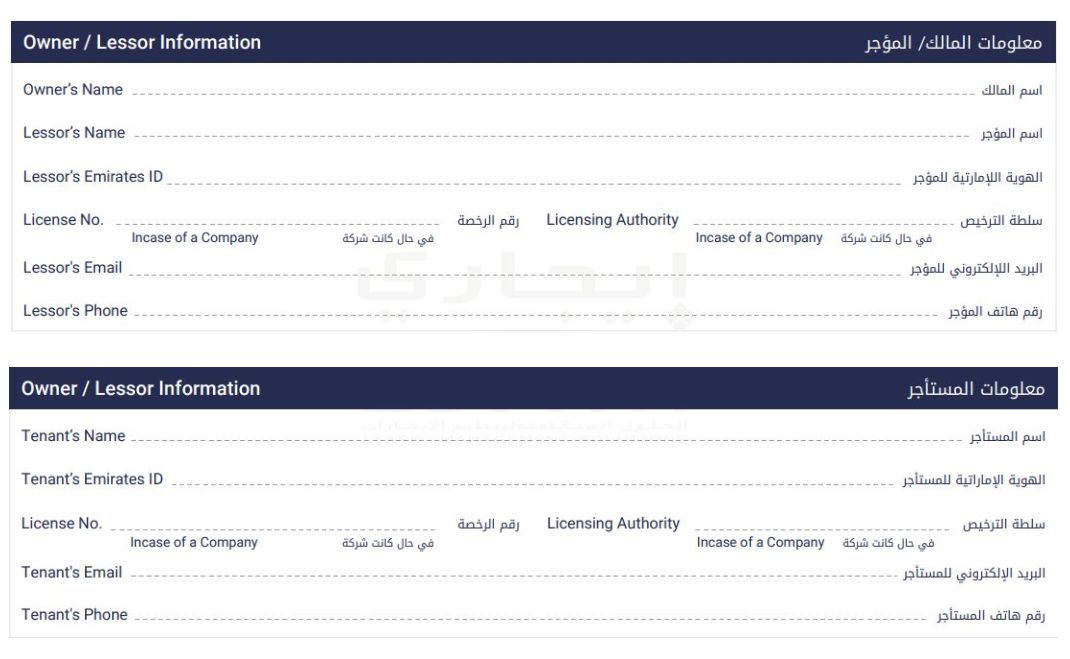
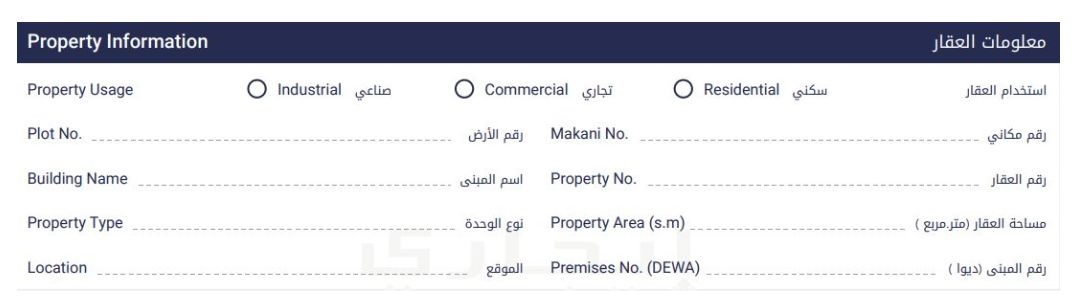
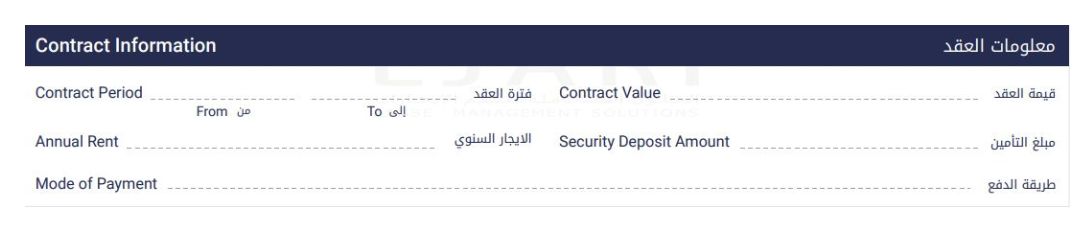
The form itself is short. It captures the parties, the property details (including the plot and DEWA premises numbers), the contract period, the annual rent, the deposit, and the payment mode.
-
Landlord and Tenant Details
-
Property Specifics
-
Contact Details
-
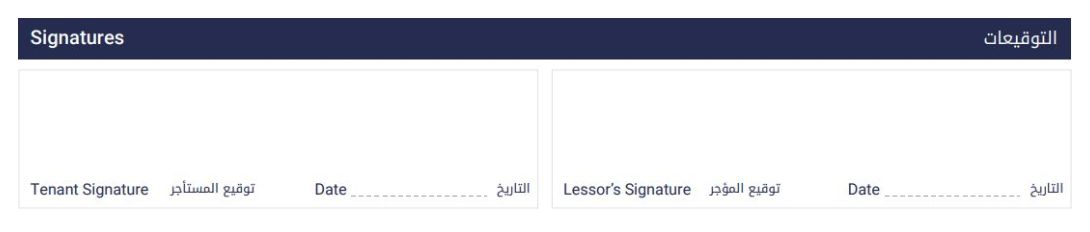
Signature for both landlord & tenant
Everything else goes into an addendum. Additional terms are valid as long as they do not conflict with the tenancy law, so this is where the maintenance threshold, break clause, pet permissions, and renewal mechanics belong. Both parties should sign the addendum on every page.
One warning from practice. A clause that waives rights the law grants the tenant, such as the 90-day notice for rent changes, will not survive a challenge at the Rental Disputes Centre. Do not rely on it, and do not pay for it.
Many tenancy disputes begin because important clauses were overlooked before signing. A legal review today could save months of problems later.
Step 3: Prepare the Documents
Signing is only half the job, because Ejari registration needs a document file. Before registering your tenancy contract with Ejari, make sure you have these documents ready. Missing even one document can delay your registration. Prepare the following:
Signed Contract
Signed DLD Unified Tenancy Contract, including any addendum.
Tenant’s Documents
Emirates ID, passport, and residence visa copy.
Landlord’s ID
Passport or Emirates ID of the property owner.
Property Documents
Title Deed or SPA/Oqood for newly handed-over properties.
Company Documents
Trade license if either party is a company.
Power of Attorney
Needed only if someone signs or registers on another person’s behalf.
Tip: Check every document before starting Ejari registration. Missing paperwork is one of the most common reasons for delays.
Drafting a lease with unusual terms, a corporate party, or a long addendum?
Our team drafts and reviews tenancy contracts and addenda before signature. Talk to our real estate team.
Step 4: Register the Contract with Ejari
Registration runs through one of three channels, and the right one depends on who the parties are.
Dubai REST App / DLD Website
Best for: Individual landlords and tenants with up-to-date property details.
Official Fee: AED 120
Processing Time: Usually completed the same day after landlord approval.
Real Estate Services Trustee Centre
Best for: Corporate tenants, Power of Attorney cases, or properties requiring data updates.
Estimated Cost: AED 206–220
Processing Time: Usually completed within minutes.
Property Management Company
Best for: Buildings managed by licensed property management companies with Ejari access.
Cost: Manager’s own service fee.
Processing Time: Processed directly through the management company’s system.
The online flow is simple. Log in with UAE Pass, select the Ejari registration service, upload the contract and documents, and pay. The landlord approves through the app, and the Ejari certificate arrives by email as a PDF.
The certificate carries a unique Ejari number. Keep it accessible, because DEWA, visa applications, school enrolment, and banks will all ask for it.
Step 5: After Registration
Three follow-up tasks complete the picture. Connect DEWA using the Ejari number, since utilities cannot be activated without it. Record any co-occupants in the Ejari file, a disclosure requirement that Dubai now enforces, and update it when housemates change.
Then diarise the renewal. Ejari is renewed with every lease renewal, and it must be cancelled when you move out, after DEWA clearance and key handover. An uncancelled Ejari blocks the landlord from registering the next tenant and can leave the old tenant tied to the unit’s bills.
Make sure your tenancy contract is properly drafted and contains all the terms you agreed to with the other party. Fixing mistakes after registration is often much harder.
The Laws That Govern Dubai Tenancy Contracts
You don’t need to know every legal provision to prepare a tenancy contract, but it’s helpful to understand the main laws that govern the process.
Three important laws apply:
- Law No. 26 of 2007 – The main law regulating the relationship between landlords and tenants in Dubai.
- Law No. 33 of 2008 – Updates and amends parts of the original tenancy law, including renewal and notice requirements.
- Decree No. 43 of 2013 – Sets the legal limits on rent increases when a tenancy contract is renewed.
One of the most important rules is Article 4 of Law No. 26 of 2007 (as amended), which requires tenancy contracts to be registered through Ejari. Although the law places responsibility for registration on the parties, the contract can specify whether the landlord, tenant, or an authorised representative will complete the registration.
A single unfair clause or missing term can create costly disputes later. Before you sign, let our real estate lawyers review your tenancy contract and explain any legal risks.
The Legal Protections Built Into Every Dubai Lease
Some terms apply whether or not the contract mentions them. Knowing them saves both sides from writing, or fearing, clauses that do not matter.
If the contract expires and the tenant stays with no objection from the landlord, Article 6 of Law No. 26 of 2007 renews it automatically on the same terms, for the same period or one year, whichever is shorter. Silence does not end a Dubai tenancy.
Any change to the rent or other terms at renewal needs 90 days’ written notice before expiry under Article 14 (as amended). And the size of any increase is capped by Decree No. 43 of 2013 against the official rental index, which we covered in detail in our guide to rent increases in Dubai.
Disputes go to the Rental Disputes Centre, not the ordinary courts. Its filing fee is 3.5% of the annual rent, with a minimum of AED 500 and a maximum of AED 20,000.
Common Mistakes to Avoid When Preparing a Tenancy Contract
Even a small mistake can delay Ejari registration or lead to problems during your tenancy. Before signing the agreement, make sure you avoid these common errors:
- Using the Wrong Contract Form
Only the official Dubai Land Department (DLD) Unified Tenancy Contract can be registered with Ejari. Using a different contract may prevent registration.
- Leaving Important Terms Unclear
Make sure the agreement clearly states the rent, payment schedule, security deposit, maintenance responsibilities, contract period, and any early termination terms. Unclear wording can lead to disputes later.
- Forgetting to Attach Additional Clauses
If you agree on special terms, such as allowing pets, including furniture, or setting an early termination clause, record them in a signed addendum. Verbal agreements are much harder to prove.
- Registering Without All Required Documents
Missing documents are one of the most common reasons for Ejari registration delays. Double-check that you have the signed contract and all supporting documents before submitting your application.
- Signing Without Reading the Contract
Never sign a tenancy agreement without reading every clause carefully. If you are unsure about any term or believe a clause is unfair, seek legal advice before signing.
- Not Keeping Copies of the Documents
After registration, keep copies of your signed tenancy contract, addendum, Ejari certificate, payment receipts, and any written communication with the landlord. These documents may be important if a dispute arises later.
Frequently Asked Questions
How do I make a tenancy contract in Dubai?
Can I write my own tenancy contract in Dubai?
How much does Ejari registration cost?
Who is responsible for registering the tenancy contract?
Is an unregistered tenancy contract valid in Dubai?
What is the standard security deposit in Dubai?
Can the landlord change the tenancy terms at renewal?
The content of this article is intended to provide a general guide to the subject matter. Specialist advice should be sought about your specific circumstances.
[View Source]