

- within Employment and HR topic(s)
- with Senior Company Executives and HR
- with readers working within the Property industries
On Friday, July 31, 2015, in Danville, Virginia -- the last capital of the Confederate States of America -- U.S District Court Judge Jackson Kiser presided over a court hearing about whether the Commonwealth of Virginia could ban the display of the confederate flag on DMV-issued license plates.
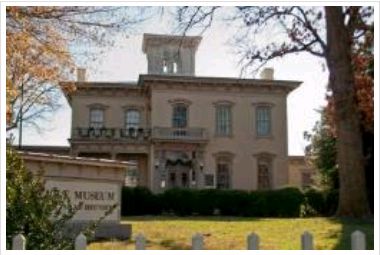
The Sutherlin Mansion in Danville, Virginia, the last capital of the Confederacy, is now the Danville Museum of Fine Arts & History and is a short walk down Main Street from the US District Court.
Specifically, the question was whether the U.S. Supreme
Court's recent decision allowing Texas to ban the confederate
flag from its license plates in Texas also applied to Virginia.
Pursuant to an older 2001 decision from the Fourth Circuit,
Virginia was prohibited from disallowing an image of the
confederate flag on vanity license plates for the Sons of
Confederate Veterans. The Fourth Circuit had held that
Virginia's rule was an impermissible content-based restriction
(viewpoint discrimination) under the First Amendment. Since
then, nearly 1602 Sons of Confederate Veterans license plates have
been issued for cars and motorcycles.
In March 2015, however, the Supreme Court held that Texas's
specialty license plate design constitutes government speech, and
therefore content-based restrictions on the design and message of
the license plates did not run afoul of the First Amendment.
The majority opinion explained that states can use license
plate slogans to urge action, promote tourism and tout local
industries, and that in doing so, the state can choose to promote
some slogans, images and messages, but not others. The Court
compared messages on vanity license plates to message-conveying
monuments in public parks.
Given this ruling, the Commonwealth of Virginia asked Judge Kiser
to dissolve the 2001 injunction that prohibited it from disallowing
the confederate flag on its license plates. In his ruling
from the bench, Judge Kiser agreed that the recent Supreme Court
case effectively overruled the prior Fourth Circuit decision, and
thus the injunction would be dissolved when he issues a written
order. Judge Kiser rejected the Sons of Confederate
Veterans' argument that the process for obtaining a vanity
plate in Virginia was so different from Texas that the US Supreme
Court case should not apply. A question that still needs to
be answered, however, is what will happen to the existing Sons of
Confederate Veterans license plates that have already been issued.
Judge Kiser's written ruling is expected to address
whether his decision applies just to new plates or also
retroactively to include the existing plates.
Attorney General Mark Herring said in a statement: "This
ruling will allow Virginia to remove a symbol of oppression and
injustice from public display on its license plates. Virginia
state government does not have to and will not endorse such a
divisive symbol. I appreciate Gov. McAulliffe's
leadership in calling for the removal of the flag and those on my
team who moved quickly to get it done."
Personally, I think that not only was Judge Kiser's ruling the
right decision but it was the only decision possible given the
Supreme Court's prior ruling in the Texas case.
The content of this article is intended to provide a general guide to the subject matter. Specialist advice should be sought about your specific circumstances.
[View Source]